Daily Marketing News, September 15, 2026: Google has started paying sites for content used in AI answers

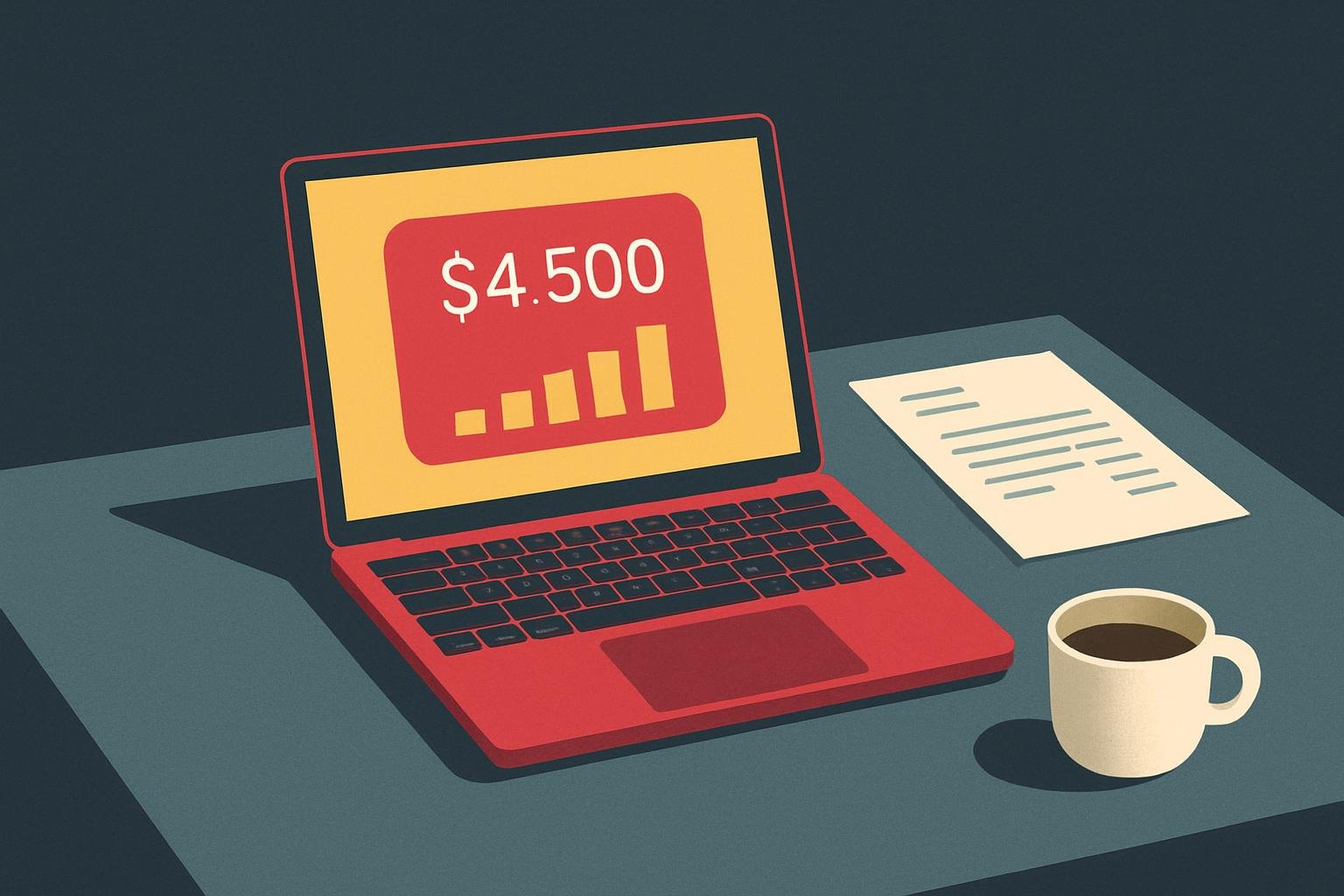
Google has started paying site owners for content that ends up in its AI answers: invited publishers now see a widget in the Search Console dashboard with the amount for the month. The calculation formula, meanwhile, is not disclosed. Also, a beta turned up in Google Ads that prioritizes products without rebuilding campaigns, and search results showed a position shift around 4 September 2026 with a partial rollback on 13 September 2026.
Story of the day: Google pays sites for content in AI answers, the amount is visible in Search Console
On 14 September 2026 details appeared about a program Google calls the AI contribution pilot. A publisher gets invited, goes into Search Console, that's Google's free dashboard for site owners showing impressions, clicks and indexing errors, accepts the Program Terms, and a separate earnings widget appears in the dashboard: the amount for the current month and the payout history. Search Engine Roundtable reported it, Digiday described how the mechanics work.
Payment is tied to a specific event: the page materially influenced how an AI answer was generated. There are three such places: AI Overviews, the AI answer at the top of regular search results; AI Mode, the search mode where instead of a list of links the user gets a detailed answer and can keep asking; and the Gemini app. But if the page was used to confirm a fact, or a link to it was attached after the answer had already been generated, that does not get paid.
The accrual is not counted per use, it's based on an assessment of the value of the contribution, and Google does not publish the formula. You can leave the program at any moment. Money arrives in a bank account, and the actual payout may differ from the amount in the dashboard because of taxes and local payout thresholds: in other words, the figure in the widget is an estimate, not a promise.
According to Digiday, at least dozens of publishers have been invited, mostly small and mid sized, and no longer only news sites. The first traces of the pilot were spotted back in April 2026, but the terms and the widget have only been described now.
For anyone promoting a site this matters for one reason: traffic is no longer the only currency in search. For content that AI consumed and didn't pay back with a click, you now at least sometimes get money. But this isn't a revenue source yet, it's participation in somebody else's arithmetic: you see the total and you don't see the math. If an invitation arrived, it's worth going in, looking at the widget and keeping your own search traffic data next to it for a month, to understand what exactly you traded and for how much.
More news, 15 September 2026
The advertiser sets product value adjustments, and automated bidding starts pulling impressions toward those parts of the assortment. Google describes 3 benefits: it works toward a business goal, whether that's profit, clearing seasonal stock or pushing bestsellers; adjustments apply to brands, categories and other product attributes, so there's no need to rework account structure; recalculation happens in real time in Performance Max and Shopping campaigns. Previously, to push high margin products forward, you had to split campaigns and edit the feed, that is, the file with product data. Google announced the setting quietly back in June 2026, and it was only widely noticed now, after a LinkedIn post by freelancer Adriaan Dekker.
Barry Schwartz, who runs that publication, stresses two things: he hasn't written about updates since late August, and most sites are calm right now. So this isn't a mass update but a narrow change that Google never officially announced or named. The practical takeaway is simple: if your positions dropped or jumped in that window, don't immediately blame your own on site edits and don't roll them back. First open your ranking chart and see whether the breakpoints line up with 4 and 13 September 2026. If they do, it isn't you.
AI Mode is Google's search mode where instead of a list of links a person gets a detailed AI answer and can keep asking. Previously refinement mostly worked through ordinary follow up questions under the answer. Now the tests show multi select questions where you can tick several options at once, a separate query refinement option, and recent answers with pagination. For anyone promoting a site this changes the task: one query increasingly unfolds into a chain of refinements, and a page has to cover not a single phrasing but a set of adjacent questions on the topic, otherwise on the second step somebody else lands in the answer.
A shopping block in search results is a carousel of cards with a price and a store name, and the "More" link expands the full product list. Before the test it looked like plain text with no highlighting, in the test it got a blue background that pulls attention to itself. This doesn't change ranking rules, but it redistributes clicks within the page: the more visible the entry into the expanded shopping block, the fewer clicks go to the regular organic links below it. Anyone selling products should watch not only positions over the coming weeks, but the share of search clicks on product queries.
A thumbnail is the image preview that search shows next to the snippet and in Images, and it takes it from the page. If a site owner replaced the image, the old version can hang around in search results for a long time, and that's not a bug. Mueller added a detail that rarely gets spelled out: the delay gets noticeably longer if the old image is still on the page and has simply moved lower, and that holds even when the new one is listed as primary in the recipe markup. The practical conclusion: when refreshing visuals it isn't enough to upload the new image, you have to remove the old one from the page entirely and check that the structured data points to the new one.
AI Overviews is the AI generated answer at the top of regular search results. Google announced the general knowledge quiz a few weeks ago for AI Mode, and now the same format is showing up in regular search: a person gets questions on the topic instead of a link and stays inside the results page. Search Engine Roundtable wrote about it. For site owners this is another scenario where the session ends without a visit: the more interactivity inside the AI block, the fewer reasons to click through. Counting search traffic by clean visits is becoming an ever sadder occupation.
Threads is Meta's text based social network tied to an Instagram account, X is the former Twitter. In an interview with Sources, the head of Meta noted that the two platforms' communities overlap and that he himself often publishes the same post on both. There are no audience figures in the retelling, and I couldn't open the full interview text, so the claim remains an estimate rather than data. For anyone running text based channels, another part is useful: Meta keeps investing in Threads, cross posting between Threads and X remains normal working practice for now, and it's too early to drop one platform in favor of the other.
Grok is xAI's AI assistant built straight into the X feed. Social Media Today reported the study citing the New York Times. I couldn't open the report itself or the New York Times piece, so I can't confirm the sample size or the observation period, no details. For advertisers this is pure brand safety: ads in X run in the general feed next to user content, and after publications like this large brands usually pause buying. If you have campaigns running in X, it's worth keeping this risk in mind when planning budget for the coming weeks.
That's the YouTube division that regularly researches what the audience watches and why. The main conclusion as reported by Social Media Today: despite the growth of microtrends and niche communities, most people still want big shared experiences that bring an audience together. The report sits on the YouTube blog, but I couldn't open the original and pull out sample sizes and percentages, no details. For anyone running a channel, this is an argument against going fully into a narrow niche: keep big, broadly understood topics in the content plan alongside material for your core audience.
What to do about it: 4 actions for sites, product advertisers and creators
- Site owners: open Search Console and check whether access to the AI contribution pilot has appeared. If it has, decide in advance whether you're willing to accept program terms under which you see the amount but not the calculation.
- Everyone tracking rankings: overlay the dates 4 and 13 September 2026 on your chart and only then decide whether your edits caused the change or it was a swing in search results. Don't roll back changes before that check.
- Product advertisers in Google Ads: request access to the Product Value Optimization beta and put together a list of priority products by profit and stock levels right now, so you don't have to rework campaign structure mid season.
- Everyone changing images on a site: delete the old image from the page instead of pushing it down, and check that the structured data points to the new one. Otherwise last year's thumbnail will hang around in search results for a long time.
This year search learned to pay for content and at the same time invented a quiz so that the person doesn't leave for a site. Both news items on the same day, both from Google.
mrpopular has been running since 2014, and promotion has been in front of my eyes all that time: social networks, search engines, ads, suppliers, orders, disputes, statistics.
One company holds every side of the market: a promotion service where most services are our own rather than resold; the etask marketplace, where tasks are done by real people; a support desk that shows what customers actually complain about. So the texts contain what agency reports leave out: supplier prices, drop-off rates, chat logs, statistics screenshots.
A marketing blog without fairy tales. What works, what stopped working, what it costs and why.
My topics: social networks and paid boosts, ads, traffic, suppliers and the market from the inside, plus the marketing news issue every morning.