Daily Marketing News, September 21, 2026: AI gets 57% of money questions wrong

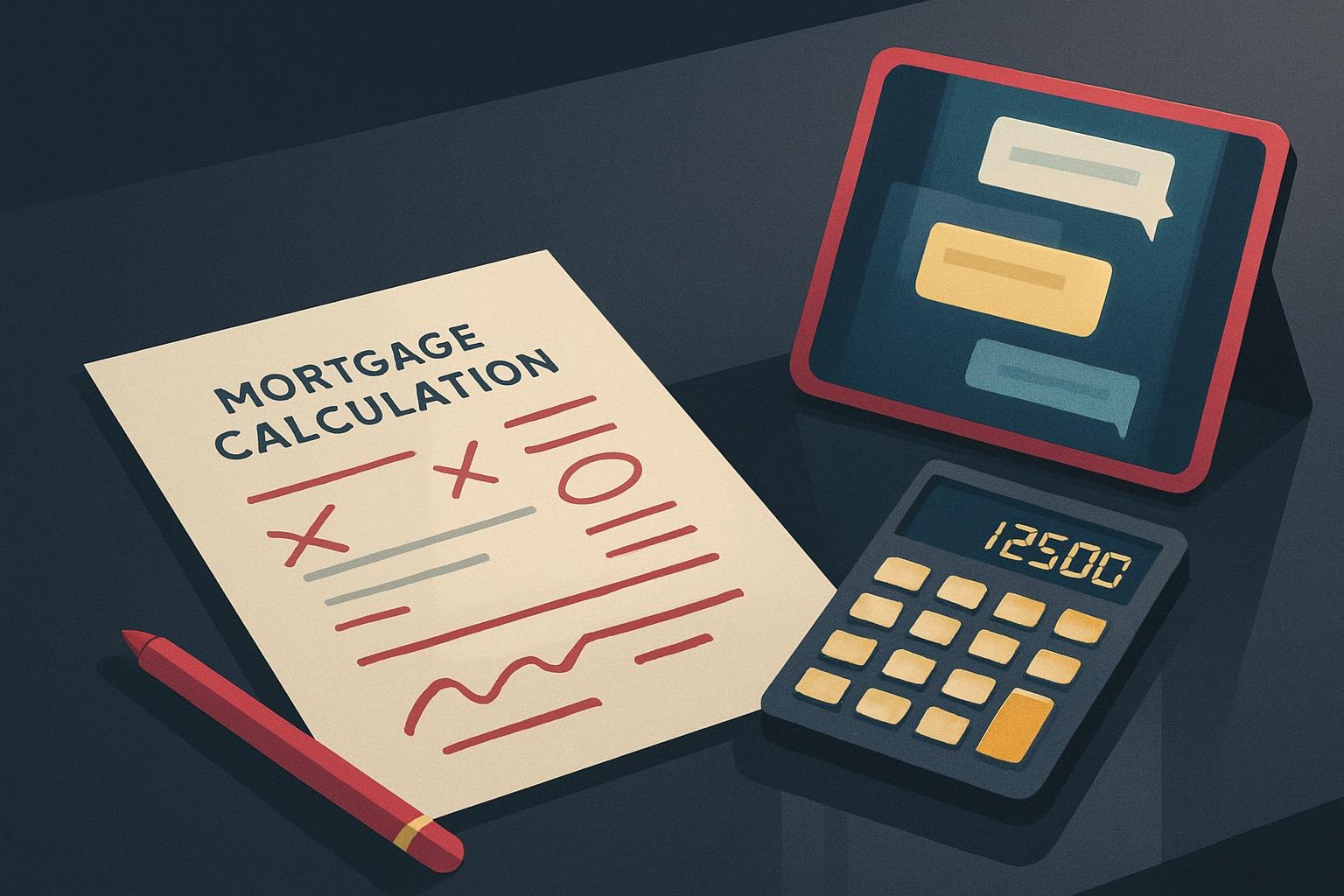
Chatbots that people already ask about mortgages and taxes give the wrong answer 57% of the time, and on complex calculations the error rate reaches 99%. A whole day disappeared from the crawl report in Google Search Console, and in the Web Guide search beta the button that returns you to normal results is broken.
Story of the day: AI chatbots are wrong on 57% of money questions, up to 88% on complex calculations
On 20 September 2026 the Financial Times published a study by fintech company Saturn on how AI chatbots answer money questions. The test covered 18 commercial models, among them ChatGPT, Claude, Gemini, Grok and Copilot. They were asked more than 10,000 questions about taxes, loans, mortgages, retirement savings, savings accounts and borrowing, and each question was repeated several times, so the result would show a pattern rather than a one off slip. On average the answer turned out to be wrong 57% of the time.
The harder the query, the worse it gets. When a question contains several conditions and the calculation runs in several steps, the share of wrong answers rose to 88%, and in the hardest scenarios some models were wrong 99% of the time. A paid subscription does not solve it: free versions were wrong 63% of the time, paid ones 49%, a gap of only 14 percentage points, and every second answer on a paid plan is still wrong. The best model of the lot missed roughly 4 times out of 10.
The errors are not just arithmetic, and that is the nastiest part. Models dropped conditions stated in the question itself, used outdated tax rules and cited rules that do not exist. And the answer was written like professional advice: confident tone, clear structure, caveats in the right places. You cannot tell a correct answer from a wrong one by the look of the text, and most readers will not check. According to the UK regulator, the Financial Conduct Authority, cited in the same piece, 26% of consumers already use general purpose AI tools for financial advice or are willing to trust them.
If you do marketing, this hits you directly, even if you do not sell loans. The savings calculation in an article, the pricing table, the chatbot reply on your site, the email about instalment plans: a lot of that is written by a neural network now, and a wrong number gets blamed on the brand, not on the model. The conclusion is simple and boring: every number, condition and reference to a rule that came out of a chatbot has to be recalculated by hand, and the more conditions there are in the calculation, the higher the chance your recount will not match.
More news, 21 September 2026
Search Console is Google's free dashboard for site owners, where you can see how search indexes your pages, and the Crawl stats report inside it shows how Google's crawler visits your site: how many requests the crawler made, what response the server gave and how heavy the downloads were. Right now the chart is missing 1 day for every property, and for some owners the gap shifts by a day because of time zones. This is a Google reporting glitch, not a site problem: the same thing happened in August 2026, October 2025, November 2021, and in February and May 2022, and Google restored the data every time. The main thing is not to read the dip in the chart as a drop in crawling and not to redo technical work because of it, like editing robots.txt or moving the site to another server.
Web Guide is a search mode the user turns on themselves, and it mixes the familiar list of links with an AI answer interface. Inside there is a "Classic search" button to get back to normal results, and it is broken: clicking it reloads the same Web Guide page and the user stays in the mode. Damien Andell noticed it first and posted an example on 20 September 2026, and he also found a second error: instead of the site name in a link it shows "null://null". Editor Barry Schwartz reproduced the bug and recorded it on video, while Web Guide specialist Glenn Gabe added that you do not always get stuck, since one attempt threw him back into normal results. Only a minority uses the mode, but it is worth checking how your site looks in it: some people are seeing you outside the classic list of links.
The newsroom went offline from the evening of Sunday 20 September 2026 until the evening of Monday 21 September 2026 for Yom Kippur, with nothing scheduled for the Monday. Not a product story, but a practical one: Search Engine Roundtable, along with Search Engine Land and Search Engine Journal, covers most of the fast reporting on Google tests and changes in Google Ads and Search Console, and on their quiet days the market learns about changes late. If you run sites and ad accounts, keep it in mind: if something looks off in an interface on 21 September 2026, the explanation will show up later, and until then looking for the cause on your side is pointless. On days like this, check your own charts instead: rankings, impressions, spend.
It is a government programme against doomscrolling, meaning the habit of flicking through news and social feeds for hours, and it is built as a game: you earn virtual rewards for reading. The mechanics are the same as in brand apps with levels and points, except the client here is the state. Payment amounts, timelines and programme reach were not disclosed. For anyone making content, the framing is what matters: attention to long text is no longer treated as something that appears on its own, and it is now stimulated with money and rewards, the way regular app visits used to be. If you have long pieces that people abandon halfway, look less at calls to read to the end and more at what the reader gets for finishing.
The letters in the font trace his feints and his runs across the pitch. Until now an athlete's movement in advertising was used as video, here it was turned into typography, that is, a digital object you can hand to people. The campaign start date, the list of countries, the download terms for the font and the agency name were not given. For brand marketers this is an example of something cheap to produce that outlives a video: a video spot burns through its impression budget and ends, while a typeface spreads through the design community on its own and stays inside other people's layouts. The small business equivalent: a set of icons, a spreadsheet template or a preset your audience will actually use in their own work.
Mattel is the maker of Barbie dolls, and celebrity collector dolls are a separate line for the company: limited runs, a price above regular toys, and press coverage generated by the choice of person alone. Price, run size, on sale date and markets were not given. The point for marketers: a product collaboration with a celebrity replaces an ad campaign, because the news is the product itself, not a message about it. Scaled down, that looks like this: instead of running ads about your partnership with someone well known in your niche, release a limited batch of a product or a version of a service with them, something that can be written about as an event.
Pew Research Center is an American nonprofit that runs regular international surveys, and its numbers often end up as arguments in brand presentations and content. In the survey, people expecting artificial intelligence to destroy jobs outnumbered those expecting new ones, and that answer is more common in high income countries than in middle income ones. The write up does not break results down by individual country. For anyone writing copy and ads about AI tools, it is a hint about tone: the promise that something "replaces a human" lands as anxiety rather than excitement in wealthy countries, and it is easier to sell time saved on a specific task than headcount cut.
What to do about it: writers, advertisers and site owners
- Recalculate by hand every number a neural network produced for your texts, emails, calculators and on site chatbot answers. On calculations with several conditions an error is close to guaranteed: 88% wrong answers according to Saturn, and a paid plan does not remove it, 49% against 63% on the free tier.
- Check not only the arithmetic but the references to rules and terms: in the study, models used outdated tax rules and cited rules that do not exist. If your text refers to a law, a rate or a deadline, open the primary source yourself.
- Do not treat the 15 September 2026 gap in the Crawl stats report as a drop in crawling. Google usually restores the data, and keep your own server logs separately so you do not depend on someone else's charts.
- Open your own site in Web Guide mode and look at how it appears there and how the domain name is displayed. Part of your audience is already seeing something other than the classic list of links, and the button back to it does not always work right now.
Writes about: SMM, paid boosts, ads, traffic, suppliers, the market from the inside, daily news