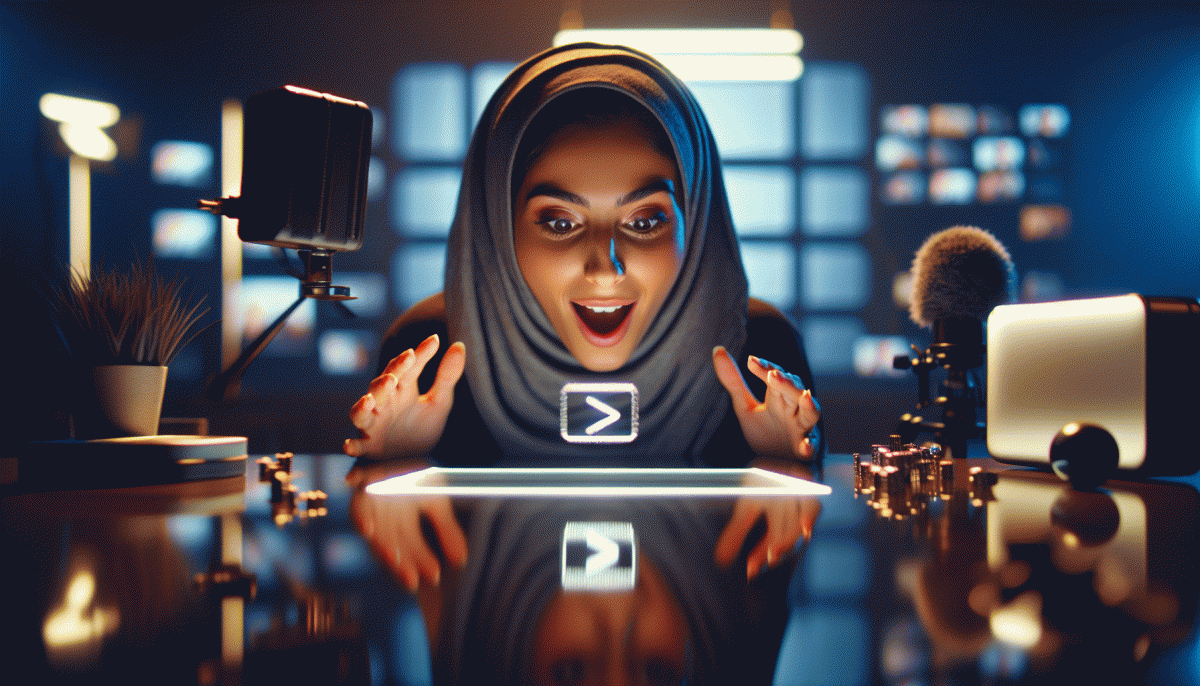
We Analyzed 10,000 Thumbnails—This One Thing Drives YouTube Clicks Every Time
The thumb-stopping secret: clarity beats cleverness
Every second your thumbnail has to answer a simple question: what is in it for the viewer? Clever metaphors and tiny type lose to brutal clarity. When someone scrolls fast, the brain can only register one idea. Show that idea instantly with a single subject, an emotion, and three to five clear words max. If the thumbnail needs explanation, it will get passed.
Design like a speed reader: make the face or object occupy 40–60% of the frame, let the eyes meet the viewer, and crank contrast so the subject pops on small phones. Use bold sans fonts with thick strokes, limit the color palette to two dominant tones, and simplify backgrounds into shapes that do not compete. Export at 1280x720 and preview at 10% zoom to confirm legibility; if text blurs, increase stroke or reduce words.
Templates that prioritize clarity win more clicks than the cleverest oneoffs. For ready to use templates and growth tools check smm provider. Start with a proven layout, swap the image and one strong word, then run a split test rather than reinventing the wheel every time.
Measure not feelings: swap thumbnails for a week, track CTR and first minute retention, then double down on winners. If CTR improves but retention drops, the image may be misleading. Keep a library of five high CTR templates mapped to video types so production stays fast. Clarity scales: once the message reads in a blink, you can get clever in the hook or title, not the tiny image that has to stop the scroll.
Faces, contrast, and one bold word: the trifecta that pulls the eye
People scan thumbnails in a tenth of a second. Faces are the human shortcut: eye gaze, micro-expressions, and head angle read as promises about tone. A face that takes up roughly 25–40% of the frame with clear eye contact wins attention; a three quarter profile works when the eyes point toward the bold word. Remove competing clutter and use shallow depth of field or a subtle vignette so the face becomes the focal anchor.
Contrast is the visual amplifier. Use luminance separation, complementary color pops, or a thin rim light to slice subject from background. High contrast edges and a simple silhouette increase legibility at tiny sizes and on mobile feeds. If you need fast impressions to validate thumbnail variants and collect CTR data, try best Twitter boosting service to accelerate views and get statistical confidence sooner.
The single bold word seals the deal. Choose one punchy token — STOP, NOW, or SHOCK — in uppercase, heavy weight, tight tracking, and a strong outline so it reads at 80–90px. Position it where the face is looking or where negative space naturally sits. Avoid sentences; the brain binds word plus face into a quick promise: emotion plus intent equals click.
Actionable testing loop: shoot tight facial frames, export three color-contrast variants, add one distinct bold word per variant, run organic splits or low-cost promos, and measure impressions plus CTR for 3–7 days or 5k–10k impressions. Iterate on the winner and scale. This face + contrast + one-word combo is not magic, it is a repeatable experiment that moves real numbers.
Pair the title and thumbnail to tease the story, not hide it
Think of the title and thumbnail as a two-sentence pitch: one sets up the curiosity, the other delivers the mood. A thumbnail that hides the story forces viewers to guess, and guessing costs clicks. Instead, use the thumbnail to answer the core question the title raises so the viewer knows a small, satisfying reveal awaits.
Practical moves: lead with a visual hook (a face, a clear object, or an action), layer in one short on-image word to frame the promise, and keep the title tight—five to eight words that swing at the emotional payoff. Avoid vague superlatives; specificity beats mystery. When title and image point to the same destination, CTR and initial watch time climb together.
Run micro-tests: change the subject crop, swap the headline verb, or alter color contrast and track CTR and 30s views. If you want faster experimentation or a partner to scale those iterations, check top YouTube campaign agency for structured A/B frameworks and creative templates that speed learning.
Final rule: tease, do not trick. The goal is a click that feels earned, not cheated. Make the thumbnail answer the title just enough to start the story, and the rest of the video can do the satisfying reveal.
Design for mobile first: tiny screens, big impact
On mobile a thumbnail becomes a postage stamp, so every pixel must earn its place. Design with the smallest possible view in mind: large shapes, a single dominant focal point, and bold contrast. Avoid small decorative details and thin strokes that vanish under compression. Mobile viewers skim with a thumb and a flick of the wrist; the hook must be readable in an instant. If the audience cannot parse the image in less than half a second, it will be skipped.
Composition rules are simple and ruthless. Fill at least 40 percent of the frame with your subject, crop tight on faces, and use slightly angled layouts to draw the eye inward. Limit on-image copy to two strong words set in a heavy sans and add a short dark or light outline for separation. Use bright complementary colors rather than pastels, and remove background clutter. Export at native size and run a compression check to ensure edges stay crisp after upload.
- Contrast: Maximize brightness gap so subject pops on any background and in dark mode.
- Faces: Use expressive closeups with visible eyes; emotion increases clicks.
- Test: Preview at 100px and 60px on actual phones to confirm legibility and adjust.
Treat thumbnails like pocket posters and iterate fast. Mock three variants, run a short traffic test, and rotate in winners. Small tweaks to color, crop, or a single callout word often produce outsized lifts when most viewers are on phones. Keep brand elements simple, avoid tiny logos, and make every thumbnail readable with a flick of the thumb for maximum click power. Also add a thin outline or subtle border to increase separation on busy feeds; this trick often saves thumbnails from blending into app chrome.
Steal this swipe file: 12 thumbnail prompts to spark ideas fast
Treat the 12 prompts as a swipe-file of micro-recipes you can remix in minutes. Each prompt is a shortcut — a mood, a prop, a framing move — that repeatedly nudges people to click. They save time on sprint days and reinject novelty when your thumbnails go stale. Use them to jumpstart shoots, not to produce clones.
Apply this simple formula: Subject + Emotion + Surprise/Prop + 3-word hook. Example swaps: chef + shocked + flaming pan + "Dinner Disaster", creator + confident + oversized check + "10K Trick", traveller + amazed + tiny map + "Hidden Gem". For rapid ideation, pick two prompts and swap elements: face from prompt A, prop from prompt B, text from prompt C. The mashups are where original looking thumbnails appear fast.
Shoot three quick variants per idea: a close-up face with direct gaze, a wide shot with a puzzle element, and a bold-text-only treatment. Export at the exact sizes YouTube compresses and run back-to-back tests for 24–72 hours. Measure CTR and, crucially, average view duration — a high CTR that crashes watch time hurts momentum.
When stuck, apply one micro-tweak — boost text contrast, tilt the subject 10–15 degrees, or flip the emotion to its opposite. Those tiny edits often unlock huge CTR jumps. Steal the structure, test ruthlessly, iterate quickly, and let the prompts shoulder the creative heavy lifting.
Read also

The One Thing That Drives Clicks on YouTube (Spoiler: It's Not Your Video)

The One Thing That Drives Clicks on YouTube (You're Probably Ignoring It)

The One Thing That Drives Clicks on YouTube (No, Not the Algorithm)

The One Thing That Drives Clicks on YouTube (Hint: Your Thumbnail Rules the Game)

This One Tiny Tweak Skyrockets Clicks on YouTube