Daily Marketing News, October 16, 2026: Google launches a universal shopping cart in Search

On October 15, 2026, Google launched a shared shopping cart in the US, right inside Search and Gemini, its AI assistant. On the same day Google changed how links appear in its AI search answers, and YouTube Music started labeling songs made with AI. Also in this episode: car ads with photos in search results, a new "Ask Google" search bar and an Australian bill giving people the right to opt out of algorithmic feeds.
Story of the day: Google launches a shared cart for products from different stores in Search and Gemini
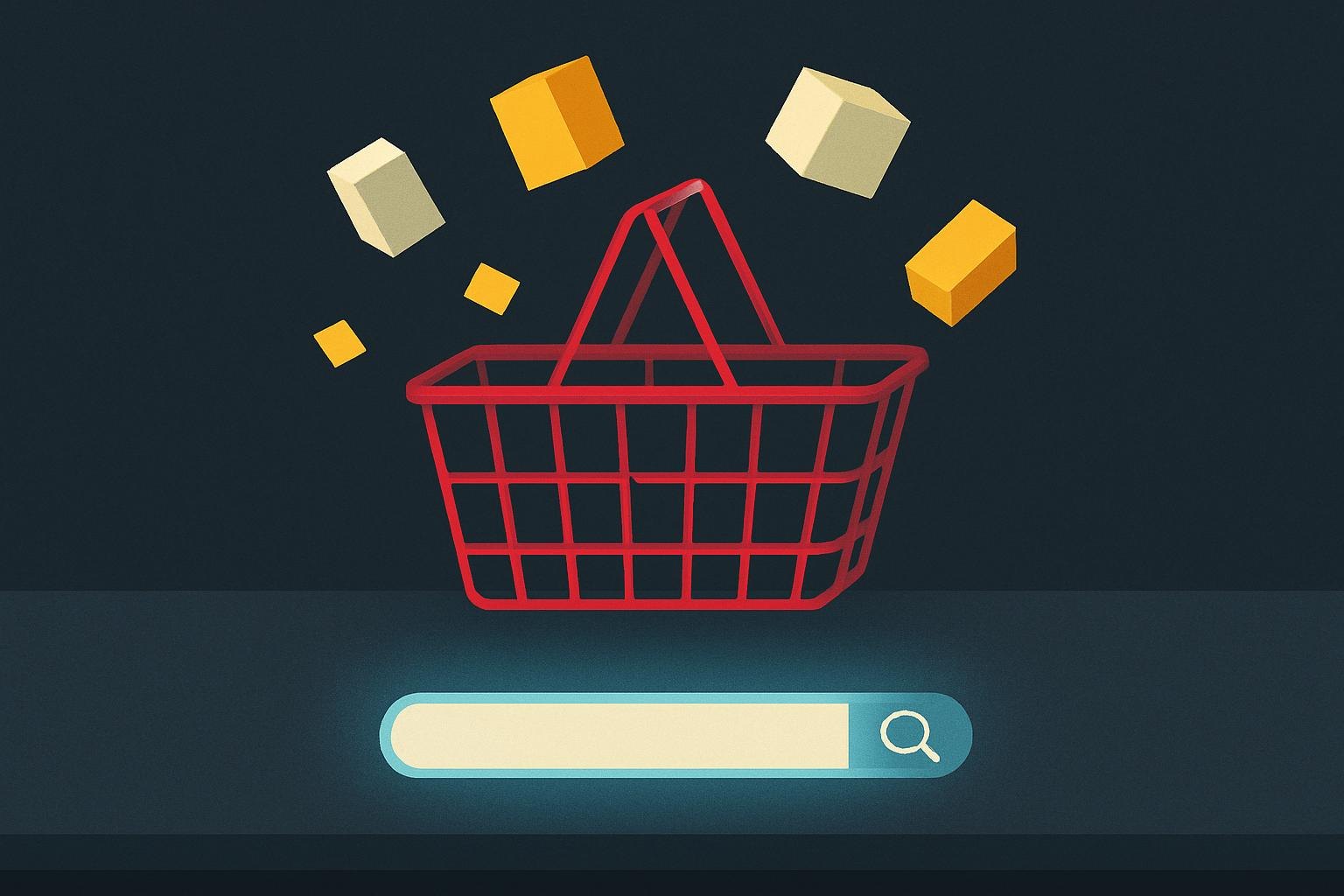
On October 15, 2026, Google launched Universal Cart in the US, a shared cart for shopping in Google Search and in the Gemini app. Until now the buyer's path looked like this: you found a product in the results, went to the store's site, and built your cart and paid there. Now products from different stores go into a single cart inside Google. Google has taken the step between choosing and paying for itself.
Universal Cart can hold products from several sellers at once. That's also where price drop and back in stock alerts arrive, and where card rewards and promo codes show up. From there the buyer has 2 paths: pay with Google Pay without leaving the cart, or move the items into the cart on the store's site. Whatever the payment method, the store remains the seller. The meeting with the buyer just no longer happens on the store's own site.
The cart runs on Shopping Graph, Google's database with more than 60 billion product listings. Among the stores Google named at launch are Nike, Sephora, Target, Ulta Beauty, Walmart, Wayfair and many stores on Shopify, the online store builder. For a store, this means the price, availability and promotions in its product feed now also work as notification copy. An error in the feed turns into a "price dropped" push that never actually happened.
The cart was first shown at Google I/O, Google's annual conference, on May 19. Back then they promised a US launch in summer, with YouTube and Gmail later. The launch slipped to mid October. The new announcement names only Search and Gemini, says nothing about YouTube and Gmail, and Google isn't saying whether those integrations are delayed or dropped. Promises from spring conferences, as usual, are best divided by 2.
The key point for anyone selling in the US: not everyone gets the checkout button. According to Google's help page, eligible products in AI Mode, the conversational search mode, and in Gemini get the button if the store is connected to UCP. UCP, the Universal Commerce Protocol, is Google's open standard for shopping through AI. The UCP integration section in Merchant Center, Google's dashboard for product feeds, is rolling out gradually in the US, and Australia and Canada are expected next year. Without this integration your product will be in the cart, but there won't be a buy button in the AI answer.
More news, October 16, 2026
This covers 2 formats: AI Overviews, the AI summaries above the regular results, and AI Mode, the conversational search mode. Both now have more links, some moved higher in the answer, and for certain queries Google will show 1 or 2 links to the page it considers the right one. Carousels of fresh articles are launching in new regions and languages. For videos in AI Mode, Google is testing links to creator profiles, but those lead first to a profile page inside Google. According to Google, the number of people using the preferred sources feature grew more than 7 times. There's no report on clicks from AI answers: Google told Search Engine Roundtable it will add metrics "over time," and in Search Console all links in one overview share a single position. A link that moved higher won't rank higher in the report.
Dealers already had similar vehicle feeds; the new format is built for automakers. Once enabled, search campaigns automatically show car photos, prices and specs next to the text ad. On mobile, 2 to 5 tiles appear under the ad: photo, model, trim, price. The requirements: the advertiser must be an automaker, have an active search campaign and upload a valid model feed. The format works in the US, Canada, Australia and the UK, and you get into the beta through your Google rep. Images must be horizontal, 1.78:1, at least 600 x 337, ideally 1200 x 675, no WebP and no text on the image. No new campaigns are needed: a single feed upload covers the whole account.
The API is the programming interface agencies, automation tools and scripts use to manage Google ads without the web interface. This is a big release: updates cover SMS messages in ads, Local Services (pay per lead ads for local services), Hotel Center accounts for hotels, lift measurement (estimating how many sales came from the ads themselves), political ads in the EU, and conversion features. If your bidding, reporting or conversion uploads run through a third party tool or your own scripts, they'll work on whatever version your vendor supports. Ask them when they're moving to version 26: the new features on this list only reach you after the switch.
According to Google, the goal is to "give advertisers more examples and clearer information." The biggest changes are in the "Sexually suggestive elements and themes" section. The rule affects anyone advertising lingerie, swimwear, cosmetics, dating services or adult products, as well as anyone in any niche who uses suggestive imagery in creatives. Google presents the update as clarification with examples, and the announcement doesn't mention new bans. Before launching fall campaigns, open the section and check your borderline banners and videos against the examples: a rejected ad in peak season costs more than half an hour of review.
The bar used to say "Search." In the test it has a "+" sign, and instead of "Search" it says "Ask Google." The bar itself turned white instead of gray, got thinner and moved higher on the screen. This is a test on some users, with no date for a full rollout. The point is clear even without a date: Google is teaching people to ask full questions instead of typing 2 keywords. For site owners, this means more queries phrased as questions. Pages that answer the question directly in the first lines fit those queries better than pages built around a single keyword.
Before this, YouTube only had a general "Made with AI" label for videos. The new label sits on the player page, and tapping it opens an explanation of what role AI played in the track. Music partners choose 1 of 3 statuses: Fully Gen AI, Partly Gen AI or No Gen AI, and send it through DDEX feeds (the industry data format for music), CSV files or YouTube Studio. If no status is given, YouTube may apply Fully Gen AI or Partly Gen AI itself. YouTube stresses that AI involvement doesn't turn off monetization. Deezer shows the scale of the problem: as of July, that streaming service was receiving about 90,000 fully AI-generated tracks a day. The labels are also promised for the main YouTube app.
Until now the feed inside Substack was mostly picked automatically, and readers had little say over what was in it. Now you can separately set how much video, audio and long text you see, and decide how many community discussions to show. You can also hide posts by keyword and temporarily see less of topics you don't need right now. For creators this means something simple: a reader can switch off the very format you publish in. If you run a newsletter and post video or podcasts on Substack, look at stats separately for each format: a drop in video views may not be a weak video but a feed setting for some of your subscribers.
Right now platforms decide what goes in the feed, and users have no mandatory choice. The bill gives people the right to pick their preferred feed type and sets fines of up to 109.2 million Australian dollars for platforms that fail their online safety obligations. It's still a bill, not a law, and no effective date or list of platforms has been named. For anyone promoting on social media, the logic is this: a person with a chronological feed sees posts from accounts they follow, not whatever recommendations push at them. Reach with that audience depends on followers and posting regularly, and a viral video aimed at strangers barely gets to them.
Growth is across all channels, and for main media it's the strongest in 9 years. The worrying detail in the same report: more companies are raising spend on sales promotion, meaning discounts and deals, and analysts fear businesses are thinking short term. On the same day the ad group Havas reported Q3 2026 results: global net revenue grew 7.2% to 703 million euros, driven by media and creative. Meanwhile organic growth in the APAC and Africa regions fell 6.7%. For anyone buying ads in Europe, the takeaway is direct: going into Q4, more money will compete for the same impressions, and cost per click may rise.
What to do: for stores, site owners, creators and advertisers
- Stores selling in the US through Google: open Merchant Center and check whether the UCP integration section has appeared. Without it, your products won't get a checkout button in AI Mode and Gemini. While you're there, clean up your feed: its prices and promotions now go into the shared cart and into price drop alerts.
- Site owners: measure traffic from AI Overviews and AI Mode with your site analytics, since Search Console won't show it separately. Ask your regular readers to add your site to their Google preferred sources: those sites stand out in the carousels that are expanding now.
- YouTube creators: if your videos use AI music, label it yourself. The label can also be applied automatically, and it doesn't turn off monetization.
- Google Ads advertisers: ask your vendors when their tools and scripts will move to API version 26. Check creatives with lingerie, cosmetics and dating against the updated rules on sexual content before launching fall campaigns.
Writes about: SMM, paid boosts, ads, traffic, suppliers, the market from the inside, daily news