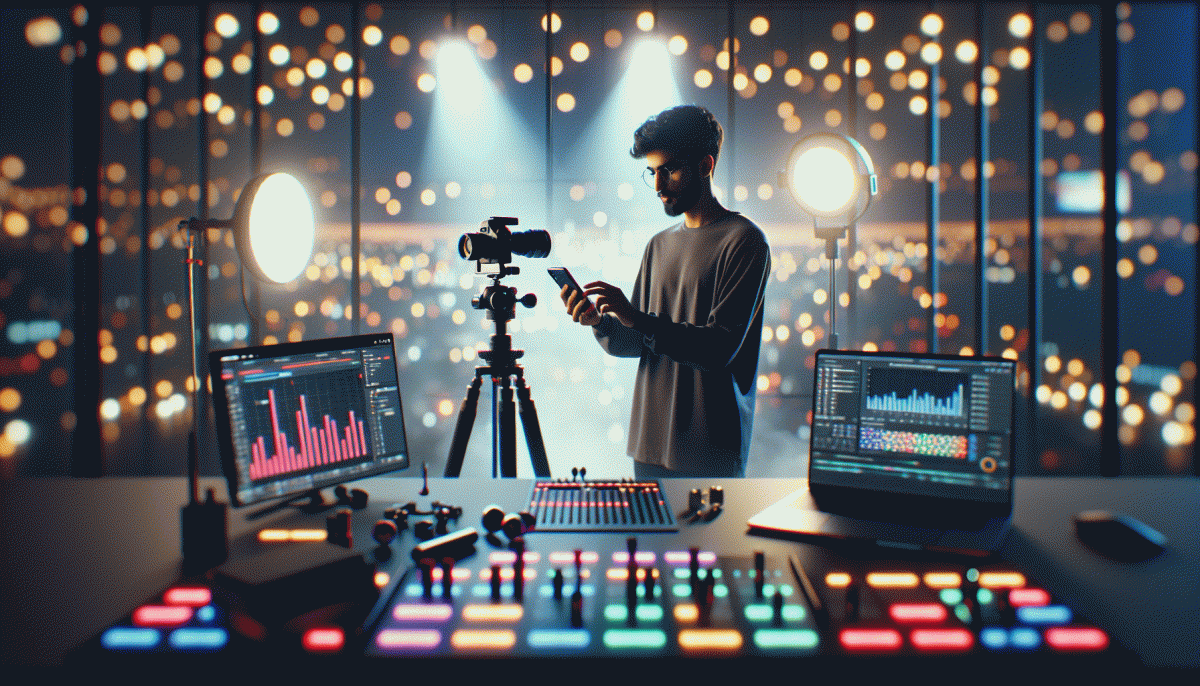
What Works Best on TikTok in 2025? We Tested Everything So You Don't Have To
Hook 'Em in 3 Seconds: Openers That Stop Scrolls Cold
Three seconds is the tiny real estate you get to flip someone from passive scroller to curious viewer. Start with a visual or audio jolt that makes the thumb stop: a sudden camera move, a onomatopoeic sound effect, or a frame that looks like an accident. Pair that with a single, bold promise delivered in the first beat so the audience immediately knows why they should care. Keep energy high and choices simple; complexity kills curiosity.
Use a simple formula to write openers: Shock: one unexpected image or fact.
Relate: mirror a common feeling or frustration.
Promise: what the rest of the clip will give them. Lead with a single sentence that does two things — identify the problem and hint at the payoff — and trim any extra words until every syllable earns attention. Replace subtlety with clarity in the first three seconds.
Editing is the hook maker. Jump cuts that skip the boring setup, a freeze frame that adds a dramatic caption, or a reversed audio cue at time 0.2 seconds all create micro-disruptions that feel fresh in a feed full of predictability. Layer on quick text overlays sized for mobile, not desktop, and keep motion centered so the eye does not wander. Sound is glue: switch or boost audio at the opener to signal importance.
Treat opening seconds as experiments: test variations, measure retention at 0–3s, and double down on what keeps viewers watching past that point. If you want a fast place to scale tests and find what sticks, try buy TT boosting as a way to validate which hooks actually stop scrolls on a larger audience.
The 2025 Algo Decoder: What TikTok Actually Rewards
TikTok in 2025 is less about gaming a secret formula and more about winning attention in smart, repeatable ways. The platform rewards micro-behaviors: how many people watch past five seconds, whether they rewatch, and whether they take an action after the video ends. That means your first two to three seconds must hook, your middle must hold, and your end should make users care enough to interact or hit replay. Think of the algorithm as a neat math problem where watch time plus rewatch equals distribution.
Engagement still matters, but quality beats quantity. Likes and shares help, yes, but saves, comments that prompt replies, profile visits, and follows immediately after a video are the signals that really tilt the scales. Use features that nudge interaction: a clear question that invites a specific one-word answer, an unexpected reveal that triggers replays, or a unique sound that encourages duets and stitches. Original audio and community callbacks are paid back with reach.
On the production side, optimize for retention. Vertical framing, punchy captions, beat-synced cuts, and readable on-screen text are not optional; they are your toolkit. Favor story arcs that reward full views rather than random jumps. Use trends as accelerants, not anchors: borrow a sound or format but deliver your own twist. Post with a testing cadence, then double down on patterns that drive follows and long watch times.
Finally, measure what matters. Inspect retention graphs, compare follow rates per post, and treat the first 48 hours as your laboratory. If a video gets high clicks but low completion, rework the hook. If it gets low clicks but great completion, tweak the thumbnail and opening line. Keep experiments small, learn fast, and let the data, not hype, dictate your next creative move.
Captions, Hashtags, and SEO: Tiny Tweaks, Huge Discovery
Micro moves matter. A one line caption rewrite or swapping a single hashtag can reroute how TikTok indexes your clip and who sees it. Think less about clever lines and more about signal: the platform listens to spoken words, captions, and the first three words of your text for discovery clues.
Start with the first two words as your search hook. Lead with a concise keyword phrase someone might type or say out loud, then expand with context. Keep captions punchy, natural, and ASR friendly so automatic transcripts match your intent. Use 2 to 4 hashtags: one niche tag, one trending or format tag, and one branded tag to capture different discovery lanes.
Optimize for SEO by aligning audio, on-screen text, and caption keywords. If you demonstrate a recipe, mention the dish name early in speech and caption. Add one clear call to action that doubles as a keyword, like Watch for the 15 second shortcut or Save for meal prep ideas. Emojis can boost scan ability but do not replace real words for indexing.
Test like a scientist. Change one variable per upload, run each version long enough to gather consistent impression patterns, then double down on winners. Track whether views are coming from For You, Sounds, or Hashtag pages to learn which tweak moved the needle.
Quick checklist: Lead with a keyword, match audio to caption, use a 3-layer hashtag mix, avoid clutter, and iterate fast. Tiny edits, huge discovery.
UGC + TikTok Shop + Collabs: Turn Views into Revenue
Turn casual scrolls into checkouts by thinking like a matchmaker: pair believable creator stories with the frictionless checkout power of TikTok Shop and a smart collab strategy. Focus on creators who can show the product actually working, not just posing with it. Authenticity shortens the decision path; a single honest 20 second clip often converts better than three slick ads.
Start with a simple playbook and iterate fast. Seed a handful of micro creators with product, make sure Shop tagging is active, then coordinate a simultaneous post window so the social proof stacks. Use this mini checklist while planning launches:
- Seed: Send product with clear demo prompts and a 15 30 second shot list.
- Tag: Ensure each creator adds the TikTok Shop tag and a shoppable card.
- Boost: Run a small paid uplift on top performers to widen the funnel.
Creative that works: quick before afters, use case montages, duet reactions and honest unboxings. Overlay price and a CTA like Shop Now in the first 3 seconds. Keep captions short and add an incentive code or time limited bundle to nudge immediate purchase.
Measure by ROAS per creator, conversion rate of shoppable cards and repeat purchase rate. Ramp what converts, pause what does not, and treat collabs as experiments not bets. Rinse and repeat faster than your competitors.
Cadence, Timing, and Loops: Build a Repeatable Growth Machine
Think of your TikTok output as a mini TV schedule: consistent beats build expectation and that expectation builds habit. Start with a cadence you can actually keep — three to five posts per week is a pragmatic sweet spot for most creators in 2025. Track which days create momentum, then double down where the signal is clearest.
Timing is less mystical than it seems: post when your audience is awake and scrolling, not when your growth fantasy says so. Nail the loop — a hook that lands in 1 to 3 seconds and a payoff that rewards a rewatch — and you convert casual swipes into repeated views. If you want a no-nonsense way to experiment with rhythm, check out safe Instagram boosting service as a model for predictable, testable distribution.
Build a repeatable machine by batching: script, film, and edit in blocks so you can A/B titles and thumbnails without burning out. Use 3 content pillars and rotate them so the audience learns what to expect. Run two-week tests with clearly defined KPIs — average watch time, completion rate, and comment volume — and treat them like controlled experiments.
Finally, automate the boring stuff. Templates for captions, a few signature beats that always appear in your opening 2 seconds, and a simple spreadsheet to log hypotheses will keep you nimble. The goal is to trade random posting for a calibrated loop: publish, measure, iterate, repeat.
Read also
What Works Best on TikTok in 2026? We Tested It So You Do Not Have To
What Works Best on TikTok in 2026? We Tested It So You Don't Have To
What Works Best on TikTok in 2026? We Tried It All—Here’s What Actually Blows Up
What Works Best on TikTok in 2026? We Ran the Experiments So You Never Have To
What Works Best on TikTok in 2026? We Cracked the Code