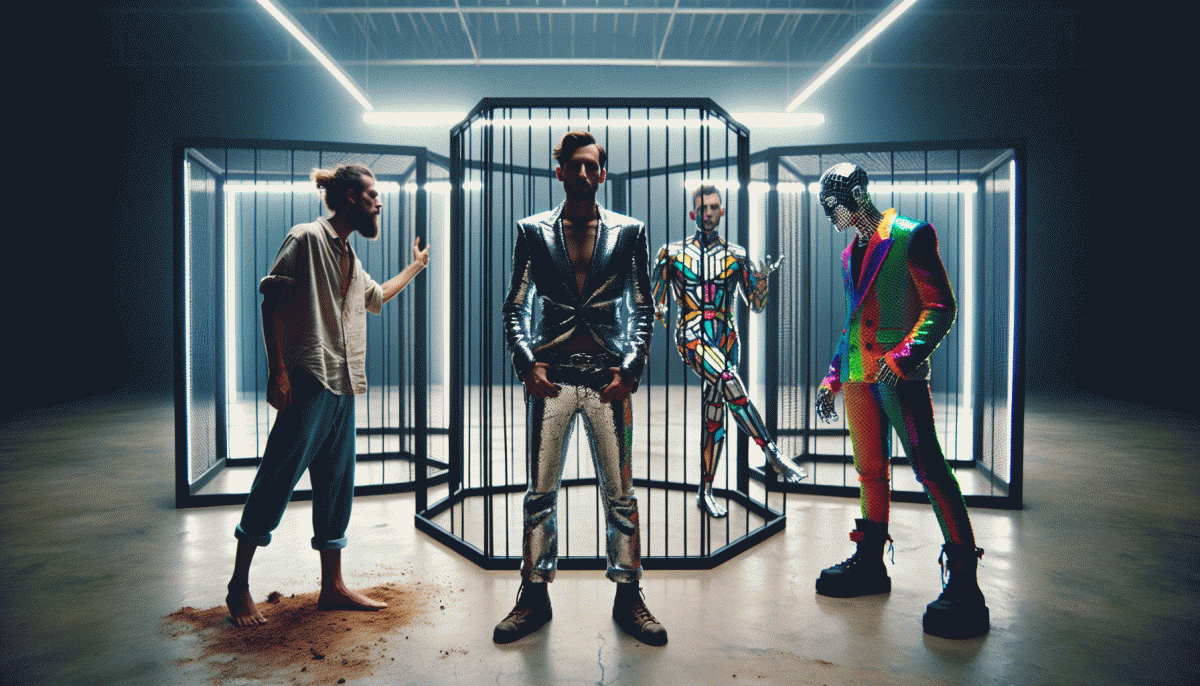
We Ran a Creative Cage Match: Raw vs Flashy vs Weird — Guess Who Won?
Team Raw: Scruffy, honest, and secretly high converting
Think of that one rough-around-the-edges ad that felt like a human talking to another human - not a polished billboard. Raw creative is exactly that: shaky tripod, visible coffee spill, an honest sentence that admits a flaw. It doesn't try to look like a glossy production; it trades polish for personality, and the result is approachable content that feels earned rather than manufactured.
Why does this quietly messier approach win clicks and buys? People crave signals of trust. When a product is presented with small imperfections or candid user footage, viewers lower their guard and start imagining themselves using it. Conversion lifts come from clarity, believable social proof, and simple CTAs. In tests, stripping a script down to a human voice often improves watch time and comment rate - the algorithm loves genuine engagement.
Want to build your own scruffy high-converting spot? Start with a micro-test: film a 15-30 second take on a phone, show an actual problem and the product solving it, and ask one clear question at the end. Use captions, keep sound natural, and cut to the moment where emotion changes. Replace flashy overlays with one bold promise in plain words. Measure clicks, retention, and comments - then iterate.
Treat raw as a toolkit, not a religion. Some audiences need sparkle; many need honesty. Run A/Bs, scale the rough take that outperforms the polished one, and keep the budget light while you learn. The secret is simple: authenticity is cheap to produce and expensive to fake - so lean into the scruff and let realness do the selling.
Team Flashy: Sparkle, motion, and the dopamine trap
Team Flashy is the carnival tent of creativity: glittering visuals, whip-smart transitions, and that sweet short-term rush when a thumb stops mid-scroll. This style wins attention fast by leaning into movement, color, and a soundtrack that feels like a tiny celebration. That burst of dopamine is a tool, not a substitute for substance, and when used with intention flashy work can lift a campaign from invisible to impossible to ignore.
If you want to weaponize sparkle without looking cheap, focus on rhythm and hierarchy. Lead with a single strong motion, then let contrast do the heavy lifting; animate for meaning rather than for show. Use short loops and tight edits so the brain can parse the hook in one glance. Always pair bold motion with a clear action cue, and test one variable at a time: timing, color temperature, or sound level.
When amplification is the goal, consider layering organic reach with targeted boosts so your flashy creative lands in front of the right eyes. For a quick, measurable lift try services that increase social proof while you refine messaging — for example buy Instagram likes now to accelerate traction during testing phases. Use paid boosts to validate concept, then scale the creative elements that actually move metrics.
Remember that high shine can hide thin strategy. Pair flash with one raw element or one weird twist to earn credibility, and set short test windows to measure true engagement, not vanity. If sparkle gets you noticed, let substance keep them. Then repeat, iterate, and enjoy the ride without getting lost in the glow.
Team Weird: Make "wait, what?" your growth engine
There is a powerful growth lever hiding in the odd corners of your creative brief: the "wait, what?" moment. When an idea does a tiny pirouette away from expectations, attention spikes. This block shows how to design deliberate weirdness so that surprise becomes a measurable engine, not a prank.
Start by treating weird as a craft, not chaos. Map the expectation you want to bend, then deliver an unexpected pivot plus a clear payoff within three seconds. Use incongruity, playful rules, and a single emotional beat that resolves into value. Keep production cheap and repeatable so odd experiments do not need boardroom signoff.
Try three bite sized formats to get traction quickly:
- Shock: Turn a mundane headline into a mini-twist so users stop mid-scroll and tag a friend.
- Slowburn: Plant a micro mystery across a few posts that rewards attention with a reveal.
- Rocket: Pair a weird visual hook with a one-line benefit and a clear next step to capture momentum.
Measure everything. Use short A/B tests that compare "weird" vs "safe" on click through, time on content, and comments per view. If engagement lifts with marginal cost unchanged, double down. If confusion rises without conversion, iterate: tweak cadence, tone, or payoff until weird becomes delightful.
Weird is not a stunt; it is a repeatable tactic when it is designed, tested, and scaled. Embrace small, strange bets, learn fast, and let the unexpected be the signal that pulls new people into your funnel.
30 Second Playbook: How to pick the right style for your next launch
Start by treating style selection like a speed-date: you have 30 seconds to decide if the audience likes honesty, spectacle or curiosity. Ask four rapid-fire questions: who is the buyer, how complex is the offer, how risky is the creative, and where will it be seen? If three of the answers lean the same way, pick that flavor and trim the rest — clarity beats cleverness every time.
The raw play is for human-first launches: founder-led products, tight budgets, or communities that prize authenticity. To pull it off, film one tight scene that proves utility, collect micro-testimonials, and repurpose that single take across ads, emails and landing pages. Keep edits minimal, captions clear, and your CTA obvious — raw doesn't mean vague.
Go flashy when you're selling aspiration, need a signal moment, or have a hero product that deserves production polish. Allocate resources to a short hero spot, sound design, and a thumbnail that stops thumbs. Coordinate the creative with a landing experience that mirrors the vibe; flashy creative without a seamless follow-through is just expensive wallpaper.
Weird wins when the category is noisy and predictable: embrace odd hooks that force a double-take, but test tiny first. Launch 3 micro-variants, cap spend, measure share rate and comment sentiment, then scale winners fast. Use the 30-second rule: if you can explain the choice, the metric you expect to move, and the fail-safe in half a minute, you're ready to roll — then commit.
Swipe This: 9 prompts to test tonight on Instagram
Pick your lane and swipe like you mean it. After watching raw, flashy and weird duke it out, the fastest way to learn is to test. These nine Instagram prompts are built to reveal what makes your audience tap, save, and DM — no video effects required, just a willingness to get weird.
1.
Behind the Scenes: Show a quick mess or success moment and ask for a reaction. 2.
Two Truths: Offer two wins and one flop, ask them to guess the flop. 3.
Micro Tutorial: Teach one tiny trick in 15 seconds and invite saves. 4.
Flip the Script: Post an expectation vs reality and ask which is truer. 5.
Choose My Next Move: Present A or B and let votes decide. 6.
Tool Swap: Show two tools and ask which to keep. 7.
Nostalgia Poll: Share a blast from the past and ask for similar memories. 8.
Hot Take: Drop a controversial opinion and ask agree or disagree. 9.
Mystery Close: End a clip mid action and ask followers to finish the story.
Use raw energy to build trust: talk to camera, keep imperfections. Use flashy to grab scalps: bold cuts, color pops, and captions that shout. Use weird to spark DM threads: unexpected sound edits, unusual props, or a tiny surprise at the end that makes viewers rewind.
Test three prompts tonight, measure saves and replies, then iterate. If you want a fast lane to more eyeballs check the best Instagram boosting service for safe, scalable reach and use those insights to refine which style wins on your grid.
Read also
Raw vs Flashy vs Weird: The Creative Cage Match No One Saw Coming

Raw vs. Flashy vs. Weird: We Ran the Showdown—Guess Which Style Actually Wins?

Raw, Flashy, or Weird? The One Style That Crushes Conversions Might Surprise You

Raw vs. Flashy vs. Weird: The Showdown Your Brand Didn’t Know It Needed

We Tested 7 Instagram Post Formats—Guess Which One Crushed Engagement?