
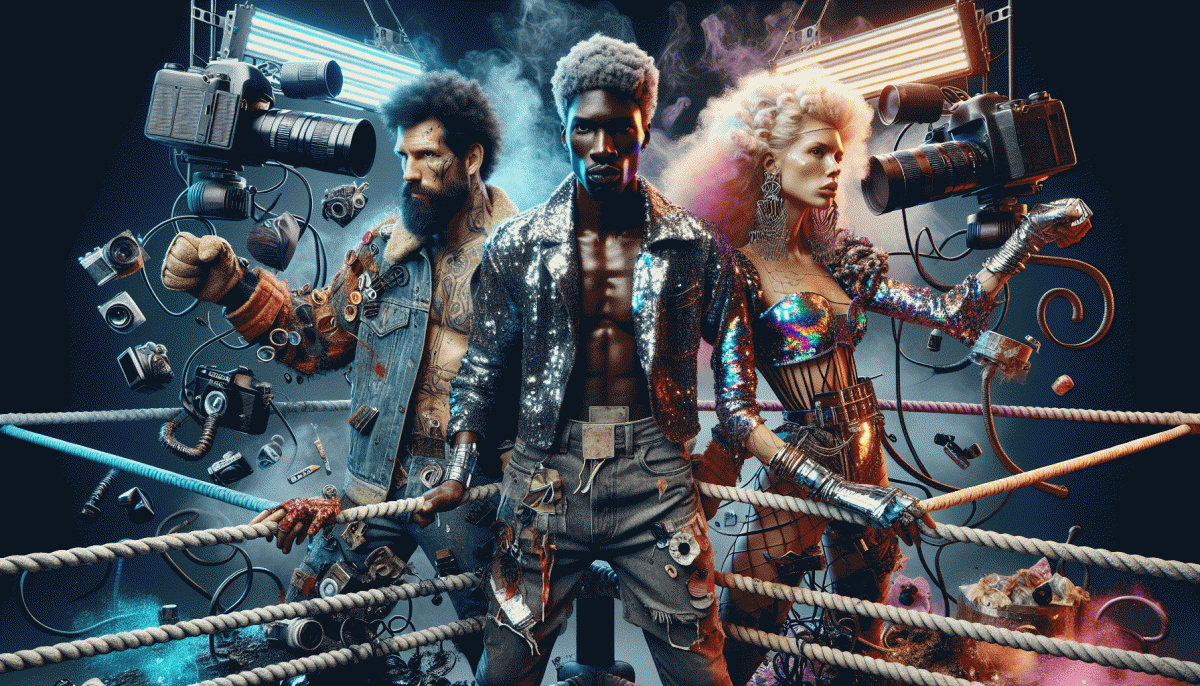
We Ran a Brutal Test: Raw vs. Flashy vs. Weird — and the Winner Shocked Us
The rules of the rumble: what we tested and how we scored it
We forced every entry to run the same short, brutal campaign so comparison felt less opinion and more science. Ninety pieces entered the arena—thirty raw, thirty flashy, thirty weird—and every submission faced identical briefs, budgets, and time windows. Submissions were judged blind by a rotating panel of creators, data analysts, and everyday users, and each had to survive a tiny real-world rollout: thumbnail, caption, and a single push to a secret audience pool.
Scoring was a simple, brutal spreadsheet. Every entry got a 1–10 on five pillars: Authenticity: did it feel human; Craft: production and polish; Novelty: how surprising or memorable; Shareability: likelihood people pass it on; and Retention: did viewers stick around. Those scores were weighted into a 100-point composite (Authenticity 30%, Craft 25%, Novelty 25%, Shareability 15%, Retention 5%) so the winner had to be good, not just loud.
We also stress-tested for real-world fakery: equal impressions across cohorts, time-of-day controls, bot-filtering, and A/B splits against neutral baselines. Quantitative metrics (clicks, watch time, comments) were paired with qualitative notes from judges. If two pieces tied, originality and follow-through won the tiebreaker—ideas that could actually be iterated beat one-off stunts.
What to do with this rulebook: use the weights as a playbook. If you need discovery, favor raw authenticity. If conversions matter, invest in craft. If you want earned buzz, prototype weird ideas fast and measure Novelty and Shareability first. Run tiny, identical experiments and let the numbers (and a few irritated spreadsheets) decide.
Team Raw: grit, honesty, and thumb-stopping trust
Team Raw stops the scroll by refusing to be pretty for the sake of pretty. Think grainy lighting, honest eyes, and lines that feel like a human wrote them five minutes ago. That immediacy creates a tiny contract: what you see is what you get, and people reward that with attention.
Execution is low drama and high intent. Shoot vertical, three angles max, read one tight line and let pauses breathe. Use captions that clarify without explaining everything. Swap overproduced transitions for a single jump cut that says, in one breath, we mean this and we mean it now.
Metrics do the convincing: raw clips often drive longer watch time, more comments, and higher shares because viewers feel invited, not sold. If your brand can be brave enough to be imperfect, it will build thumb-stopping trust faster than polished perfection ever could.
Ready to scale that honesty into growth? Combine these instincts with tools that get results — think honest reach and measurable lifts. Start with a platform that matches the method: fast and safe social media growth and test micro-campaigns that prioritize voice over polish.
Action steps: film four raw clips this week, post two unedited takes, respond to every comment for 48 hours, and keep a simple metric sheet to spot trends. Repeat what works, abandon what feels staged, and enjoy the strange fact that human flaws sell better than flawless ads.
Team Flashy: high gloss, big hooks, and the scroll-stopper effect
We threw everything at the glossy playbook — slick motion graphics, punchy sound design, thumbnail-level drama, and neon gradients that practically scream. Flashy creatives win the three-second war: bold color contrast, jump cuts, and big type that tells a tiny story instantly. In a feed full of sameness, those elements make thumbs stall and eyes lock on longer than youd expect.
Flashy is a top-of-funnel powerhouse: perfect for launches, promos, and anything that needs to break noise fast. Pick one big idea and amplify it — a visual gag, a shocking stat, or a signature sound — then optimize for click-through and short watch time rather than vague impression counts. When deployed on high-velocity platforms like Instagram Reels or short-form feeds, the payoff is immediate.
That said, gloss can backfire. Overproduced spots feel hollow if your brand voice is quiet, and expensive assets age quickly. Cap production costs per concept, run rapid A/Bs against simpler cuts, and sequence your creative — flashy to attract, then raw or weird to build trust. If comments and saves don't follow the initial spike, youre burning attention without converting it.
Quick, usable checklist: 1) craft a 3s hook people can't ignore; 2) commit to a single visual promise; 3) add a sonic cue that repeats across assets; 4) measure CTR, 6s view rate and comments; 5) recycle the strongest frames as thumbnails and short clips. Use flashy like a spotlight — aim it, then hand the audience something real to stick around for.
Team Weird: quirk power, pattern breaks, and brand-safe chaos
When we turned loose the overclocked creatives, the scrappy weird squad did something boring teams dream about: it stopped scrolling. Not with glossy polish or shock-factor stunts but with deliberate oddness — a twitch in timing, a wink in copy, a visual that felt like a private joke. Those tiny anomalies forced a double-take and earned attention faster than any extra spent on production.
The quirk power lives in micro-choices that behave like magnets: one unusual word, a mismatched prop, or cadence that interrupts expectation. In our test those small bets moved engagement more consistently than polishing the same predictable formula. Practical rule: pick one thing to break per asset and lean into the consequence instead of smoothing it away until it's safe and forgettable.
Pattern breaks aren't permission to be random. Swap formats mid-series, punctuate a predictable run with a deliberately odd post, or use timing as a device (drop something that reads like a riddle at 3AM). These moves create attention spikes and shareable moments; measure short windows for lift and capture qualitative reactions rather than waiting for a month's averages to tell you it worked.
Brand-safe chaos is about clear guardrails, not chaos for chaos's sake. Keep your values and core visuals steady; let weirdness live in tone, pacing, or micro-stunts. Create an approval checklist for edge cases, avoid risky topics, and decide in advance what triggers an immediate pull or a minor edit. If audience signals go red, dial the quirk back — don't erase the approach entirely.
Want a quick experiment? Run a 7-day pilot: three control assets, three weird variations, and one wild card. Track CTR, watch time, and qualitative comments; note which oddball element drove the lift. Iterate fast: every weird hit reveals how your audience rewards being human, unexpected, and just a little bit offbeat.
Steal the win: a simple framework to pick your style for the next campaign
Make style selection painless with a three‑axis quick test: Audience tolerance, Channel speed, and Objective clarity. Give each axis a 1–5 score, then add them. The highest total steers your style choice, but do one more trick: subtract 1 point if your audience skews older and add 1 if your brand is already unexpected — that small tweak will keep wild bets from tanking reach.
- Raw: Unpolished, honest, close-up storytelling that trades polish for trust.
- Flashy: High production, clear hooks, great for first impressions and cold audiences.
- Weird: Oddball creativity that sparks shares and fanatic followings when timed right.
Turn scores into action: if Channel speed is high and Objective is awareness, bias toward Flashy. If Audience tolerance is high and Objective is loyalty, favor Raw. If you need to provoke virality, tip toward Weird. If you want a quick test campaign, try a controlled boost from a service like get Instagram reels instantly to validate attention before scaling.
Concrete decision rule: 11–15 = Flashy experiment; 7–10 = Raw play with polish; 3–6 = Weird but tightly scoped. Run three microtests (one for each style) at low spend, measure CTR and share rate at 7 days, then double down on the winner for 70% of your budget and keep 30% for creative iteration.
Final tip: keep the math and the madness separate. Use the framework for selection, then let performance data be the tiebreaker. Treat every campaign like a tiny lab and you will stop guessing and start winning.
Read also

Raw, Flashy, or Weird? The One Style That Crushes Conversions Might Surprise You

Raw vs. Flashy vs. Weird: The Showdown Your Brand Didn’t Know It Needed
Raw vs Flashy vs Weird: The Creative Cage Match No One Saw Coming

Raw vs. Flashy vs. Weird: We Ran the Showdown—Guess Which Style Actually Wins?

Shoppable Content Outside Social: Worth It or Wallet Drain? We Ran the Test