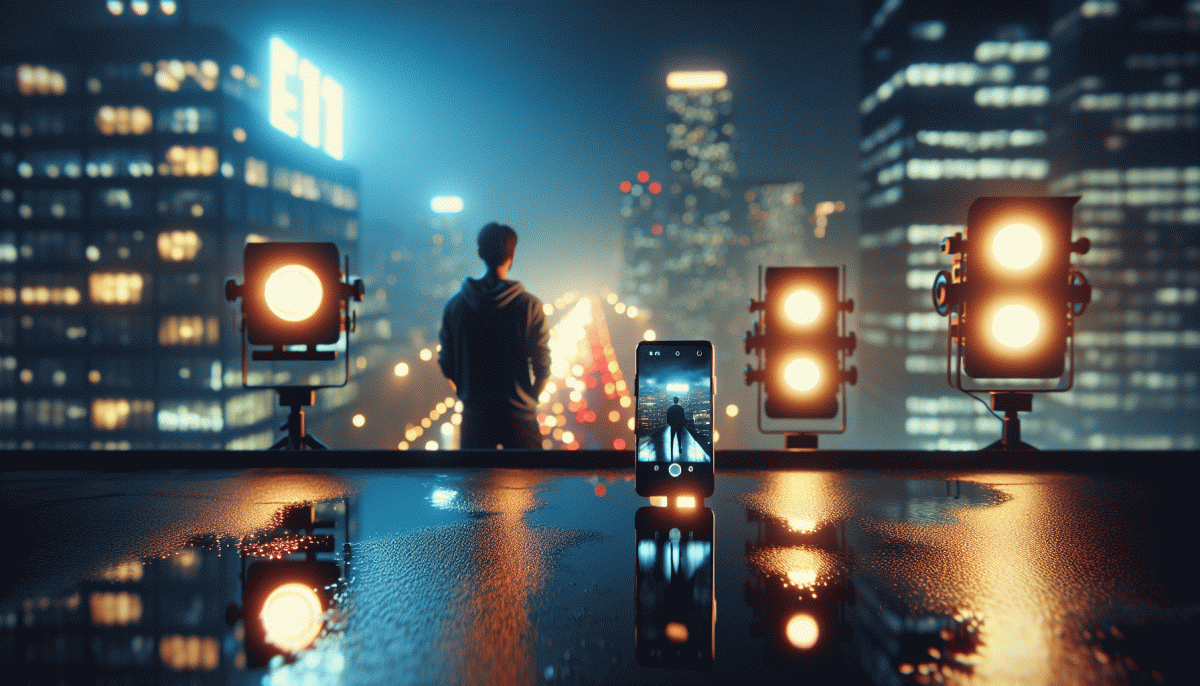
Visual Trends in 2025: You Won't Believe What's Actually Going Viral
Hook in 3 Seconds: Thumb-Stopping Frames That Win the Scroll
In the first three seconds a frame must pull two tricks: stop the thumb and promise a quick payoff. Think of that moment as a tiny movie poster — bold shape, a readable face or object, and one idea that is instantly digestible. If viewers can name what they will see next in a heartbeat, they will hesitate long enough to watch.
Use visual shortcuts that the brain loves: exaggerated contrast, human eyes looking at the camera, a single word in heavy type, and implied motion. Vertical crops demand tight composition; leave negative space where the eye can rest and place your focal interest on the top third. Color pops, not muddy gradients, win the micro glance.
- Composition: Start with a clear foreground subject and simple background so the first frame reads at a thumbnail size.
- Moment: Capture a micro-reveal or emotional beat that hints at a story without giving everything away.
- Copy: Use one punchy word or short phrase in large type to add context and curiosity.
Edit with micro-timing in mind: cut into motion, not static poses; reveal the why by 1.5 seconds; keep the first three frames different enough to register as movement. Swap a muted color for a saturated accent in frame two to create a visual jolt that the brain locks onto.
Make quick experiments: test two thumbnail treatments and three opening beats, then iterate on the winner. Treat frame zero as a hypothesis, not a decoration, and you will convert curious scrollers into engaged viewers.
Lo-Fi Beats High Budget: Raw, Real, and Ridiculously Clickable
Forget polish for a second: audiences are leaning into texture, not perfection. A grainy frame, a bum note in the background, a candid laugh—those tiny human moments stop scrollers more reliably than glossy cinematography. The trick is not to be sloppy, but to be unmistakably human; that rawness reads as trust, and trust clicks.
Algorithms reward attention, and attention is messy. Short, honest clips that feel like they were shot between meetings or between trains rack up more saves and shares than high-budget commercials that try to do too much. Keep the camera handheld, keep the edits abrupt, and let the narrative breathe; this creates a rhythm viewers want to come back to.
Want a quick production recipe that scales? Shoot 15 to 30 second clips, use one natural light source, capture ambient sound instead of perfect voiceover, and trim ruthlessly. Use the same lo-fi audio bed across multiple clips to build recognition, then swap visuals. Small constraints make creative shortcuts that look intentional.
For brands and creators this is a permission slip: launch a backstage series, show author mistakes, demo in real time, and invite followers to duet with messy reactions. Repurpose raw takes into thumbnails, stories, and short-form ads; the unified aesthetic lowers production cost and raises authenticity. Test raw versus glossy and put real metrics behind the gut feeling.
Final, actionable win: create one reusable template for frames and sound, film five imperfect moments a week, and measure saves and watch time. In 30 days you will have a library where imperfection becomes your most clickable asset.
Text on Video = Engagement: Fonts, Motion, and Captions That Convert
If a frame had a voice, the text on it is the megaphone — and in 2025 the megaphone is getting smarter. Treat on screen copy like product design: prioritize legibility over cleverness, aim for high contrast, and size for thumbs. Keep lines short so mobile viewers can read at a glance; if a line forces a second look, you lose attention. Position primary copy in predictable safe zones like lower third or center left for vertical formats.
Choose one strong family and one neutral companion. Variable fonts let you tune weight and reduce load without sacrificing personality. Avoid hairline scripts and ultra condensed types that evaporate on small screens. Use weight and spacing to build hierarchy rather than relying on color alone, and reserve decorative faces for moments that need emotional pop, not the entire message.
Motion should amplify meaning, not mimic fireworks. Time reveals to voice beats, aim for entrance/exit windows roughly 300 to 700 ms, and favor subtle easing for readability. Synchronize text with audio cues to lock ideas into memory, and consider a tiny micro interaction on CTAs to nudge taps. If animation feels like a magic trick, it is; if it feels like glitter, it is a distraction.
Closed captions are conversion tools: most watch muted, and captions boost both comprehension and discovery. Be concise, include keyword-rich phrases, and break lines where the eye naturally pauses. Respect platform chrome, A/B test sizes and motion versus static overlays, and measure CTR, watch time, and retention. Then double down on what moves metrics, not just looks pretty.
Template Culture FTW: Remixes, Duets, and CapCut Cuts That Spread Fast
In 2025 the fastest visuals are not polished epics but playful blueprints: short, repeatable pieces that any creator can stitch into their own voice. Templates act like social duct tape — elastic enough to bend, rigid enough to keep a recognizable pattern. Remixes, duets, and CapCut cuts turn private jokes into public language because they lower the bar for participation.
What spreads is not perfect editing but predictable surprises: a tidy hook, a rhythmic loop, and a blank spot for a personal twist. Keep the audio or motion loop under 6 seconds, leave one clear slot for a caption punchline, and use a visual anchor that reads fast on mute. Those constraints become affordances that speed memetic multiplication.
Practical moves: design one reusable clip with a visual cue, offer an alternate frame for duets, and label each asset so other creators remix correctly. Test variations with small batches and double down on the formats that get duets or overlays. If you want ready templates and examples to prototype from, explore best Instagram marketing service to jumpstart iterations.
Brands that win treat templates like product features: iterate publicly, celebrate community edits, and measure virality in participation not just views. When templates feel like invitations, audiences stop scrolling and start contributing, and that is the shortcut to cultural presence this year.
AI x Aesthetic: Gen Art, Retro Vibes, and How to Keep It Feeling Human
Generative tools have unlocked a mashup that feels both futuristic and familiarly worn-in: synthesized gradients sit next to dust and VHS streaks, and a pixel-perfect poster can read like a thrifted Polaroid. Motion microloops and subtle scanline transitions amplify nostalgic hooks when used sparingly. The real skill is curating machine output so the work still tells a human story and invites repeat engagement.
Start with tight inputs and tactile references. Feed the model curated analog photos, call out film stocks, light direction, and era in a concise prompt, and use negative prompts to avoid clinical smoothness. Combine seed control with model blending to generate deliberate variants, then composite scanned paper, tape hiss, or lens flare in a second pass. Favor texture and intentional imperfections over sterile polish for instant authenticity.
Keep the human in the loop by reserving final edits for hand work: retouch edges, add rough pencil marks, or apply uneven masking to suggest a maker behind the image. Tell a tiny origin story in captions or a before/after frame so viewers sense authorship. Credit collaborators and source media openly; transparency builds trust and turns curious scrollers into fans.
Release fast and learn fast. Publish small batches of variants, A/B test subtle human tweaks, and harvest community remixes as inspiration for the next creative prompt set. Maintain a consistent motif so your voice remains recognizably yours while aesthetics evolve. Automate heavy lifting, curate the soul, and treat surprise as a feature, not a bug.
Read also
Visual Trends in 2026: What Actually Goes Viral on Social Platforms (and How to Ride the Wave)

Visual Trends in 2026: The Eye-Popping Secrets Behind What Actually Goes Viral
Visual Trends 2026: What Actually Goes Viral on Social Platforms

Visual Trends in 2026: Viral Visual Hacks Social Platforms Cannot Resist

Visual Trends in 2026: The Shockingly Simple Secrets Behind What Goes Viral on Social Platforms