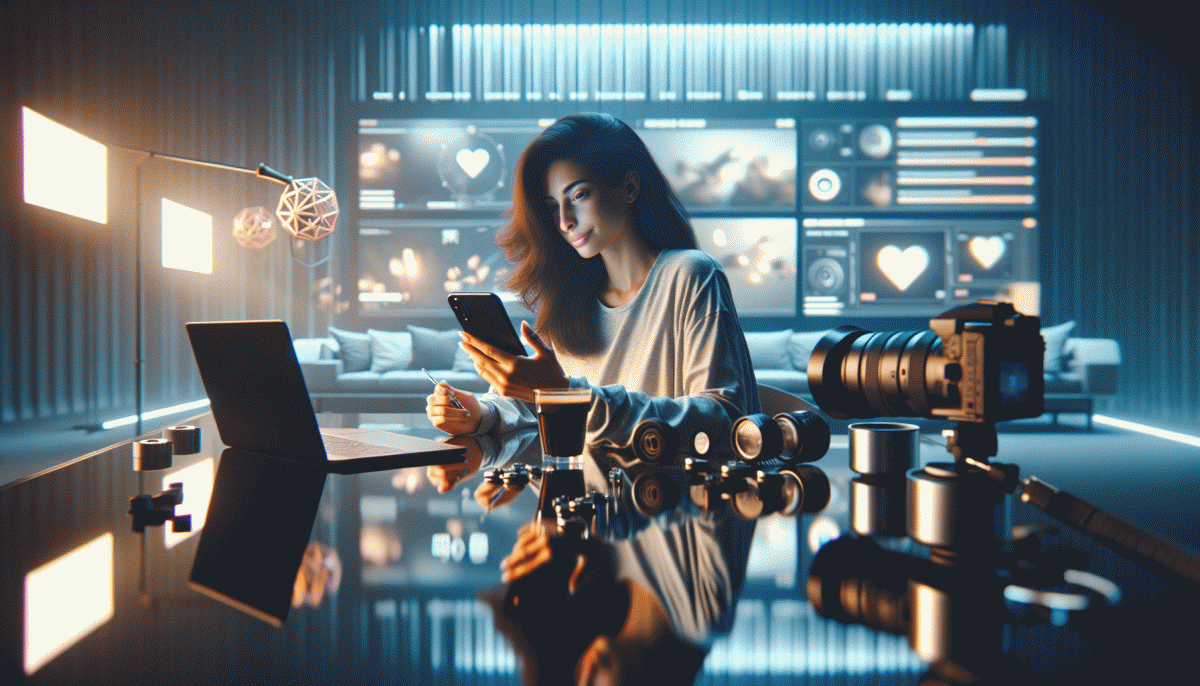
Visual Trends in 2025: The Viral Secrets Social Platforms Will Not Tell You
Hook the scroll: Thumb-stopping visuals that win in 3 seconds flat
You get three seconds. Make them count. Start with contrast and a readable focal point: big face, bold typography, or a motion cue. The eye locks on faces and high-contrast color shifts — design for a thumb-swipe, not a microscope. Use one visual idea, not ten; clutter kills the hook.
A quick, repeatable recipe: open with a micro-story (0.5s) — close crop or moving element; deliver the visual surprise by 2s — unexpected color, motion, or emoji overlay; close with a clear readable caption in the final second. Keep type large, use one brand accent color, and make the composition legible in a 9:16 crop.
Work smarter: shoot a 3–5s loop, export a 1:1 thumbnail plus a vertical version, and add motion in the first frame (subtle push, zoom, or a blink). Test variants fast and learn which visual beats run best for your audience. For lightweight promotion or boosting, try get YouTube subscribers fast to validate what hooks at scale.
Measure watch-throughs and 1–3s retention, then iterate — change color, swap the face, adjust copy. Keep a swipe-file of three winners and riff on them. Make A/B a habit: small changes, big lifts. In short: simplify, shock, and serve a readable story — when the thumb stops, the rest follows.
Color stories 2025: Dopamine brights, rich blacks, and the new neutrals
Palette power in 2025 is less about subtlety and more about strategy: think dopamine brights that stop thumbs mid-scroll, rich blacks that give images cinematic weight, and fresh new neutrals that act like breathable stage sets. Dopamine brights are your emotional shorthand—neon creams, saturated corals, electric lime—used sparingly they trigger curiosity; overuse turns hot colors into noise. Pair them with deep, inky blacks to create contrast that reads premium even on small screens.
Practical playbook: reserve brights for focal points—CTAs, product accents, or facial highlights—then let new neutrals (warm stone, greige, soft clay) calm the eye and hold brand memory. For thumbnails, let a single bright color outline the subject against a neutral plane; for stories or Reels, use animated color pops that land on the beat. Product shots benefit from rich black shadows that sell texture; portraits gain depth when a bright rim light separates subject from background.
Technical rules that actually save time: aim for brights to occupy 10–25% of the frame, neutrals 50–70%, blacks 15–30% depending on mood. Watch contrast ratios for accessibility—text over bright blocks needs proper contrast and simple fonts. Export with slightly softened saturation for video to avoid compression shifts, and keep HSL controls handy so you can nudge tones per platform without rebuilding assets.
Quick experiments to run this week: A/B test a thumbnail with a bright accent vs. no accent, try a caption that references color emotionally ("feel the zing") and compare saves/CTR, and build a template library with variable neutral backgrounds. Trends will move, but dopamine brights backed by rich blacks and steady neutrals give you a timeless toolkit that's equal parts dopamine and discipline—playful, clickable, repeatable.
Face, text, motion: The trifecta behind share-worthy short video
People scroll for faces — an expressive eye-roll, a grin, a moment of surprise. Lead with one and frame it tight: eye level, occupying roughly 60-80% of the frame. That human anchor reduces friction and gets viewers to pause. Quick tip: deliver a clear emotional beat within the first 0.8-1s.
Text is your silent narrator. Use bold, high-contrast sans fonts and large sizing so captions read at a glance. Keep lines under seven words and display each caption for 2.5-4 seconds. Sync the first caption to the hook and include one strong keyword in each caption to help skimmers lock the message.
Motion is the personality dial: micro-zooms, whip cuts, and subtle parallax spark curiosity. Edit to musical beats — aim for 0.3-1.2s clip lengths to maintain momentum, add a 50-150ms crossfade when emotion needs softening, and remove jitter that competes with facial expression. Stabilize and crop for vertical viewing so motion enhances, not hides, the face.
Put the three together like a lab experiment: hook with a face in the first second, layer a bold caption that restates the core idea, then hit a motion accent on the beat. A/B two variables per clip — caption phrasing or pacing — and watch retention at 3s and 10s. Tiny tweaks compound into real viral lift.
AI-made, human-loved: Blend gen AI aesthetics without the uncanny
Think of generative images as a new spice rather than the whole recipe. Start with a human story or small scene that matters, then use AI to amplify mood and detail instead of fabricating the entire moment. Keep scale and context in mind: social feeds reward gestures, small interactions, and honest flaws more than perfect symmetry or maximal polish.
Practical moves that avoid the uncanny include adding tactile texture, micro imperfections, and lens artifacts after generation; dialing back perfect geometry and identical faces; mixing AI elements with a few real photographs for grounding; and choosing color palettes that match human ecosystems rather than sci fi neon. Use subtle motion blur and shallow depth to suggest real optics.
Adopt a human in the loop workflow: iterate prompts, pick variations, then hand tweak in an editor. Run tiny live tests with a sample audience, then measure engagement and comments for cues about believability. For portraits, prioritize expression over novelty and limit stylization to one striking element per image. When captions stay human, visuals feel human too.
Quick checklist to use today: start from a moodboard, generate three versions, composite one with real texture, remove uncanny symmetry, and add a human caption line. Done right, AI becomes a playful coauthor that helps your visuals go viral without making viewers do a double take.
Trends to test now: Mini carousels, lo-fi loops, and meme-native captions that convert
Treat these three moves as rapid experiments you can launch this week. Mini carousels let you pace a story—reveal product specs, reactions, or micro-tutorials across panels. Lo-fi loops turn mundane motion into hypnotic familiarity with grain, imperfect framing, and a steady tempo. Meme-native captions translate your voice into platform slang while nudging a clear next step. Start with one channel and one metric.
Quick experiments to try right now:
- Carousel: Run a 3-panel mini-guide where panel three contains a specific ask (save, DM, shop) and measure swipe-through rate.
- Loop: Test a 3-6s lo-fi loop that ends so it can replay; compare average watch time and replay percentage to a standard clip.
- Caption: Pair meme-native captions with identical creative, vary tone (ironic, utility, curiosity) and track replies, saves, and conversions.
Keep tests clean: change only one variable, run each variant for at least 7 to 14 days, and prioritize engagement quality over vanity metrics. Read comments for intent signals, watch for remixing and shares, and use saves or DMs as conversion proxies when links are hard to measure. Use replay and swipe data to spot formats worth scaling.
Your 48-hour plan: craft one mini-carousel, film one lo-fi loop on a phone, and write three meme-native captions. Ship them, collect quick signals, then double down on whichever increases meaningful actions. Small, platform-native bets now buy the optionality that leads to later virality.
Read also

Visual Trends in 2026: Viral Visual Hacks Social Platforms Cannot Resist

Visual Trends in 2026: The Shockingly Simple Secrets Behind What Goes Viral on Social Platforms
Visual Trends in 2026: 11 Viral Triggers Social Platforms Cannot Resist
Visual Trends in 2026: What Actually Goes Viral on Social Platforms (and How to Ride the Wave)

Visual Trends in 2026: What Goes Viral on Social Platforms (and How to Hijack It)