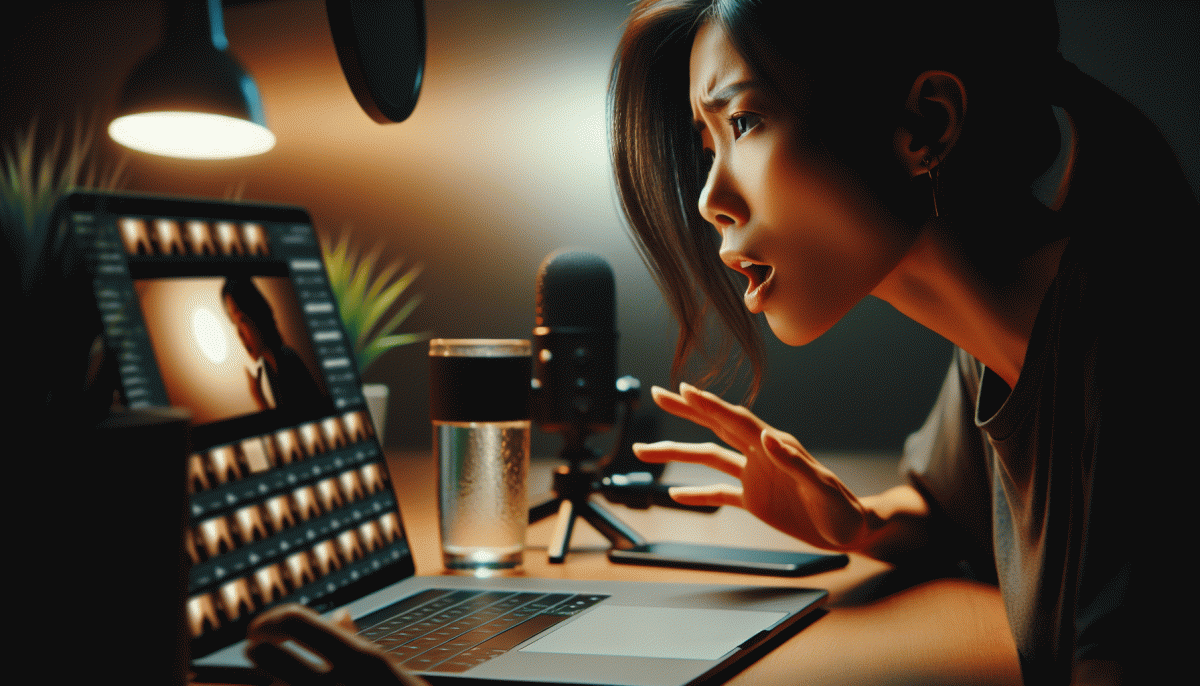
The One Thing That Explodes YouTube Clicks (No, It's Not the Algorithm)
Meet Your Real CTR Engine: The Thumbnail
Think of your thumbnail as the handshake before the date: first impression, immediate trust—or an awkward glance and a scroll. It doesn't whisper to the algorithm; it shouts to humans on a tiny screen. A great thumbnail promises the exact moment of value your title hints at, so people feel silly not clicking.
Focus on the signals that actually move fingers: clear focal point, emotional or curious face, and high contrast that pops on mobile. Use big, readable text—three words max—only when it amplifies the hook. Keep backgrounds simple, faces expressive, and colors tuned so the eye lands where you want it. Negative space is your friend, not wasted real estate.
Make this actionable: design three quick variants, publish the one that outperforms in hour-one CTR, then watch retention for the first 15 seconds. If CTR is high but retention tanks, adjust the promise in the frame or tighten your intro. Swap colors, tweak wording, and repeat—small changes stack faster than a viral script rewrite.
Finally, build a flexible template so your channel looks cohesive without being predictable. Use a tiny logo, consistent type treatment, and always test new bolder ideas alongside the safe one. Treat thumbnails like headlines you can A/B—because they are the real engine that explodes clicks.
Design a Stop-Scroll Hook in 3 Seconds Flat
You get one glance to stop a scroll. Treat that first three seconds like a movie trailer edited for speed: hit with a weird or vivid visual, attach a tiny promise the viewer can grasp instantly, and layer a human cue that signals feeling. The brain locks on to contrast and motion, so choose a bold color, a close up, or a sudden camera movement that reads at thumbnail scale.
Build a micro formula you can repeat. Start with a 0.5 second visual hook, deliver a one line promise in under one second, then show a fast micro payoff or tease the payoff in the remaining time. Use short verbs, a number or time limit, and a face if possible. Faces + eye contact accelerate attention more than any fancy font.
Design assets that back the hook: thumbnail must match the first frame, caption must echo the promise, and sound should underscore the emotion in the first beat. If you want to amplify traction fast, check buy Instagram views cheap to get early momentum while you iterate your creative.
Make it a lab. Test three different hooks on the same title and thumbnail, measure click through in 24 hours, then double down on the winner. Fast iterations on 3 second hooks are the simplest, least technical lever that explodes organic clicks when done right.
Color, Contrast, and Faces: The Click Chemistry
Color and contrast are the thumbnail chemistry set. Bright, saturated hues attract the eye in a busy feed, and strong contrast separates your subject from the background so viewers do not have to work to find the promise of the video. Treat color like a headline: it must speak fast and loud.
Pick one dominant color, one accent, and a neutral to keep the composition readable. Use complementary pairs — cyan against orange or purple against yellow — to create a tiny electric pull that screams click me. Boost perceived contrast by darkening backgrounds, adding a thin rim light, or brightening the face so the subject pops at a glance.
Faces close to camera convert because humans scan for eyes. Use a tight crop, an exaggerated expression, and a clear eye line to direct attention. Test eyebrow raises, open mouths, and glance directions to see what stops scrolling; if you want to accelerate wins, buy YouTube views cheap to gather signals faster and validate which visual combo wins.
Final rule: contrast first, face second, clarity always. Swap clothing tones if skin blends into the background, dial saturation until the thumbnail still reads on a phone, and preview at tiny size. Small visual choices compound into big lifts in clicks.
Title–Thumbnail Tag Team: Write Less, Say More
Think of the thumbnail and title as a micro billboard: one glance, one read, one click. Reduce words until the message is unavoidable — bold emotion or promise plus a single object or number. Make the thumbnail speak loudly with only two or three words and a face or icon that amplifies the feeling; let the title do the heavy lifting for search and context while borrowing the thumbnail's energy. Done well, they create a predictable pattern that signals relevance and earns the click without shouting.
Design thumbnails for tiny screens: giant type, high contrast, simple composition. Eyes and exaggerated expressions draw attention; isolated product shots or a single prop create clarity. Use a narrow palette so the subject pops and avoid cluttered backgrounds. If you overlay text, keep it to a single short phrase in a strong weight and test black or white outlines for legibility. Avoid overused buzzwords and tiny logos that blur into noise.
Titles are the promise and the bridge to retention. Put the keyword early, then add a concise value line: a verb, a number, or a bracketed format hint like [Quick Fix] or [2025]. Aim for roughly 50 to 60 characters so the hook survives mobile truncation. Swap fluffy adjectives for cold verbs: replace "awesome" with "fix", "stop", "save", or "learn". Use curiosity sparingly; give enough to explain the reward and leave just a sliver of mystery so viewers feel compelled to find out more.
Match signals across both assets: if the thumbnail screams 'Save $100', the title should echo the benefit and the tag set should include cash, bargains, and how-to variants. Use tags to broaden discovery with synonyms and longer phrases, then track views and click through rate to iterate. Quick test idea: change a single word on the thumbnail and title together and measure CTR for a week. Small edits stack into big growth; make testing habitual and your channel becomes a machine for predictable wins.
Rapid A/B Tests You Can Run This Week
Think of rapid A/B tests like guerrilla theater for your thumbnails and titles: quick, loud, and revealing. Start by choosing one metric to optimize—CTR is the fastest feedback loop. Pick a video with steady impressions, change only one thing at a time, and give each variant a clean run (24–72 hours) so the numbers can breathe.
Ready-to-run experiments: swap a high-contrast thumbnail for a muted one; test a face close-up versus an object shot; try big, two-word title text versus no text; compare a curiosity-driven title to a benefit-driven title; and record two different 0–15s hooks (promise first vs. tease a story). For each variant, create the alternate asset, swap it in, and watch CTR and average view duration closely.
How to judge winners fast: look for consistent lifts (even +0.5–1 percentage point CTR is meaningful on mid-traffic videos) and check whether average view duration or relative retention moves with it. If results are noisy, repeat the same change on another similar video—science beats superstition. If you have an A/B tool available, use it; otherwise manual swaps plus disciplined observation work fine.
Quick checklist: 1) pick the metric, 2) form a single hypothesis, 3) build two variants, 4) run 24–72 hours, 5) keep the winner. Treat each test like a mini-play: make it bold, measure it, then either keep it in the spotlight or send it offstage.
Read also

The One Thing That Drives Clicks on YouTube (No, Not the Algorithm)

The One Thing That Drives Clicks on YouTube (Spoiler: It's Not Your Video)

The One Thing That Drives Clicks on YouTube (You're Probably Ignoring It)

The One Thing That Drives Clicks on YouTube (Hint: Your Thumbnail Rules the Game)

The One Thing That Drives Clicks on LinkedIn (You're Probably Ignoring It)