
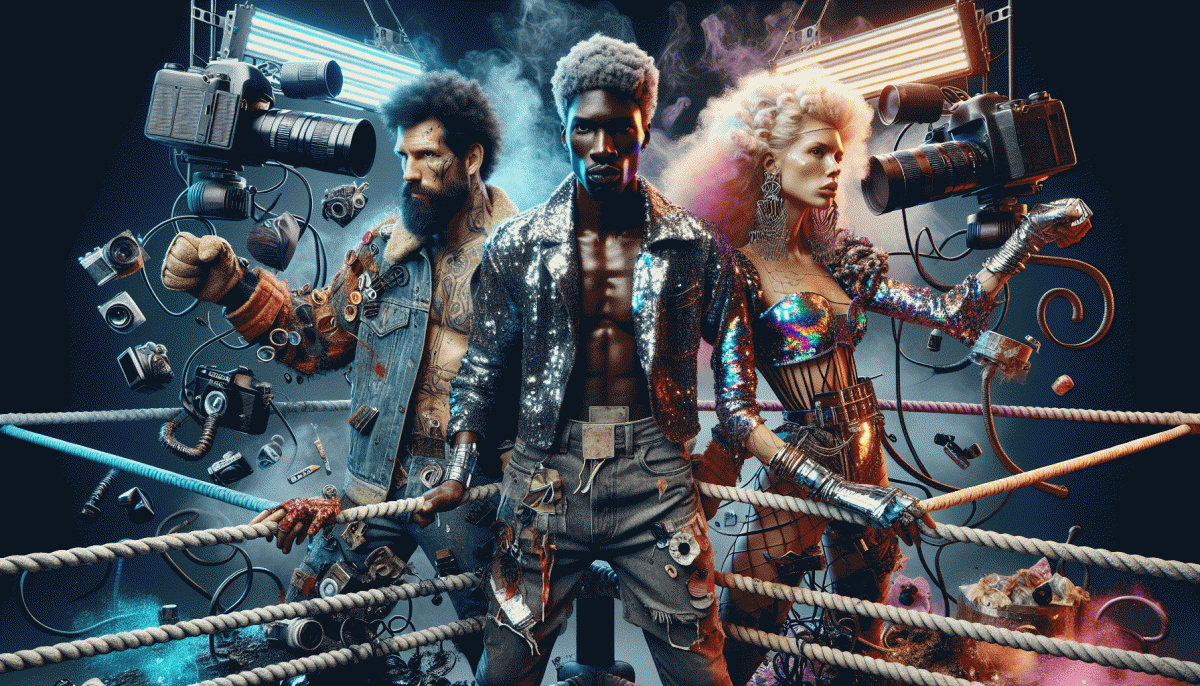
The Creative Cage Match: Raw vs Flashy vs Weird — Guess Which One Actually Wins?
Raw Reality: Why scrappy, unpolished content can beat glossy campaigns
Polish sells in galleries, but raw sells in feeds. A shaky phone clip, a candid screw up, or a half finished sketch invites curiosity because it feels human and repairable. Scrappy content signals that a creator is experimenting, not broadcasting a corporate script, and that invitation to witness the experiment drives stronger behavioral responses. Micro influencers and niche communities reward authenticity with attention, and attention compounds into momentum when people begin to add their own jokes and edits. That organic remixability is what flashy ads often lack.
- Cost: Produce more experiments for a fraction of the spend and find what resonates fast.
- Speed: Ship ideas within hours to catch trends while they are hot and unclaimed.
- Relatability: Audiences bond with flaws more than with perfection, and that bond turns into repeat engagement.
To test the theory quickly, amplify your strongest raw clip where it already lives. Try a simple growth nudge like buy YouTube views today and measure engagement lift before scaling paid creative. Run small A/B tests so you can compare retention curves and comment tone between boosted and organic posts.
Focus on three metrics: watch time, comment rate, and the ratio of saves to views. If a rough edit beats a glossy ad on those, double down and iterate on format rather than polish. Keep experiments cheap, document what changed, and run dozens of tiny hypotheses instead of one big bet. In the creative cage match, grit often outperforms gloss because audiences prefer things that feel like they could happen to them right now. Be brave, be messy, and treat feedback like free research.
Flashy FOMO: When high-production spectacle wins the scroll—and when it flops
High-gloss production can stop thumbs mid-scroll: cinematic cuts, bass drops, custom animation and a hook in the first second. When the spectacle matches the promise and the audience identification, it converts attention into clicks, follows and saves. In short, big polish creates big FOMO—fast.
But spectacle without strategy collapses into noise: expensive visuals that do not answer a viewer question, lack of narrative, or a mismatch with the brand voice. Audiences sniff out hollow flash. If the shiny moment has no follow-through or utility, metrics spike then crater—engagement that costs more than it returns.
Use this quick litmus test before greenlighting a shoot:
- Hook: Does a viewer get the value in 1–3 seconds?
- Relevance: Will your core audience see themselves in the visual story?
- ⚙️ Conversion: Is there a single, obvious next action?
When you want to scale the spectacle but minimize risk, run mini-tests and amplify winners. If you need to accelerate reach for reliable experiments, consider supportive promotion tools like buy Instagram followers today to jumpstart social proof—then invest in creatives that actually hold attention.
The real win is a blend: use flashy production to catch the eye, sprinkle raw or weird elements to build trust, and instrument every asset so you know whether FOMO drove real behavior. Spend on spectacle smartly, and the scroll becomes the start of a customer relationship, not the end.
Weird Works: The science of delightful oddity that boosts recall and clicks
Drop a tiny weirdness into a feed and the brain stops scrolling. That's not superstition — it's expectation violation: when something doesn't fit a pattern dopamine spikes, curiosity kicks in and the ad gets deeper processing. Small oddities play like an attention magnet: a quirky visual, a phrase that feels off, or a sound that makes viewers tilt.
On the memory side, distinctiveness matters. Items that violate a schema are encoded more elaborately and linked to context — which is why people remember the ad and the product. Emotional arousal from delightful surprise strengthens consolidation, so the goal isn't shock for shock's sake but playful mismatch that creates positive affect and recall.
Make it practical: pick one element to bend. Swap expected copy for a tiny semantic twist, give the product a goofy metaphor, or pair clean design with an oddly candid image. Run a short A/B with CTR and 3-day recall as KPIs. If the oddball lifts clicks without hurting conversions, scale. Keep iterations fast and reversible.
Boundaries keep weirdness useful. Always anchor the odd to clear value: the punchline should point to the benefit. Avoid alienating your core audience, and don't overuse novelty. A consistent signature twist — a voice, a color, a visual gag — lets you be weird and recognizable at the same time.
Measure like a scientist: track immediate metrics (CTR, watch time), then run tiny recall surveys or holdout groups to confirm lasting memory. Budget 10–20% of creative tests for odd ideas. If you want a quick win, swap one headline for an offbeat line next campaign and watch how attention, then action, follows.
Fit to context: how channel, audience, and offer decide the champion
Creative style is not a popularity contest, it is a toolbox. Raw energy, glossy flash, and weird charm all win sometimes. The trick is picking the tool that matches where attention lives, how your audience thinks, and what the offer actually does for them. Treat channel, audience, and offer as three dials to tune before you pick a tone.
Start with a simple triage checklist that makes choice fast and repeatable:
- Channel: Match style to platform behavior; short, loud work on rapid scroll feeds, longer builds on watch lists.
- Audience: Identify tolerance for novelty; early adopters will ride weird ideas, conservative buyers want clarity.
- Offer: Let the product dictate proof; premium goods need craft, impulse buys need hooks and quick social proof.
Practical mappings: go flashy on short video platforms when visual wow drives clicks, go raw for community channels where authenticity builds loyalty, and sprinkle weirdness when memorability beats immediate clarity. Always annotate creative with the metric it must move so choice is not aesthetic only.
Final playbook: A/B the style with small bets, measure the offer funnel, then scale what reduces friction fastest. Repeat until the champion emerges, then lean in with confidence and a grin.
Run the experiment: a simple 3-way test to pick your winning style
Start small and think like a scientist: pick one creative idea you care about and turn it into three versions — the stripped-to-bones raw take, the high-polish flashy cut, and the weird left-field remix. Decide your hypothesis: which one will get attention, clicks, or shares? Write a single clear success metric so you're not chasing vanity.
Keep everything else constant: same headline, same length, same posting time, and the same thumbnail or opening frame where possible. Produce the three variants quickly: raw (authentic, minimal edits), flashy (graphics, motion, punchy hooks), weird (unexpected angle, playful risk). Aim for parity in effort so the creative style is the independent variable, not production value or distribution.
Split your audience into equal cohorts and launch them simultaneously on the platform you care about; if you're unsure start with the channel that feeds your business. Track a short list of metrics — primary conversion (views-to-action), engagement rate, and retention — over a set window (48–72 hours for fast social experiments, up to two weeks for longer-form content). Use sample sizes big enough to be meaningful; tiny tests lie.
Pick the winner based on the metric you set, then iterate: borrow the best detail from the runner-ups and run a second round. If results are close, try a hybrid: a flashy frame with a raw voice or a weird hook with polished delivery. Repeat until you've got a repeatable formula, and remember: the point isn't proving a style right once, it's finding reliable creative patterns you can scale.
Read also

Raw vs. Flashy vs. Weird: We Ran the Showdown—Guess Which Style Actually Wins?
Raw vs Flashy vs Weird: The Creative Cage Match No One Saw Coming

We Tested 7 Instagram Post Formats—Guess Which One Crushed Engagement?

Raw, Flashy, or Weird? The One Style That Crushes Conversions Might Surprise You

Raw vs. Flashy vs. Weird: The Showdown Your Brand Didn’t Know It Needed