Steal This Foolproof Playbook for Going Live on Instagram (Without Embarrassment)
Pre-game like a pro: script the first 30 seconds and kill the awkward hello
Think of the first 30 seconds as your handshake — sharp, warm, and impossible to ignore. Start with a 0–5s hook that names the problem or drops a surprising fact, then 5–15s introduce yourself in one human sentence, and 15–30s promise the payoff and tell people why to stay. Memorable formula: Hook → Human Intro → Tease. Use one clear gesture or visual cue to anchor the moment and rehearse until the lines come out like conversation, not a script.
- Hook: Drop a tiny shock or benefit — numbers, a pain point, or a bold claim.
- Welcome: Say name and what you solve in one breath, for example "Hi, I am Alex, I help creators get views."
- Tease: Promise the concrete takeaway in 15 seconds and invite viewers to stick around.
Want a fast way to boost initial reach so your rehearsed opening gets seen? Check this resource: YouTube boosting site — pair it with a pinned comment that repeats your promised payoff.
Now record the 30-second script, time it, and trim any fluff. Practice aloud, watch the recording, and repeat until the hello feels like a high five. When you go live, breathe, smile, and open with that rehearsed hook — awkwardness will not stand a chance.
Lighting, angles, and Wi-Fi: the zero-flop setup checklist
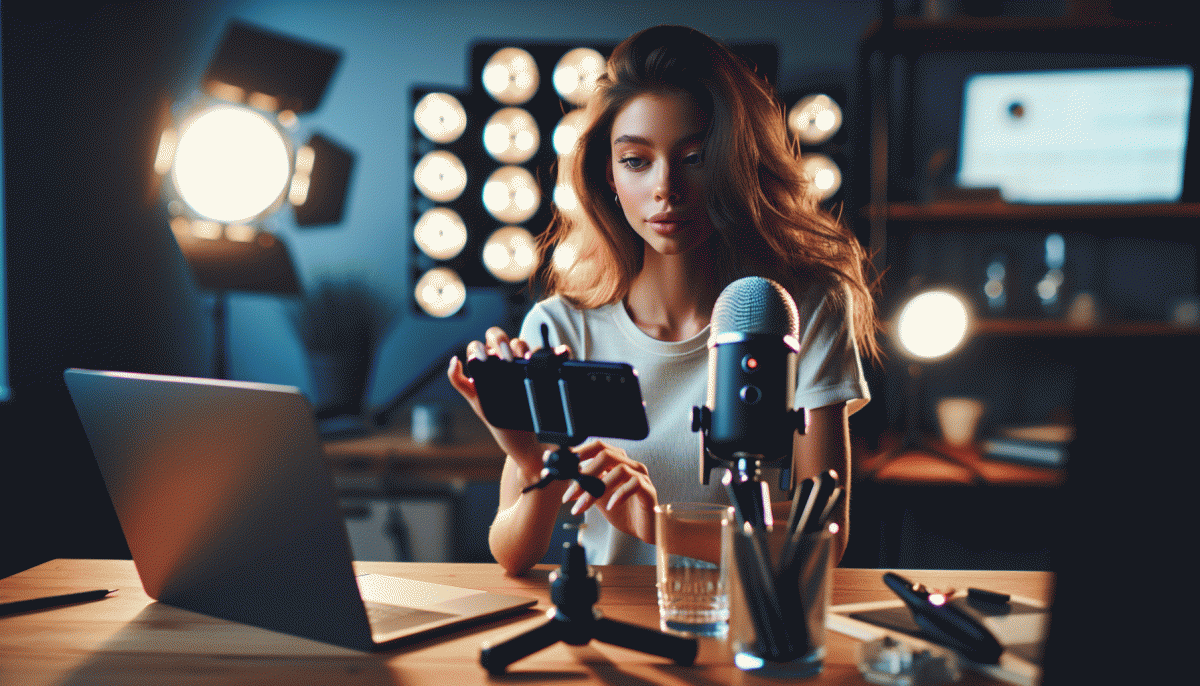
Treat your corner like a tiny studio. Clear clutter, pick a simple backdrop, and set your phone at eye level — pro tip: tape a marker on the floor so placement is repeatable. Use a stable mount or tripod; shaky framing screams nervous more than nerves ever do.
Lighting is your secret mic: soft, even, and flattering. Face a window for natural key light, add a diffuse fill (a lamp with a white sheet works), and avoid bright backlighting that silhouettes you. Match bulbs for consistent color temperature and nudge the light slightly above eye level to banish unflattering shadows.
Angles and framing sell authenticity. Keep your eyes roughly one-third from the top of the frame, keep shoulders relaxed, and aim for a little breathing room above the head. Tilt the camera down a smidge if you want to look more engaged; tilt up and you risk looking like a guest on a roasting show.
Wi‑Fi is the unsung MVP. Run a quick speed check before going live: aim for 3–5 Mbps upload for decent HD. If Wi‑Fi is flaky, use an ethernet adapter or hop on your phone hotspot as backup. Close background apps, enable Do Not Disturb, and plug your device into power.
Finish with a two‑minute run‑through: mic check, quick recording, and a friend watching the stream for comments. Keep a charger, a glass of water, and a backup battery nearby. If lights, angle, and signal are green, you're not just ready—you're set to stop flopping and start shining.
Chat without chaos: prompts to spark comments (and keep trolls tame)
Silence on a live stream feels like a stage flop, but a tiny nudge in chat turns viewers into collaborators. Open with a micro-task in the first minute, promise to read names, and offer a quick reward like a shoutout or an on-air reaction. Those three moves lower the barrier to comment and give polite lurkers a reason to add one line.
Use compact, low-friction prompts that invite an immediate, easy reply. Try Decision Prompt: "Red or blue? Drop a ❤️ or ?"; Tip Prompt: "Share one trick you use for X — best one I steal gets a shoutout"; Hot Take: "Overrated or underrated? Say OVER or UNDER." Keep prompts binary or emoji-based for fast taps, and pin a sample reply so people know what you want.
Taming troublemakers is part craft, part choreography. Have three short scripts ready: Diffuse: "Thanks for that view — let us keep it constructive. What would you change?"; Redirect: "Love the energy, but back to topic — help us solve X."; Enforce: "We keep this space positive — repeated abuse will be removed." Combine those lines with real-time tools: pin rules, enable slow mode, and use comment filters so trolls do not derail momentum.
Save these snippets to a notes app and rehearse them once before you go live. Test which prompt type gets the most replies and iterate next stream. Think of chat like a party game: with the right prompts and a calm moderator script, you get more laughs, more saves, and far fewer headaches.
Real-time value: formats that win: demos, AMAs, Live Rooms, and mini tutorials
Think of a live stream as a tiny stage where value is the only spotlight that matters. If you deliver something people can use right now, watch time spikes and nerves flatten. The easiest wins come from narrowing scope: one product reveal, one troubleshooting session, one fresh angle on a common pain point.
Formats that win are blunt and fast. Use visual proof, direct engagement, and teachable moments that leave viewers with a next step. Try these three power plays during your next session:
- Demo: Walk through a real use case from start to finish so viewers can see results instead of hearing promises.
- AMA: Answer live questions on a focused topic; rapid replies create rhythm and make the audience feel heard.
- Mini Tutorial: Break a skill into three bite sized steps that anyone can copy in five minutes.
Prep like a pro: rehearse a 60 second opener, plan two visuals or props, and set a single measurable goal for the stream. Keep pace brisk, call out viewer names when possible, and end with one clear next move. Do this enough times and live will feel like the easiest place to win.
Smooth exit strategy: close strong and turn replays into evergreen gold
Flip your live from freeform to finish-line focused: set a visible timer for the last five minutes, announce a two‑point recap, and give one unmistakable next step. Repeat that CTA twice in different ways so scanners catch it: once verbally, once typed into chat. A tidy ending feels professional and saves you from awkward fumbling.
Have a closing script ready so your energy stays high even when attention dips. Thank viewers, highlight three quick wins from the stream, then hand them a low-friction action — sign up for the checklist, DM the word for a free link, or tap the pinned replay timestamps. Add a soft deadline to boost clicks and pin that comment immediately.
Don't let the replay sit idle. Within 24 hours slice the session into 30 to 60 second clips with bold captions, export an audiogram for stories, and pull three standalone quote graphics for feed posts. Add clear timestamps and keyword-rich captions so the content ranks and answers future searchers instead of vanishing in your archive.
Make this a repeatable workflow: batch edit, write one caption template to reuse, schedule daily clips for a week, and create a Highlight called Replays. Close every live the same way so your audience learns the ritual, replays gain traction, and your live sessions become evergreen conversion engines.
Read also
Go Live on Instagram Without the Cringe: Steal These Pro Tricks to Wow Viewers

Instagram Live Without the Cringe: The Unfair Playbook They Don't Want You to Use
Live on Instagram Without Embarrassment: Pro Secrets That Actually Work

Steal This $5/Day Ad Playbook: Grow Fast Without Torching Your Budget

Go Live on Instagram Without Cringe: The Shockingly Simple Playbook