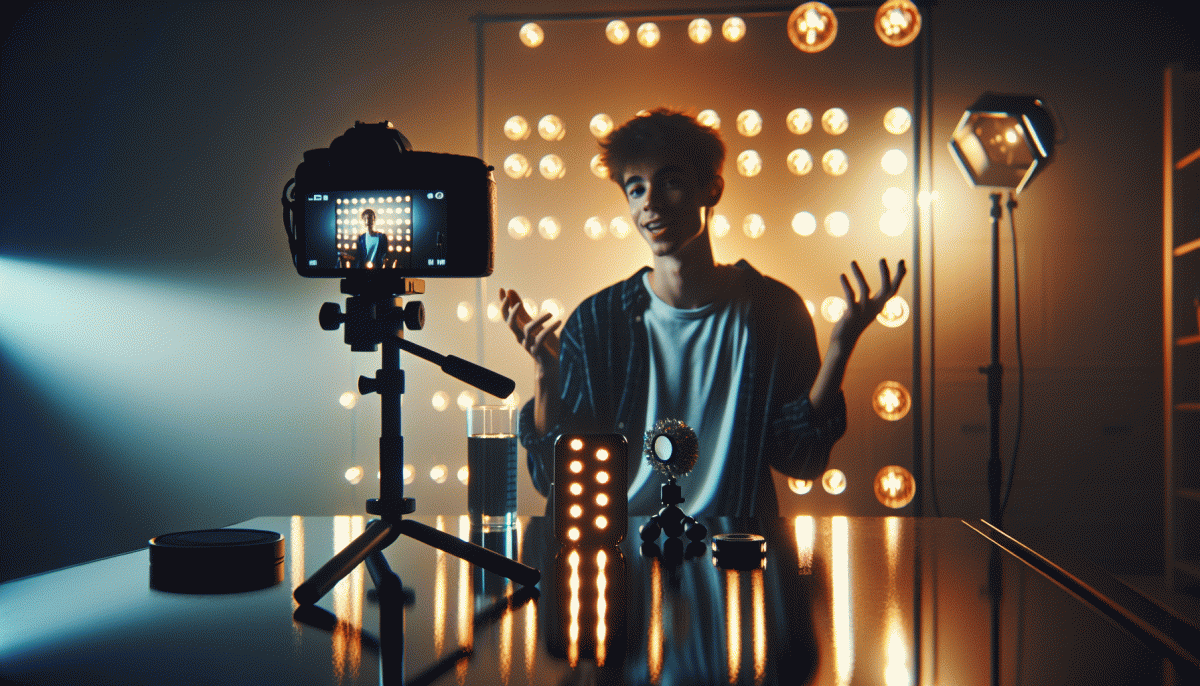
How to Go Viral on TikTok Without Paying a Cent (Even If You're Starting From Zero)
Algorithm Judo: Turn TikTok's For You Page into Your Personal Hype Machine
Think of the platform like a well-trained opponent: instead of shouting louder, you use its momentum to flip attention in your favor. TikTok rewards tiny behaviors — click-through rate, early watch-time spikes, completions, replays and rapid comment threads — and when you design content to trigger those signals, the For You surface does the heavy lifting for you.
Start with a magnet: a 1–2 second hook that promises value or surprise, then deliver within the next 3–8 seconds. Edit for loopability — seamless endings or micro-cliffhangers boost replays — and pick sounds that already have traction. Thumbnails and captions act like tiny billboards; use a short, punchy caption and a clear thumbnail frame so people tap. Test two variations per concept and keep track of which hooks win.
Turn viewers into participants: ask a single, easy micro-ask in the first comment (answer in the next video, duet, or vote), pin the best community reply, and reply with short video responses to spark threads. Use stitches and duets on trending clips to borrow context, post consistently so the algorithm learns your cadence, and cross-seed to niche communities to build concentrated early engagement.
Measure signals, not vanity. Watch completion and rewatch rates in analytics, double down on formats that earn retention, then scale by batching similar concepts and swapping trending audio. Small, repeated experiments beat one-off viral prayers — iterate faster than the trend cycle, and the system will start promoting you for free.
Hook in 1 Second: Thumb-Stopping Openers That Steal Attention Fast
In the first second your viewer decides: are they staying or scrolling? The trick is to give their thumb a reason to freeze—something urgent, weird, or irresistibly promising that lands instantly. Start with motion, a big contrast, or a face right at the lens. If it doesn't hit before the first beat, you've lost them.
Use simple, repeatable formulas.
Result-first: flash the payoff immediately (a before/after, a shocked reaction, or a bold number).
Micro-shock: an unexpected sound + fast cut.
Curiosity cliffhanger: begin with a one-line question that begs an answer. All should be readable in one glance.
Frame for impact: tight close-ups, hands interacting with an object, and negative space that makes a single element pop. Throw in a jump cut in the first 0.6s or push the camera toward the subject to create motion. Keep the background uncluttered so your hook reads even on a tiny phone screen.
Audio is a weapon — start with a punchy sound or a spoken line that begins immediately; pair it with bold captions for sound-off viewers. If your voice appears, make it raw and reactive: 'Wait—look at this!' Face expressions that match the energy amplify retention instantly.
Final sprint: A/B test two hook variations per video, track 3-second retention, then double down on winners. Commit to short experiments, iterate fast, and treat the first second like prime real estate. Nail that thumb-stopper and the rest of the climb from zero becomes a lot easier.
Trendjacking Without Looking Thirsty: Remix, Duet, Stitch Like a Pro
Trendjacking is not theft, it is remix culture with class. The trick is to ride a wave while adding a distinct fingerprint so viewers feel rewarded, not sold to. Think of duet, stitch, and remix as three creative tools: one lets you react, one lets you comment inside the original, and one lets you reframe the audio or visual. Use them to amplify a trend with personality, not to copy and paste someone else's punchline.
Start with these quick rules of engagement and keep your energy fresh:
- Hook: Open with an unexpected visual in the first second to stop the scroll.
- Twist: Add a perspective that shifts the original meaning or makes it funnier, smarter, or more useful.
- Timing: Jump on the trend early and post when creators are still getting traction, then iterate fast.
Actionable steps: pick a trending sound and study the top 6 videos for patterns, then decide whether to duet (mirror energy), stitch (reply sharply), or remix (change the context). Keep videos tight: 8 to 18 seconds often wins; use captions and on-screen text for scannability; start with a clear call to action that is playful, not needy. If you want a quick place to explore promotion options for other platforms while you refine organic chops, check boost Instagram. Track watch time and comment sentiment, not vanity likes, and double down on the micro-formats that keep people watching and sharing.
Final note: treat trendjacking like a lab, not a billboard. Test three variations, keep what gets shares and saves, and do not be afraid to fail fast. With consistent creative risk and smart use of duet, stitch, and remix, you can get organic reach without spending a cent.
Comment Bait That Doesn't Suck: Prompts That Spark Real Conversations
Tired of comment prompts that feel like clickbait-for-the-sake-of-clicks? The trick is to treat the comments section like a mini debate club, not a suggestion box. Offer a clear mini-opinion, a tiny reveal, or a playful dare — something people can answer in one line. Good prompts make it easy to start; your replies make it stick.
Use formats that lower friction: Hot take: opens permission to disagree; Two truths and a lie: invites guesses; Would you rather: forces a choice. Keep language specific to your niche — swap "coffee" for "coding" or "makeup" for "mechanics" — the more niche, the more invested the answers will be.
Don't just drop the question and ghost. Pin a comment that models the first reply, reply to early answers to stoke the fire, and turn the best responses into stitches or duets — that signals value and hooks viewers who arrive later. Timing matters: post the prompt when your audience is active and respond within the first hour to maximize momentum.
If you ever want to experiment with cross-platform growth or scale engagement, check Instagram boosting service for ideas on repurposing comment momentum into followers and traffic. Use tools sparingly and always prioritize real conversation over fake metrics.
Ready-to-use prompts to copy: Hot take: "This trend is dead" — explain; Two truths and a lie: about your niche — guess which is fake; Pick one: A or B — defend your choice; Rate: my idea 1–10 and say why; What would you do: if you had my account for a day? Test three of these in sequence and watch which format consistently brings meaningful replies.
Post Like a Scientist: Free Analytics, A/B Tests, and Timing That Snowball Reach
Think of every upload as a mini lab: you're not begging the algorithm, you're testing hypotheses. Start by defining one clear metric—average watch time, completion rate, or follower conversions—and treat every clip as an experiment designed to move that number. Keep notes, timestamps, and a simple spreadsheet; the cost is zero and the clarity is priceless.
Open the native analytics first: look at traffic source types, audience retention graphs, which second your viewers drop off, and the sounds that dragged people in. Snapshot the top three performing videos each week and reverse-engineer the common hooks, shot lengths, and CTA placements. If something nudges watch time up even 10%, prioritize that variable in your next batch.
- Test: Run two variants of the same idea—different hook or first 3 seconds—and compare retention at 3, 6, and 15 seconds.
- ⚙️ Timing: Post at two candidate windows (same weekday) and log first-hour view velocity to see which converts viewers into engagement fastest.
- Optimize: Keep the winning element, iterate with small changes, and repeat; compounding wins snowball reach without spending a cent.
Make A/B testing low-friction: reuse the same footage, swap a caption or trim of 0.5–1s, and upload as two separate posts spaced a few days apart. Use pinned comments to steer engagement and measure comment growth; a lively comment section signals the algorithm to push further.
Finally, treat momentum like tinder—stoke it immediately. Reply fast to the first wave of comments, post a follow-up or stitch within 24–48 hours, and batch similar experiments so you learn faster. Over time those tiny, free optimizations compound into predictable reach increases.
Read also

How to Go Viral on TikTok Without Paying for It: steal the playbook pros use

Sick of the Same Old Ads? Beat Social Media Ad Fatigue Without Starting From Scratch

Ad Fatigue Is Killing Your Clicks—Here's How to Stay Fresh Without Starting From Scratch

What TikTok's Algorithm Really Wants From You (So You Can Go Viral)

Steal the Spotlight: How to Go Viral on TikTok Without Spending a Dime