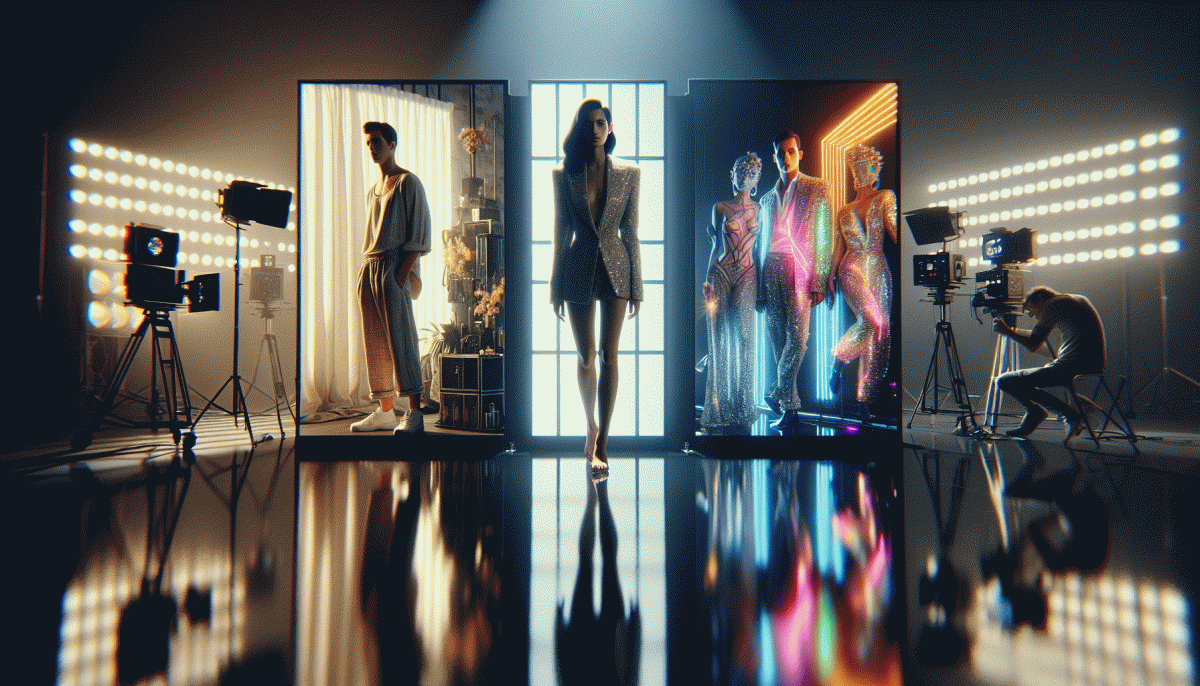
We Tested Raw vs. Flashy vs. Weird—Guess Which One Actually Wins?
The Showdown Rules: What We Measured and Why It Matters
We measured six hard-hitting things: initial click magnetism (did the thumbnail and headline make people tap), watch retention at 15/30/60 seconds, engagement depth (likes versus comments and thread length), shareability velocity (reshares per minute), follower conversion (new subs per view), and a human-rated authenticity score. Each metric reflects a different kind of win — attention, relationship, or action — so our scoreboard is not sentimental, it is strategic.
Our lab was part science, part street test: same script, same runtime, randomized audience cohorts, and normalized spend so creative, not budget, moved the needle. We weighted metrics by outcome: conversions and retention counted more for long-term success, clicks and reach helped identify attention-getters, and authenticity kept us from rewarding empty noise. The method gave us a repeatable rubric, not a gut feeling.
Practically, flashy creatives crushed click-throughs and reach but often saw big drop-offs unless paired with a genuine hook; raw clips held retention and loyalty like a magnetic field; weirdness triggered unpredictable spikes in shares and discussion. Translate that into action: if you want subs, prioritize retention and authenticity; if virality matters, do not be afraid to flirt with weird, then funnel viewers into something real.
If you want to tilt the odds, start by promoting the metric you care about and let data refine the tone. For a quick, targeted boost and smarter A/Bs, try boost YouTube and run short experiments feeding back into your creative loop. No single style wins on every scoreboard; winning means picking the scoreboard first.
Raw: Unfiltered, Unpolished, and Unexpectedly High-Performing
Think of the rough-cut video, the shaky product demo, the candid caption that slipped past the proofreader — these imperfect pieces often punch above their weight. Stripped of polish, they feel human, immediate, and oddly clickable. Platforms reward authenticity; audiences reward relatability. That combination explains why rough work sometimes outperforms slick campaigns.
Raw content triggers cognitive curiosity: micro-surprises, visible effort, and small flaws invite comments and shares. Algorithms amplify signals such as watch time spikes, repeat views, or rapid comment threads, translating into reach. Treat roughness as a feature, not a bug: shorter cuts, unexpected asides, and unfiltered audio can create more meaningful interactions than perfectly staged content.
Try low-cost experiments: film one authentic clip per week and promote it against a produced piece; keep intros under five seconds; ask an open-ended question in the caption; show behind-the-scenes decisions. Track three simple KPIs — engagement rate, view-through, and comment sentiment — and iterate. Small adjustments compound quickly when the content feels alive.
A local maker I know swapped a glossy product video for a Saturday morning live build and saw orders climb. A music promoter posted raw backstage clips on YouTube and grew subscribers faster than with studio teasers. The pattern repeats: people follow people, not perfection. Those experiments cost little and teach a lot, fast.
Give your brand permission to be human. Run a two-week raw sprint: publish three candid pieces, measure what moves, and amplify the best performer. If nothing else, you will learn where your audience prefers honesty over artifice — and that knowledge has value beyond any fancy filter.
Flashy: When Slick Design Converts—and When It Backfires
Flashy design is the velvet rope of the web: it promises exclusivity, grabs attention, and can turn a passerby into a paying customer before they know what hit them. But it only works when the shine highlights a clear value. If the gloss adds confusion, you lose trust faster than a slow-loading hero animation.
When it converts: visuals lead the eye to a single, obvious action, microcopy explains the small risk, and social proof backs the claim. Use high-contrast CTAs, tasteful motion to guide attention (not to hypnotize), and fast-loading assets. If your fancy UI reduces friction, you get higher conversion — every pixel should serve a purpose.
When it backfires: you get spectacle without clarity. Too many options, auto-playing media, or ambiguous icons create cognitive load; heavy assets kill mobile users; matching a startup's playful UI to an enterprise buyer's expectations creates distrust. Fancy is not a substitute for relevance — a pretty page with no promise still leaves people scrolling.
Quick, non-boring checklist: prioritize the primary CTA, measure drop-off points, prune extra animations, and run short A/B tests on headline and hero layout. Optimize for speed with compressed images and critical CSS, and always vet on three screen sizes. If metrics fall, dial down decoration and bring back the message.
Bottom line: flashy can win when it clarifies, persuades, and respects user time. If you're tempted to over-design, ask whether each flourish moves someone closer to the goal. Prefer bold restraint over maximal shininess — then test, iterate, and only add flair when data says it earns its keep.
Weird: The Pattern Breaker That Hijacks Attention
Think of weird as the friendly elbow that shoves people out of auto-scroll. It's not chaos for chaos's sake — it's a deliberate surprise that interrupts patterns, triggers a double-take, and makes a brain invest a few extra seconds. Weird can be visual (an awkward crop), tonal (a joke that shouldn't fit), or structural (a headline that behaves like a cliffhanger); the goal is to create curiosity that feels earned, not random.
Why it works: humans are prediction machines. When an ad or post violates an expectation, attention locks in while the mind reconciles the mismatch. That tension turns passive skimming into active engagement. The trick is calibrating oddness: too tame and nobody notices, too bizarre and readers bail. The sweet spot is recognizable context plus one unexpected element that invites interpretation.
To use weird without sabotaging your brand, start small. Pick one brand rule to break — color, composition, voice — and amplify that single change. Make sure the core message stays legible: novelty is a hook, clarity is the catch. A/B test the odd variant against a control, track CTR and time-on-content, then scale what actually lifts behavior, not just eyeballs.
Practical experiment: flip a product image or write a micro-story that leaves one line dangling — measure shares and comments, not just impressions. If weird becomes a repeatable play in your toolkit, it stops being an accident and becomes a predictable way to win attention. Embrace the tasteful misfit; it's the mischief that moves metrics.
How to Pick Your Winner: A 3-Step Test You Can Run This Week
Ready for an experiment that does not require a PhD, a large budget, or selling your soul to algorithms? Set aside one week, pick equal slots or impressions for Raw, Flashy, and Weird, and treat this like a lab where the only sin is sloppy setup. Define one primary metric up front so you know which victory matters.
Keep the test honest: same copy length, same posting times, same thumbnail style if possible, and only vary the core creative idea. Run each variant at least three times across the week to avoid a single lucky strike skewing results. If you have limited reach, rotate the variants across similar audience slices rather than posting to completely different audiences.
- Hypothesis: Write one line for each style explaining why it should win; this prevents wishful thinking.
- Metric: Choose one KPI — clicks, watch time, comments — and one secondary supporting metric.
- Analyze: After seven days compare averages, engagement rates, and qualitative feedback before naming a winner.
Beware of noise: a 5 percent blip is not a coronation. Look for consistent lifts or a clear pattern across your primary and secondary metrics. If samples are tiny, extend the test another week rather than flipping the strategy based on chance.
When a winner emerges, double down on that flavor and run micro-iterations to amplify strength or blend elements from the runner up. This is repeatable, fast, and low drama — so run it this week and let data, not gut, pick the champ.
Read also

Raw vs. Flashy vs. Weird: We Ran the Showdown—Guess Which Style Actually Wins?

We Tested 7 Instagram Post Formats—Guess Which One Crushed Engagement?

Raw, Flashy, or Weird? The One Style That Crushes Conversions Might Surprise You

Raw vs. Flashy vs. Weird: The Showdown Your Brand Didn’t Know It Needed

Stop Scrolling: Hooks That Actually Work in 2026 — We Tested Them So You Can Skip the Guesswork