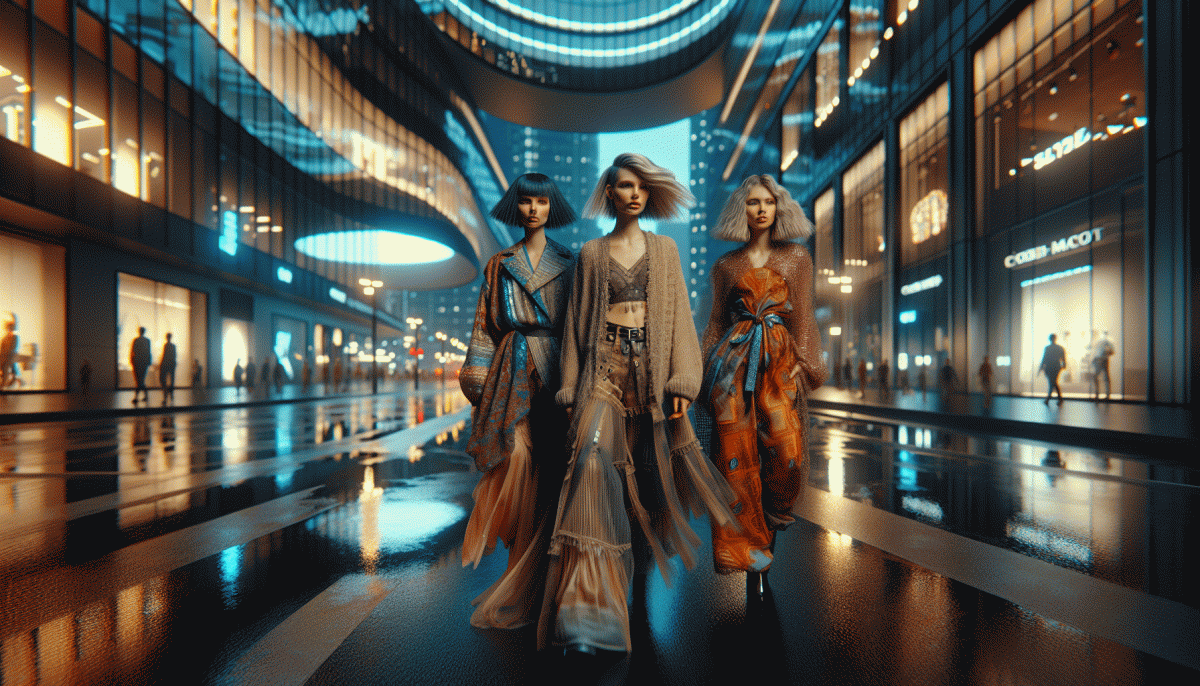
Visual Trends in 2026: The Scroll-Stopping Looks Everyone Will Copy by Friday
AI-Generated Aesthetics Go Mainstream: How to Make Yours Look Human
AI can now paint beach sunsets, product shots, and portraiture that look like a pro did it, but the difference between scroll-worthy and soulless is the human breadcrumbs you leave behind. Start by designing a backstory for the image: who just left the frame, what small imperfection hints at a life lived, and what lighting choice suggests a specific hour or mood. Eyes, posture, and context props are tiny signals that make viewers pause and feel connected.
In the creative workflow, combine text prompts with living references and hands-on tweaks. Use image-to-image to preserve geometry, sprinkle in camera and lens specs, and ask for micro-constraints like slight skin texture or individual loose hairs. Then break the perfect sheen by layering tactile elements in post. Quick practical recipe to try right now:
- Reference: Use 2–5 real photos from a shoot as anchors so poses, proportions, and lighting read as believable.
- ⚙️ Textures: Apply scanned fabric, paper grain, or subtle dust overlays to defeat digital polish.
- Humanize: Introduce tiny asymmetry, motion blur on hands, and imperfect smiles to sell the moment.
Post-production is where the illusion becomes conviction. Push and pull color locally, add film grain at low strength, introduce tiny chromatic aberration or halation, selectively sharpen eyes, and soften skin with local masking. Small compositing touches like a stray hair, a lint speck, or a slightly worn label will convince the brain that this scene was actually touched by a person.
Finish with a lightweight QA loop: compare variants to source photos, A/B test thumbnails and captions, and always keep a human final pass for faces and hands. Scale by templating prompt fragments and swapping reference images to keep variety. Treat AI as a co-creator with habits, not a magic box, and the results will feel made, not manufactured.
Micro-Motion Magic: Loops, Cinemagraphs, and Blinks That Boost Watch Time
Small, deliberate motion is the new visual shock. A half-second ripple, a hair flip that never quite finishes, or a cup of coffee that catches light on repeat: these micro-moves turn passive scroll into curiosity. They feel handcrafted, not flashy, and they coax viewers to pause, rewatch, and actually remember the brand behind the loop. It feels honest and earned.
Loops, cinemagraphs, and micro-blinks each play a different role. Loops reward patience with a seamless restart; cinemagraphs freeze everything but one element, creating a focal whisper; blinks or micro-transitions add personality between cuts. Aim for 2–6 second loops, match easing to the motion, and design loop points so the restart feels inevitable rather than jarring. Match cadence to subject for best effect.
Make them without magic; use simple tools and smart framing. Shoot extra frames, lock the camera on a tripod, mask out motion in Premiere or Photoshop, and nudge timing with speed ramps. For blinks, time a 3-frame gap so the eye perceives a wink. Export H.264 or HEVC with a modest bitrate to keep files light and loops silky on mobile. Use simple apps if needed.
Optimize per platform: vertical 9:16 for short-form, 1:1 for feeds, and crop carefully so the moving element never disappears under UI chrome. Autoplay without sound means movement must tell the story; add a micro-caption as insurance. For ads, set the first frame to look complete alone so users who do not autoplay still get clarity. And guard the safe area from overlays.
Measure what matters: increase in average watch time, rewatches, and completion rate. Quick checklist: Test three loop lengths, Inspect restart smoothness on device, Iterate until the dropoff curve flattens. Start with a single hero asset, then scale winners into a set. Micro-motion is not a gimmick when it is intentional—revise, test, and ship what stops thumbs in their tracks.
Maximalist Color, Minimalist Copy: The Thumb-Stopping Combo
In a feed full of polished thumbnails and polite type, the quickest way to hijack a thumb is visual contradiction: riotous color paired with whisper-quiet copy. A saturated background or a clashing palette gives your creative the emotional jolt; short, spare words give viewers a landing strip. Together they create an instant read — the eye locks, the mind understands, the thumb pauses. That pause is your currency.
Design like you only have one scroll: block-level color fields, generous negative space, and a type scale that reads from elbow distance. Limit your palette to two dominant hues plus a neon accent; treat text as the headline's exhale, not its manifesto. Use a bold weight for the single-line hook and a tiny subhead only if necessary. One actionable rule: make your main line no longer than 5–7 words.
Write with verbs, not adjectives. Microcopy is a muscles-and-money game — one verb, one benefit, one small proof point. Swap 'Discover our range of innovative solutions' for 'Try it risk-free' or 'Save 20% now' and measure the difference. Keep emojis and punctuation selective; they should amplify, not clutter. And never forget accessibility: check contrast ratios and font sizes so your thumb-stoppers can actually be read.
Turn this into experiments: swap an oversaturated palette for a muted variant, then halve the headline; test a single-word CTA against a three-word line; adjust color contrast while holding copy constant. Track micro-conversions, not vanity likes, and iterate based on what short copy + big color actually does to attention. Do it twice a week and you'll have a library of thumb-stopping combos to steal from yourself.
Real People, Real Chaos: Lo-Fi Storytelling That Beats Polished Ads
Forget glossy polish and overproduced scripts — people now stop for honest noise. In 2026 the scroll-stopping moments look like a living room argument, a quick how-to filmed between meetings, or a tiny, imperfect victory caught mid-moment. Lo-fi storytelling gives permission to be messy, human, and therefore memorable; it converts because it feels like something a friend would share. Brands that stage authenticity lose fast, while the ones that let real life breathe win attention and trust.
- Hook: Open with a surprising micro-moment in the first two seconds to force a pause.
- Flaws: Keep a little jitter, a flubbed line, or ambient sound to signal that this was not scripted.
- CTA: Ask for one tiny action — a reply, a duet, a comment — not a long conversion funnel.
Put these pieces where real conversations happen: candid replies and duets on Instagram and short-form feeds, threaded anecdotes on Twitter and Bluesky, behind-the-scenes clips in Stories and Reels. Partner with creators who can improvise; staged improvisation feels off, genuine improvisation convinces. Repurpose the same raw clip into a 15s bump, a 30s cut, and a caption-led native post to multiply reach without adding polish.
Run a rapid experiment: brief three creators with the outcome you want, let them film raw, then measure watch-through, replies, and saves over vanity metrics. Keep briefs outcome-focused, not shot-list heavy. Iterate on what sparks conversation and lean into the chaos — by Friday you will have a handful of authentic winners to scale.
Trend Hacking 101: Spot, Remix, and Ship in Under 24 Hours
Think of trend hacking as a sprint, not a thesis. Start with a ten-minute radar: scan feeds, bookmark three recurring visuals, and save the one swipe-worthy frame you can riff on. Timebox everything—if it's not prototypable in under two hours, shelve it for the next wave.
Remix like a chef: take a signature asset and run three quick experiments.
Palette: swap colors to match a subculture.
Motion: speed up or loop a micro-gesture for hypnotic repeat value.
Context: drop the same visual into a different caption or product frame. Each tweak should be cheap and reversible.
Ship with formats in mind—vertical, thumbnail, and a still for paid slots—so one idea covers organic and ads. Use a simple QA checklist: brand clear at 1 second, caption hooks in 3, and the CTA is obvious. Schedule the strongest cut first, then let data decide which remix earns a second push.
Last mile tips: keep legal checks light (credit inspirations), run tiny A/Bs, and stash templates that make iteration painless. The goal isn't perfection; it's momentum—launch, watch, then remix again before the internet moves on.
Read also
Visual Trends in 2026: Viral Visual Hacks Social Platforms Cannot Resist

Visual Trends 2026: Swipe Stopping Secrets for Instant Reach
Visual Trends in 2026: Steal the Viral Formula Social Feeds Crave
Visual Trends in 2026: 11 Viral Triggers Social Platforms Cannot Resist
Visual Trends in 2026: The Shockingly Simple Secrets Behind What Goes Viral on Social Platforms