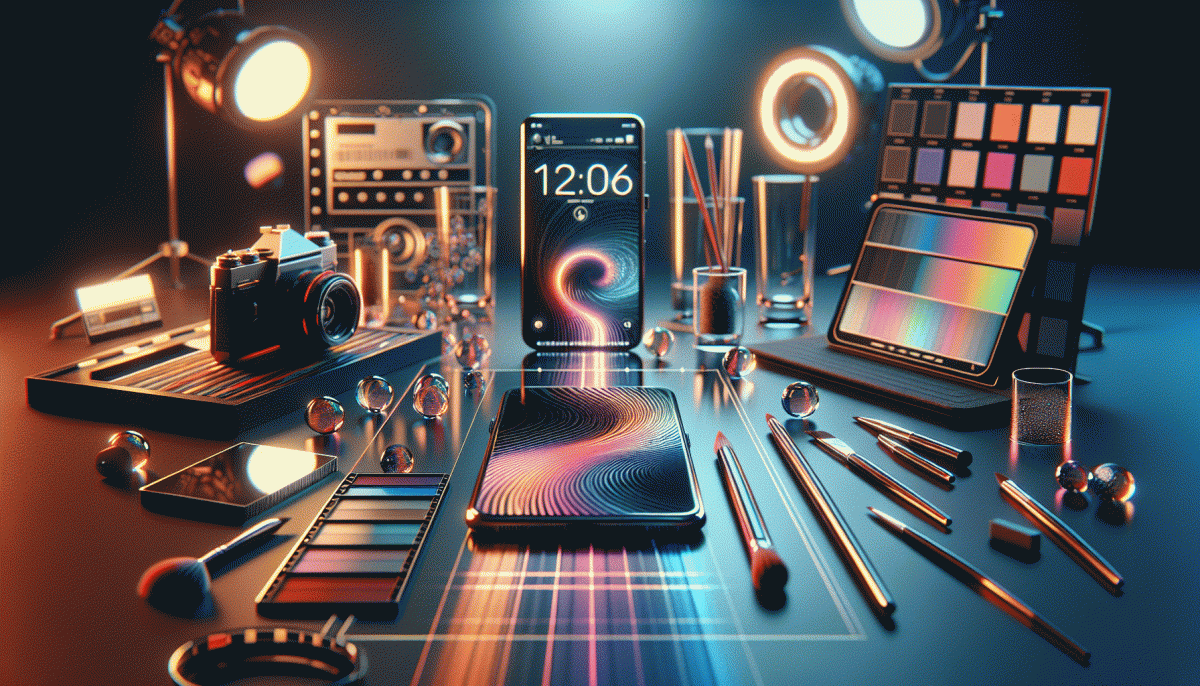
Visual Trends 2025: The Scroll-Stopping Secrets Behind What Goes Viral
Lo-fi vs Pro: Why imperfect visuals feel real and perform better
Forget glossy perfection — audiences are clicking the imperfections. When a frame is slightly askew, a caption is offbeat, or the audio breathes like someone talking in your living room, viewers feel invited rather than advertised. That rawness signals humans behind the camera and, in a feed full of polish, it stops the thumb.
Psychology explains the pull: imperfect visuals lower suspicion and raise relatability. People forgive technical roughness if the story lands fast; social proof amplifies authenticity once real reactions pile up. Actionable moves: shoot vertical, keep scenes short, use ambient light, and let the on-screen voice stumble a bit — authenticity beats forced perfection.
Performance isn’t just theory. Lo-fi clips often earn higher completion rates and more candid comments on short-form platforms because they read like something made for friends, not commercials. Quick test: pair a seven-second raw clip with clear captions and one simple call-to-action, then track saves, replies, and shares.
Still, pro techniques make the difference between charming and messy. Keep audio clear, crop for legibility, and use consistent brand color in titles so lo-fi reads intentional. Treat polish as seasoning: apply professional tools where they amplify emotion, not to erase the human traces that make content scroll-stopping.
Color that clicks: 2025 hot palettes, gradients, and glow effects
Color is no longer just decorative. In a scroll economy full of noise, a deliberate palette can act like a visual headline that stops thumbs. Think of color as voice. Warm, saturated tones shout joy and urgency. Cool, muted tones whisper trust and craft. Combine both strategically to create a push and pull that forces the eye to linger for a beat longer.
Hot combos for 2025 lean toward unexpected contrasts. Try a neo mint paired with a berry dusk for playful sophistication: #A1E3C0 with #7C3B6C. For cinematic depth use deep marine and electric saffron: #0F2B4C with #FFB300. For UI accents, pick a single vivid hue and match it to two neutral supports like warm graphite and soft sand so CTAs leap without clashing.
Gradients are getting tactical, not just pretty. Layered two tone gradients that shift angle on hover create micro motion without video weight. Use diagonal blends for energy and radial overlays to center attention. Example CSS pattern: background: linear-gradient(135deg, #A1E3C0 0%, #6B3B8F 100%); then add a subtle overlay at 10 percent opacity for texture. Duotone duos for images are back and convert static shots into instant brand assets.
Glow effects have moved from neon to nuanced. Favor soft halos and edge glows that lift elements off flat feeds, using box-shadow sparingly: box-shadow: 0 8px 30px rgba(99,102,241,0.18). For accessibility, always check contrast and offer a low motion alternative. When exporting, bake gradients at 8-bit for smooth banding and export glow layers as separate PNGs so they scale cleanly. Small, intentional light makes big viral difference.
Human thumbnails win: faces, micro expressions, and eye contact
Faces stop the scroll because they shortcut decisions. A human thumbnail that shows a real face, even for a fraction of a second, communicates intent and feeling faster than text or graphics. The trick is micro expression work: a tiny eyebrow lift, a half smile, a soft squint can shift a viewer from passive to curious before the caption is read.
- Gaze: Direct eye contact increases connection; averted eyes create mystery.
- Expression: Micro cues beat big grins for authenticity; aim for nuanced, not theatrical.
- Crop: Tight crops on the eyes and nose magnify meaning and translate to higher click rates.
Make it actionable: test three thumbnail variations per campaign, watch 24 hour lift, double down on the winner. For teams that want a shortcut to visibility try combining a winning face shot with a growth push like buy Instagram views fast to get early social proof while organic signals build.
Small adjustments to expression and framing compound. Treat thumbnails like micro ads: iterate quickly, use real human subjects, and let the eyes do the selling. The face may be tiny on mobile, but its impact is gigantic.
Text-on-video that converts: kinetic type, captions, and hook science
Text needs to do the heavy lifting in the first second — a kinetic headline that arrests thumbs and promises value. Lead with a single bold word or short phrase, use high-contrast color and generous tracking, and keep each caption frame readable at a glance. Rule of thumb: no more than a short phrase per 1.5–2.5 seconds to avoid scrollers squinting.
Captions are non-negotiable: they grab silent scrollers, boost watch-time, and help algorithms index dialogue. Use sentence case, one or two lines max, clear sans-serif, and a thin drop stroke or translucent bar for busy backgrounds. Sync text to speech, avoid verbatim errors, and prefer action-first wording — "Watch how we..." outperforms passive copy every time.
Kinetic typography should flirt with motion, not scream. Favor simple moves — pop, slide-in, reveal masks — and keep micro-animations short (≈300–600ms) while larger reveals can breathe for 600–1,200ms. Anchor motion to the viewers eye path and to audio beats; let type point toward buttons or ends of sentences so animation leads to the desired click.
Treat hooks like experiments: A/B test opener copy, caption on vs off, and a 3–5 word CTA that promises immediate benefit. Measure retention, rewatch rate, and CTR, then iterate fast. In short: animate with purpose, caption for everyone, and obsess over the first two seconds — words that move and clarify will convert more than polish ever will.
Format cheat codes: aspect ratios, loop magic, and the three second rule
Think of aspect ratio, loop and the three-second hook as your visual cheat codes. Vertical fills thumbs, but squares still sit pretty in grids; letterbox after the first cut kills momentum. Start with the subject centered, cut to motion at 1.5–2 seconds, and design a seamless 1–2 second loop so viewers hit replay.
- Ratio: Favor 9:16 for Reels and short-form video, 1:1 for in-feed polish — crop for faces, not background clutter.
- Loop: Make first and last frames align: reverse motion, match a color flash, or hide a jump cut behind a blink so the loop feels endless.
- Hook: Lead with a question, a bold visual, or an unexpected move in seconds 0–3 to force that pause-and-watch.
Do fast experiments: export vertical, square, and a trimmed loop, post them staggered, and compare retention at second 3 and second 6. If you want faster validation of what sticks, try buy followers to accelerate social proof — then double down on the format that keeps eyes on screen.
Remember: ratio is a creative lever, not a checkbox. Swap formats early, obsess over the first two seconds, and craft loops that reward a second look. Tiny edits in framing and timing compound into much bigger reach.
Read also

Visual Trends in 2026: The Shockingly Simple Secrets Behind What Goes Viral on Social Platforms

Visual Trends in 2026: The Eye-Popping Secrets Behind What Actually Goes Viral
Visual Trends in 2026: What Actually Goes Viral on Social Platforms (and How to Ride the Wave)
Visual Trends in 2026: What Goes Viral on Social Platforms (and How to Hijack It)
Visual Trends 2026: What Actually Goes Viral on Social Platforms