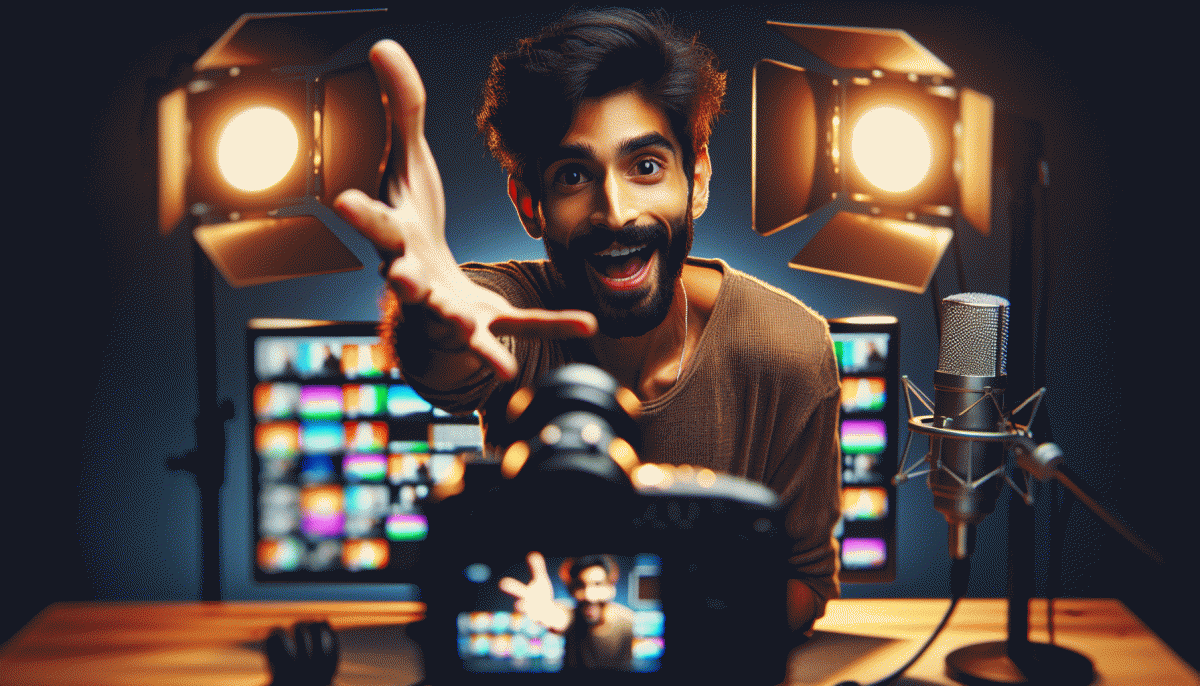
The One Thing That Skyrockets Clicks on YouTube (Creators Miss This Every Day)
The Curiosity Switch: Turn Browsers into Clickers
Flip the curiosity switch and browsers become clickers. The trick is to present a tiny, tantalizing gap: a surprising fact, a contradiction, or a promise of a quick payoff — but not the whole answer. That little itch is what makes people press play, and once you learn to manufacture it honestly, your CTR goes up without clickbait fatigue.
Practical rules: tease one clear unknown, promise a specific outcome, and imply a reveal that rewards the viewer's attention. Use templates that actually work — e.g., "I stopped X for 30 days — here's what happened" or "Nobody told me this about Y." Specific numbers, sensory words, and a clear beneficiary (who gets better?) amplify curiosity and make clicks feel like low-risk bets.
- Hook: One-line mystery that sparks a question the viewer wants answered.
- Thumbnail: Contrast + expression or object that hints at an answer without spoiling it.
- Payoff: Show the reveal within the first 15–30 seconds so viewers feel rewarded, then expand.
Test one curiosity angle per upload: A/B your titles, swap thumbnails, and watch CTR plus first-minute retention. Keep it playful and iterate — curiosity is a muscle you can train — and every small tweak turns passive scrollers into engaged viewers.
Title vs Thumbnail: Why the Pair Beats Either One
Think of the title and thumbnail as conversational partners: the thumbnail waves you over, the title explains why staying matters. When they sync—style, tone, and promise—they become a single, irresistible offer that guides attention and expectation. Most creators obsess over one or the other and miss the multiplier effect of both working together.
Start by aligning emotion and information. Choose one dominant feeling—surprise, urgency, or curiosity—and let both assets echo it. Design thumbnails for legibility at tiny sizes with a single focal subject and high-contrast colors, then write a title that finishes the thought without repeating the visual. Promise a clear payoff, keep the title tight, and avoid vague clickbait that betrays the thumbnail.
- Hook: One short promise—what will change if they watch.
- Contrast: Bold color or expression so the frame pops in feeds.
- Clarity: Two- to six-word readable headline that remains crisp on mobile.
Measure everything. Run quick A/B tests with alternative thumbnails and tiny title tweaks, track CTR plus the first 15–30 seconds of retention. If CTR climbs but early retention collapses, the pair is overpromising; refine the promise until both metrics rise. Use audience signals, not vanity clicks, to decide which pair survives.
Quick wins: add a number, a clear face, or an action shot; bold the text and trim to essentials. Treat the thumbnail and title as choreography—one draws attention, the other seals the decision. Iterate weekly and those extra clicks will stop being luck and become repeatable design.
The 3-Second Promise: Clarity That Sparks the Tap
Think of the first three seconds like an elevator door: if you do not give a clear reason to step in, people keep walking. In video terms this means instantly answering the viewer's subconscious question: "What will I get?" Lead with a promise so tight it is impossible to misunderstand — a benefit, a feeling, or a quick result.
Use a tiny formula: one short spoken line that names the benefit, one visual that shows the outcome, and one overlay that confirms the claim. For example, say "Lose belly bloat in 7 days" while cutting to a real before/after still, then flash a bold text tag. The brain needs proof plus a shortcut to believe it.
Do not be clever at the cost of clarity. Swap puns for plain language, reduce jargon, and compress any setup. Practice a 3-second script until you can deliver it with confidence, then match it in the thumbnail and first frame. Consistency between title, art, and voice is what makes a promise feel believable.
Finally, treat the promise as a hypothesis: test two variations, watch retention at 3-15 seconds, and keep the version that hooks faster. A promise kept is a tap earned; a promise vague is a scroll handed to your competitor. Tweak, time, and repeat — clarity compounds into clicks.
Pattern Interrupts You Can Steal for Scroll-Stopping Thumbnails
Think of a pattern interrupt like a neon sign in a boulevard of sameness: it makes your thumbnail snap a viewer out of autopilot and poke the play button. Most creators tweak titles and thumbnails, but pattern interrupts are the deliberate weird choices—color pops, motion hints, odd crops—that hijack the scroll reflex.
Use these stealable tricks that are fast to prototype and proven to lift CTR:
- Contrast: Slam opposite colors or a bright accent on a muted background so the eye locks in a single glance.
- Odd Crop: Chop a face or object mid-action so the brain wants to complete the story.
- Unexpected Prop: Plop a random item that clashes with the subject—it's a curiosity magnet.
When you build thumbnails, make one intentionally weird version beside your safe option. Use exaggerated expressions, extreme close-ups, and high-contrast borders. Keep text to two words max and treat faces as the hero: eyes + tension = click. Export small A/B tests and watch which pattern consistently climbs CTR.
This stuff is as much science as mischief: iterate quickly, keep a swipe file of interrupts that worked, and clone the strongest ones across topics. If you want a simple rule—disrupt the baseline in the first 0.3 seconds—and you'll stop being background noise and start being irresistible.
Proof It Works: Run a Mini A/B Test and Watch CTR Jump
Think of this like a science fair for your channel: two tiny experiments, one clear winner, and a CTR that spikes while your coffee cools. The trick is to test one variable at a time — thumbnail OR title — not both. Pick a video with steady impressions, design a second thumbnail that changes only one thing (face closer, brighter color, or a bolder text box), then swap it into an experiment slot or upload a duplicate with identical tags and description. Keep expectations realistic: this is about small, measurable gains.
Run the test for a short, decisive window: 48–72 hours if your video gets hundreds of daily impressions, or up to a week for slower channels. Track Impressions and CTR in YouTube Studio, and make sure external traffic sources stay consistent. If you can't use YouTube's built-in experiments, do a manual split — show variant A for the first period, variant B for the second — and compare the CTR per impression, not just raw views. Keep everything else identical.
When you compare results, focus on lift percentage and absolute clicks: a 15–30% relative CTR increase with at least +50 extra clicks is a strong signal for a winner. Don't chase clicks alone — check average view duration and retention. A thumbnail that triples CTR but halves watch time is a false victory. If CTR rises and retention holds (or improves slightly), you've found a scalable tweak that actually grows watch-time-driven ranking.
Once you have a winner, roll it out: update the thumbnail/title across similar evergreen videos, save the assets as templates, and repeat the mini-test on the next target. Keep a simple spreadsheet of hypotheses and results so patterns emerge (colors, face angles, text hooks). Test fast, learn fast, and scale the tweaks that make both CTR and watch time happier — that's how tiny experiments compound into big channel wins.
Read also

The One Thing That Drives Clicks on YouTube (Spoiler: It's Not Your Video)

This One Tiny Tweak Skyrockets Clicks on YouTube

The One Thing That Drives Clicks on YouTube (You're Probably Ignoring It)

The One Thing That Drives Clicks on YouTube (No, Not the Algorithm)

The One Thing That Drives Clicks on YouTube (Hint: Your Thumbnail Rules the Game)