
Stop the Scroll: Hooks That Actually Work in 2026
The 3 second rule: hook them before they blink
Attention spans are tiny and feeds are loud, so the opening beat has to do heavy lifting. Treat the first three seconds like a tiny movie trailer: lead with motion, a human face, or an impossible detail that makes the thumb stop. Visual contrast wins on mute, bold text overlays sell sound, and a single, crisp line of copy gives the brain a promise it wants to keep watching.
Keep production simple and intentional. Start with a clear subject in frame, move the camera or cut to a reaction within the first second, and layer a one-phrase curiosity hook on screen. Use natural sound or an abrupt beat in the audio to create a jolt, but always caption for scrollers who browse with sound off. Swap a static opening for a tiny action and you will see retention lift before you change the thumbnail.
Here are micro scripts to test quickly: "Stop—one trick you did not try," "This will change your 30 second routine," or "I tried the trend and it failed in one way." Lead with a question, a surprising number, or a human confession. Keep verbs active, faces honest, and avoid openers that sound like clickbait. Design three variants per post: curiosity, shock, and utility. Run them against each other for one week.
Measure retention at the 3, 6, and 15 second marks and treat early decay as a creative brief, not a failure. Iterate on entry speed, framing, and copy until the first second gives viewers a reason to stay to second three. Small changes to the opener compound fast; the faster you test, the quicker the wins. Try three micro-variants tomorrow and watch how a better start changes the whole video.
Curiosity gaps, numbers, and shocks: patterns that still convert
Think of hooks as tiny emotional boomerangs: toss a curiosity nibble, a crisp number, or a micro-shock and attention comes back—fast. In a feed crowded with glossy production values, the simplest pattern wins: invite a small puzzle, promise a specific payoff, then deliver a twist that validates the click. Even as formats change, these psychological levers remain the backbone of scroll-stopping copy because brains reward solved suspense and concrete outcomes.
Use curiosity gaps as gentle invitations rather than clickbait traps: pose a question that hints at an unusual payoff, then let a precise number make the answer feel attainable. Prefer odd or specific digits (37% outperforms 40%) and couple them with a tiny shock—a counterintuitive stat, a surprising method, or a vivid metaphor—that reframes what the audience assumed. Place these elements in headlines, thumbnails, and the first line of captions, and vary length: sometimes a 6-word hook, sometimes a 26-word mini-story wins.
- Example: "How I cut our churn 47% with one tweak"
- Tease: "3 counterintuitive swaps marketers ignore"
- Shock: "Why more content tanked our traffic"
Actionable rule: combine two patterns—curiosity + number or number + shock—and A/B them relentlessly. Track micro-conversions (swipes, saves, comments) as early signals and iterate quickly every 24–72 hours. Keep the voice human, honor the promise you made in the hook, and let small, testable surprises be the engine that turns passive scrollers into engaged audiences.
Channel smart: how hooks change for email, landing pages, and ads
Audience attention looks and behaves differently depending on the doorway you use. In one place a cheeky question will flip a switch, in another a single statistic must prove value before the scroll completes. Think of hooks as tiny experiments tuned to the rules of each channel, not one perfect line to copy everywhere.
Email: The subject line is the one shot you get; make it specific, personal, and useful. Combine a curiosity gap with a clear benefit, and mirror that promise in the preheader. Segment so the hook speaks to a real problem for a real group, and test variants that swap benefit for urgency to see what moves opens into clicks.
Landing pages: Lead with an outcome above the fold and back it with proof. The headline must match the ad or email that brought the visitor so there is no cognitive whiplash. Use a microstory or one bold metric, then present a single, impossible to miss CTA. Remove distractions so the hook can do its conversion job.
Ads: Here speed and clarity beat cleverness most of the time. Use striking visuals, a tight hook in the first frame or first line, and platform specific language. Reuse your best micro hooks across channels but compress or expand them to fit format. Always test duration, framing, and CTA wording until you find the shortest path from attention to action.
Video first: first frame, first line, first second tactics
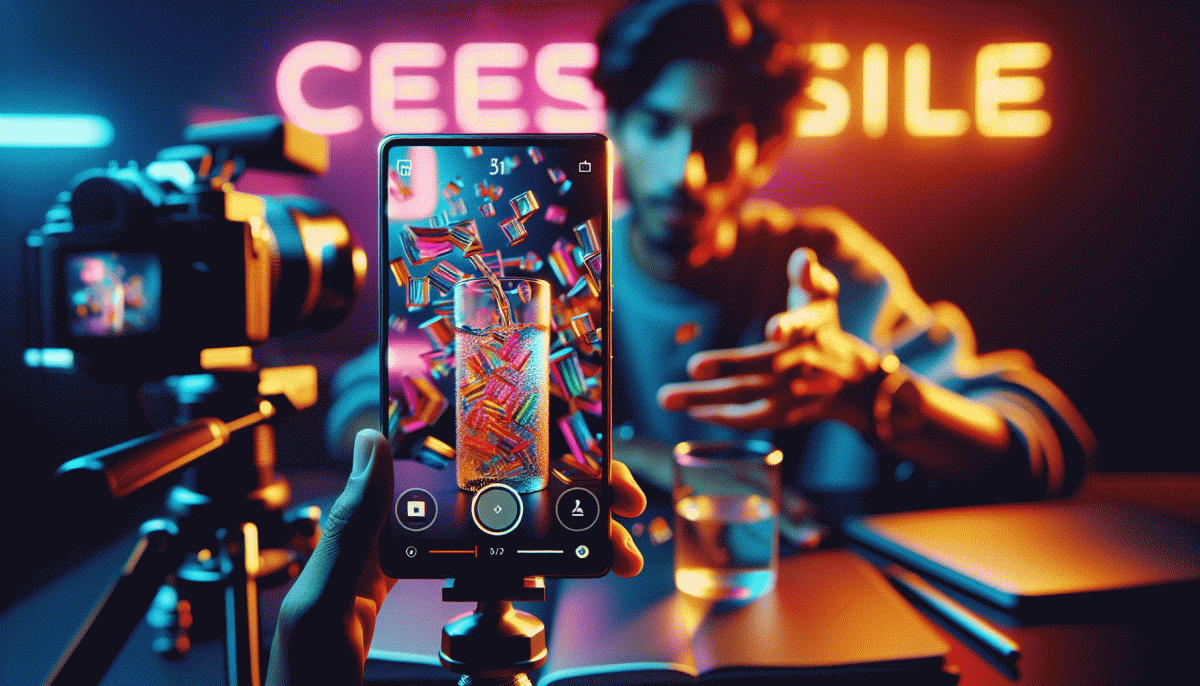
Stop people in their thumb scroll with a visual that hits like a neon sign: big face or object, tight crop, motion in the first frame and a color pop that contrasts the feed. Use the rule of thirds and safe vertical composition so the focal point reads on mobile. Keep logos tiny and introduce the hook visually—action, hands, or a mystery object work best.
The first line — caption or on-screen copy — must be a one-line promise or puzzle. Lead with benefit or a question: Benefit examples: Save time. Get free tips. Puzzle examples: Why is this melting? Who paid for this? Keep it 3–7 words, bold and high contrast, and match the copy tone to the creator voice. Swap slang for clarity when testing broader reach.
The first second equals permission to keep watching. Use an audio ping, a quick camera move, or an unexpected cut at 0.3–0.7 seconds to trigger attention. Sync visual punch with a micro sound for viewers with sound on and add captions for those without. End that first second with a tiny reveal that makes the rest of the video feel like the answer.
Prototype three variations: a face-led frame, a product-close frame, and a curiosity frame, each paired with two one-line hooks. Test them as 3–6 second ads or organic videos and measure clickthrough and 3-second view rate. Iterate fast: discard weak opens, double down on the ones that force the thumb to stop. Keep it simple, surprising, and served hot.
Steal these 12 plug and play hooks for 2026
Steal these lines like you're cutting class—short, sticky, and built for 2026 attention spans.
1. Micro‑Contradiction: Open with a tiny surprise that forces a double-take (e.g., 'I quit coffee and got more energy—here's why').
2. Time-Stack: Promise a crystal-clear timeline ('60s to better focus').
3. Secret Reframe: Flip a common belief into a fresh angle ('Why hustle is the boring part').
4. Social Proof Flash: Drop a rapid stat or short testimonial in the first 2 seconds ('3,421 people tried this').
5. Visual Hook: Describe a vivid image your audience can picture instantly ('the cup that never spills').
6. Tiny Challenge CTA: Ask for one tiny action ('try this for 3 minutes; tell me below').
7. Confession Lead: Start with a short, human slip that builds trust ('I was wrong about X').
8. Comparison Snap: Put two things side-by-side to show a benefit fast ('old way vs. 2026 way').
9. Reverse How‑To: Show what NOT to do, then flip to the right move—easy to scan.
10. Micro-Tutorial: One practical step the viewer can use immediately.
11. Cliff-Wit: End a micro-story with a witty unresolved line that demands the next swipe.
12. Community Pull: Invite a tiny in-group action ('tag the person who needs this') to spark shares.
Use these as templates: swap the words, keep the structure, and A/B test one per post. Pair hooks with a thumb‑stopping visual, keep copy under 18 words, and reuse winners across platforms with micro-tweaks. Steal fast, tweak faster, and track what actually makes people stop.
Read also

Stop the Scroll: The Hooks That Actually Work in 2026

Stop the Scroll: The Hooks That Actually Work in 2026 (Steal These!)

Stop Scrolling: The Hooks That Actually Work in 2026
Stop Scrolling: The Hooks That Actually Work in 2026 (Steal These!)

Stop Scrolling: The Hooks That Actually Work in 2026 (And Why Yours Might Not)