
Stop Scrolling: The One Thing That Drives Clicks on YouTube (Every Time)
Spoiler: It’s Curiosity—Here’s How to Bottle It in a Thumbnail
Curiosity is a tiny psychological hook that short-circuits thumb inertia. In practice that means your thumbnail should promise something specific while keeping the payoff out of view. Create a small mystery with clear stakes so viewers feel a mild cognitive itch: what happens next? That itch is the engine that turns browsers into clicks.
Start by choosing one focal mystery — an object, a face, or a bold number — and strip everything else away. Keep text overlays to 3 or 4 words max and force the brain to fill the gap. Try different micro-promises and measure lift; for quick templates and ordering help check TT boosting.
- Tease: Show half of an action or reaction so the mind completes the scene.
- Contrast: Pair an ordinary setting with an odd object or expression to create visual dissonance.
- Scale: Use a huge or tiny element relative to its context to create immediate questions.
Technically, use high contrast, large readable type, and faces with clear eye direction — eyes that look at the object create a visual path for attention. Favor a simple color pop and negative space so the mystery reads at a glance on mobile. Avoid clutter; confusion kills curiosity.
Finally, treat thumbnails like experiments: run A B tests for 24 to 48 hours, track click through rate and first 15 seconds of watch time, then iterate. Keep a swipe file of winners, copy the structure not the exact image, and remember that bottling curiosity is about withholding just enough information to make people lean in.
Titles That Tease (Without Lying): Crafting the Irresistible Gap
Want people to click without feeling tricked? The sweet spot is a title that opens a curiosity gap — hints at an outcome, not the whole recipe. Think of it as a wink, not a con: invite a question, promise value, and make the viewer feel a tiny itch they must scratch. That itch turns passive scrollers into viewers.
Start with specificity: swap "crazy hack" for "3-minute hack to cut editing time 50%". Use a pivot word — but, until, if — to imply a reveal. Tease consequence over process: "Why most lighting setups fail — and the two tweaks that fix them." Most important: keep your promise. Curiosity works only if honesty follows. Clickbait collapses trust; tease, do not lie.
Use tight formulas you can deliver on. Try "How I [result] in [time]" — e.g. "How I doubled watch time in 7 days"; "The real reason [common belief] is wrong" — e.g. "The real reason cinematic cuts kill retention"; or "X mistakes you are making" — e.g. "3 thumbnail sins lowering clicks by 30%". Swap words, test, and keep the headline and opening 3 seconds aligned.
Final checklist: promise a clear benefit, quantify when possible, hint at a twist, and absolutely deliver. A/B titles for a week, pair the winner with a matching thumbnail, and watch the curiosity gap do the heavy lifting. Tease smartly — and your next title will stop the scroll and earn the play.
Faces, Arrows, and Shocked Eyebrows: Visual Triggers That Pull the Click
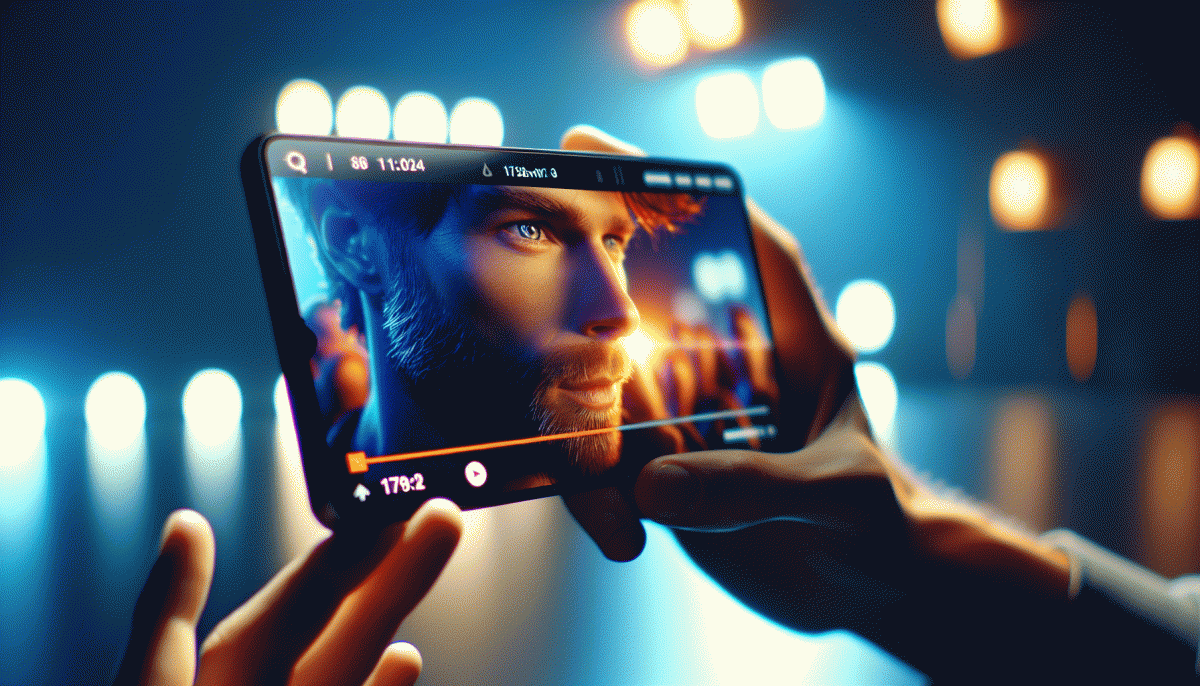
Every thumbnail fight for attention is won in a blink. Human brains are tuned to faces, directional cues, and expressive anomalies; they operate like a built in click sensor. A close face, a pointing arrow, or a pair of shocked eyebrows can convert a skimmable scroll into a decisive tap before viewers even read a title.
Faces do heavy lifting because they signal intent and emotion instantly. Use a tight crop, readable eye contact, and strong contrast so the face reads at mobile size. If the subject looks toward the on thumbnail text or the video element you want to highlight, viewers follow that visual line as if told exactly where to look.
Arrows and other compositional pointers are mini directives. They do not need to be literal: glance lines, hair, light streaks, and colored shapes all count. Keep pointers clean, high contrast, and sized to read at a thumb glance. Overuse dilutes impact; one clear cue beats three competing ones every time.
Practical swaps to test quickly:
- Face: Tighten the crop, increase contrast, and make the eyes readable at small sizes.
- Arrow: Add one bold pointer angled toward the value or subject you want clicked.
- Expression: Amplify surprise or joy with raised eyebrows and a slight mouth opening to trigger curiosity.
Treat thumbnails like mini experiments: change one variable at a time, run until you have a meaningful sample, and track CTR plus the first 30 seconds of watch time. If a click does not translate to watch, refine the visual promise so the content delivers. Small visual tweaks often produce the biggest lift with the least effort.
The Promise-Per-Second Rule: Make Value Obvious in 7 Words
Think of seven words as a tiny contract you make with a scroller: promise a specific payoff and they stop. Make the payoff ultra clear—no mysterious teases, no vague tips—just one crisp benefit they can picture. That single line promise sits in your title, caption, and thumbnail cue; when it clicks, the thumb stops mid scroll and curiosity becomes attention.
Use a tight formula: verb + specific benefit + truth marker. Great examples are obvious and visual: Get cinematic color grading in five minutes. Double YouTube watch time with one title. Fix shaky footage using free phone stabilizer. Stop losing subscribers with one small tweak. Each is seven words and delivers a clear, immediate result instead of hiding behind cleverness.
Step 1: State the outcome first so the brain computes value instantly.
Step 2: Add a qualifier (time, tool, number) to make the promise believable.
Step 3: Trim filler and swap boring nouns for punchy verbs until you land at seven words. Then test: run two variants and watch CTR and average view duration like a hawk; those numbers reward clarity.
Drop that seven word line into your thumbnail copy, the pinned comment, and the very first frame so promise equals delivery. Do not overpromise; if the hook is stronger than the content you will lose trust faster than you gained clicks. Keep the promise honest, honor it in the first ten seconds, and enjoy the small magic of turning scrolls into clicks.
Test Like a Mad Scientist: A/B Your Curiosity Hooks for CTR Wins
Think like a lab rat that gets snacks for clicking. On YouTube the curiosity hook is the scent that draws viewers in. A curiosity hook pairs thumbnail and title to promise an unresolved question or an unexpected payoff. Your A/B mission is simple: find which combination makes people stop scrolling and tap.
Start by defining tight variants. Test a Mystery hook that withholds a key detail, a Benefit hook that clearly promises a payoff, a Specific hook with numbers, and a Shock hook that surprises. Change only the title or only the thumbnail per run so you can isolate what actually moves CTR.
Keep the experiment practical. Run 3 to 4 variants, gather at least 1,000 impressions per variant or test for 7 days, then compare CTRs. Look for a meaningful lift, for example 10 to 15 percent, and avoid overinterpreting tiny differences. Use YouTube analytics or a simple spreadsheet to track results side by side.
Do not ignore tradeoffs. A higher CTR that collapses watch time is a false win. Measure average view duration, retention curve, and subscriber conversion as secondary metrics. If a hook brings clicks but kills retention, iterate with smaller shifts so the thumbnail promise matches the video delivery.
Treat testing like a creative loop. Document hypotheses, record why a winner worked, then scale that pattern across videos. Rinse, repeat, and keep the experiments coming until your curiosity hooks reliably magnetize attention and keep it.
Read also

The One Thing That Drives Clicks on YouTube (Spoiler: It's Not Your Video)
The One Thing That Drives Clicks on YouTube (You're Probably Ignoring It)

The One Thing That Drives Clicks on YouTube (No, Not the Algorithm)

The One Thing That Drives Clicks on YouTube (Hint: Your Thumbnail Rules the Game)

The One Thing That Drives Clicks on LinkedIn (You're Probably Ignoring It)