Stop Going Live to Crickets: Instagram Live Done Right (Without the Awkwardness)
The 10‑Minute Pre‑Live Checklist That Prevents Awkward Silence
Ten minutes before you hit Go, treat the pre‑live routine like a comedian's warm‑up: short, ritualized, and designed to kill awkwardness before it starts.
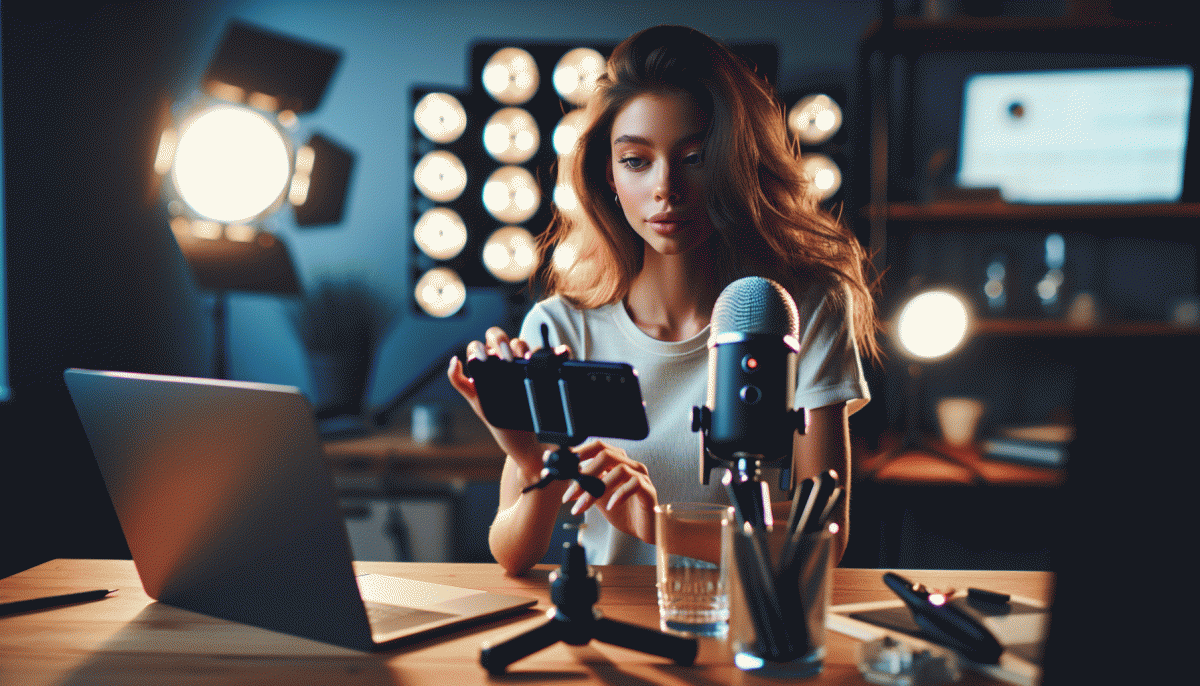
Tech check: confirm you're on the strongest Wi‑Fi or a reliable hotspot, plug in power, close heavy apps, and verify your mic and camera are selected in the streaming app. Do a 30‑second record to check audio levels and framing so you don't discover static mid-sentence.
Stage the shot like you mean it: check lighting, declutter the background, and position the lens at eye level.
Framing: swap that overhead lamp for soft frontal light, avoid backlight that creates a silhouette, clean the lens, and leave a single prop that reinforces your topic. If cohosts join, confirm everyone's setup and agree on how you'll cue each other so talkover chaos doesn't happen.
Map the session in one line: a 60‑second hook, two value chunks, then 5–10 minutes of Q&A.
Engage: prewrite three open chat prompts ('Where are you joining from?', 'Tell me one win this week'), pick two names to call out, and decide your primary CTA. Paste that CTA as a pinned comment and have quick replies ready so you can convert chat into follows, clicks, or signups without fumbling.
Calm the nerves and plan for glitches. Breathe, smile, and say your opener once out loud. Keep a backup device charged, a short troubleshooting checklist, and a DM template to follow up top viewers. Save the recording, note one metric to watch, and promise yourself one tiny improvement for next time — consistency beats perfection, and preparation makes you sound like you've done this forever.
Hook Them in 15 Seconds: Cold‑Open Scripts That Stop the Scroll
Think of the first 15 seconds like a headline on adrenaline: loud, clear and impossible to ignore. Open with a tiny mystery plus a tangible win and you'll stop thumbs. Use a visual that begs a question, say the payoff fast, and give viewers a reason to stay.
Use this simple formula: Shock (one line) + Benefit (what they get) + Micro-CTA (what to do next). Try: "I doubled my DMs in a week — watch these 3 messages." Or: "Stop wasting time on bad Reels — do this for 60 seconds." Short, specific, irresistible.
- Tease: "Free 5-minute audit coming up — I'll call out what you should delete."
- Promise: "One change that doubled views — I'll demo it live."
- Shock: "You're losing followers for this one habit — here's the fix."
Deliver the hook like a headline: chop sentences, flash bold captions, and use a prop or close-up so the camera reads like a poster. Energy matters — smile, vary pace, and use vocal punctuation (a pause or whisper) to make that line land. Subtitles = survival.
Before you go live, rehearse the opener twice, test the thumbnail, pin a reinforcing comment, and A/B your first line across a few streams so you can track retention. Tiny edits to the cold open change whether people stick around or bounce.
If you want more eyes on the stream so your cold open has a real shot, consider buy Instagram followers today as a short-term boost — pair it with a killer first 15 seconds and your retention numbers will thank you.
Chat Like a Pro: Dealing with Comments, Trolls, and Dead Air
Think of your live chat like a party: guests won’t start talking until someone says something interesting. Before you go live, write three starter prompts and pin one as a welcome comment (something like “Where are you tuning in from? Drop your city and an emoji!”). Keep a cheat-sheet of quick replies so you can acknowledge comments without pausing the flow: a short thank-you, a follow-up question, and a one-liner that nudges people deeper into the topic.
Trolls are inevitable, so have rules and backups. Assign 1–2 moderators who know your tone and a three-step response: 1) ignore or delete obvious nonsense, 2) calmly correct misinformation with a fact + source, 3) ban persistent troublemakers. Use Instagram’s comment filters and pin helpful comments to set the vibe. Script a polite defuse line your mods can paste: “Hey there—let’s keep it constructive or we’ll have to move on.”
Dead air kills momentum faster than bad lighting. Build a 5–minute buffer: a quick intro, a two-minute mini-demo, then a live Q&A. If chat stalls, drop a low-effort engagement move: ask viewers to post an emoji for yes/no, run a rapid-fire poll, or give shoutouts by name. Keep a folder of micro-topics (two-sentence takes) you can riff on to buy time while you pull the next segment together.
If you want a fast confidence boost, seed your first five minutes with real engagement so conversation looks inviting from the start. Consider safe, platform-appropriate boosts (like targeted Instagram Live views or activity) to jumpstart interaction while you use the scripts above to convert lurkers into active participants. Little prep + a few strategic moves = no more crickets.
Look Great Live: Lighting, Framing, and Audio That Flatter Without Gear Overkill
Lighting is the fastest glow-up you can give a live stream without buying gear. Face a window or a soft lamp and aim for even, 45° side/front light rather than harsh overhead glare. Diffuse bright sun with a sheer curtain, a white sheet, or even a shower curtain; bounce fill light with a poster board. Lock your phone exposure and avoid mixing warm and cool bulbs so your skin tone looks natural instead of Instagram-filtered by accident.
Framing is your silent director: put the camera at eye level (stack books or use a small tripod), keep comfortable headroom, and nudge yourself slightly off-center for a more cinematic feel. Use the rule of thirds—eyes roughly one-third down—and don't sit too close; a little breathing room makes you look confident. Tidy the immediate background, add one or two depth elements (plant, lamp), and mark a sweet spot on the floor if you move around.
Audio makes or breaks perceived quality. Clip-on lavs are tiny miracles, but if you don't have one, earbuds near your mouth or the phone placed closely will outperform a distant laptop mic. Dampen echo with pillows, a rug, or hanging a blanket; close windows to cut traffic noise and eliminate HVAC hum. Always do a 30–60 second soundcheck at speaking volume, monitor with headphones, and record a local backup on your phone if possible.
Before you hit live, run this quick, under-90-second routine: Lighting: window/front lamp on, diffusion in place.
Framing: eye-level camera, tidy background, mark your spot.
Audio: mic/phone positioned, soundcheck done, notifications off.
Practice: do a two-minute dry run to warm up pacing and gestures. Tiny, repeatable habits like these turn awkward livestreams into relaxed conversations—no production truck required.
From Viewers to Buyers: Natural CTAs That Convert Without the Ick
Think of CTAs as directions, not demands — they guide viewers from "cool" to "I want that" without derailing the vibe. Start with value: show the product doing the thing, answer a live question, or reveal a quick before/after. When viewers feel helped first, asking for the sale feels like a logical next step instead of an awkward commercial break.
Use micro-commitments that fit conversation: ask for a reaction in chat, invite a quick poll, or offer a downloadable trick in exchange for an email. Pin small actions in the replay so passive watchers still have a clear next move. Replace "Buy now" with benefit-forward language — Want this to save X minutes? or Grab the formula I used to get Y— and attach a simple path to claim it.
Have three CTA scripts ready: a soft one for early engagement, a mid-show nudge tied to a demo, and a hard-close when urgency is real. Example lines you can tweak: "If this helped, drop a ? and I'll DM the link," "I'll open 20 spots after the stream — comment 'YES' to reserve," or "Swipe the link in bio for the cheat sheet I promised." Keep wording short, specific, and tied to the moment.
Afterwards, stitch CTAs into the replay, measure clicks and DMs, and follow up with people who engaged. The secret is consistency: predictable, low-friction CTAs build habits and trust, so your next live feels less like selling and more like helping — which is how viewers naturally become buyers.
Read also
Go Live on Instagram Without the Cringe: Steal These Pro Tricks to Wow Viewers

Instagram Live Without the Cringe: The Unfair Playbook They Don't Want You to Use
Stop Guessing: What the Instagram Algorithm Wants From You Right Now
Live on Instagram Without Embarrassment: Pro Secrets That Actually Work
Go Live on Instagram Without Cringe: The Shockingly Simple Playbook