
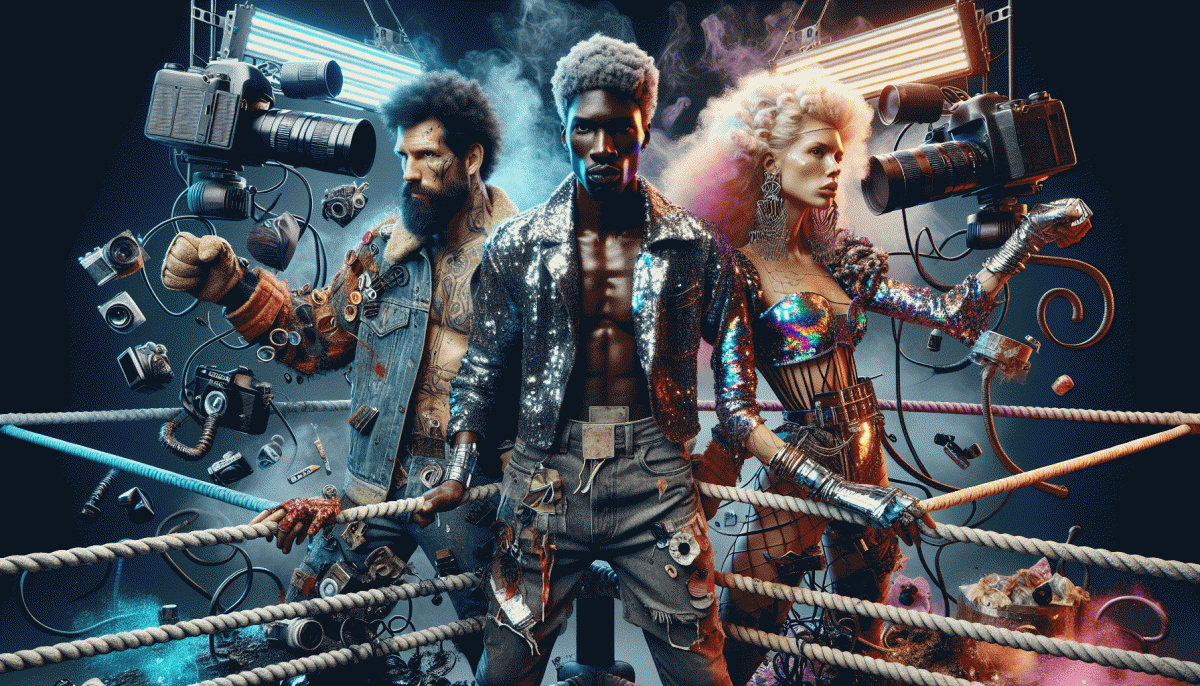
Raw vs. Flashy vs. Weird: You Will Not Believe Which Style Actually Converts
The Case for Raw: Imperfect, Unfiltered, Irresistible
Stop polishing until you erase personality. Raw content throws aside the script — candid camera angles, a mid-sentence laugh, the stain on the mug — and suddenly an audience recognizes a real human instead of a brochure. That recognition is the magic that kicks off conversations, clicks, and the smallest commitment: a follow.
Conversion is not only about glossy production values; it is about perceived honesty. When a creator shows a mistake or an unfinished draft, viewers assign credibility automatically. Use micro-reveals: a one-second blooper clip, a shot of the messy desk, a candid caption that admits tradeoffs. Those tiny authenticity cues lower resistance and boost replies.
Practical playbook: film vertically, keep takes under 30 seconds, stop editing out breaths, and write captions that read like a note to a friend. Add one tangible detail — a real metric, a price confusion, the weird smell from shipping — and invite a reaction with a simple question. Small vulnerabilities invite big engagement.
Measure smarter: track comments per view, saves, and DM requests, not vanity plays. A/B test the same concept in a slick edit versus a raw take for a week; the raw version will often win on conversation rate. If it does not, double down on the specific human detail you left out the first time.
Final challenge: publish one intentionally imperfect post tomorrow. No B-roll, no perfect lighting, one honest line about what flopped — then ask readers a direct question. Expect a messier-looking feed and a clearer funnel. Raw does not mean sloppy marketing; it is a surgical way to make people care.
Flashy That Does Not Fizzle: When Gloss Beats Grit
Some products and campaigns live or die in the first three seconds. In crowded feeds, gloss is not vanity — it is a compression tool that communicates trust, price tier, and desirability faster than a written argument ever could. When gloss wins, you trade texture for speed: a polished visual shorthand that signals value before attention wanders.
Choose high shine when the category rewards status, when the purchase is impulsive, or when you need to out-sparkle competitors who all say the same thing. Look for short attention windows, high CPM environments where creative has to carry the sale, and audiences who buy on vibe. Those are the times grit becomes background noise and gloss becomes a conversion lever.
Make the polish work: bold hero shots, motion in the first second, a color palette that stops the scroll, and a single unambiguous CTA. Test micro-variations: trim the intro, boost the contrast, swap the sound. Measure CTR and conversion lift, not just likes. If you want a quick distribution boost to test glossy creative, try get Instagram followers today to accelerate social proof during the experiment.
Remember: polish without purpose is lipstick on a billboard. Use gloss to amplify a simple, compelling proposition and then iterate fast. If the metrics rise, scale the shine; if they do not, pull the polish back and let substance lead the next creative round.
Getting Weird on Instagram: Why Odd Hooks Stop the Scroll
Attention on Instagram is a currency and odd hooks act like counterfeit bills that somehow pass everywhere. Instead of another glossy product shot or a tidy caption, try a tiny bit of wrongness: a misplaced prop, an offbeat caption rhythm, or a beat that makes the ear tilt. The aim is not to confuse the audience; the aim is to interrupt autopilot scrolling so curiosity can convert into a tap, a save, or a follow.
Start with small, measurable strangeness and pair it with clear value. Try these low friction ideas to stop the scroll and invite interaction:
- Shock: Drop an absurd detail in frame that forces a double take — then explain why it matters in the next clip.
- Curiosity: Begin with a line that makes people ask How? or Why? and promise the reveal within three seconds.
- Oddity: Use mismatched audio or a deliberately awkward edit to create a break in pattern that feels shareable.
If you want to amplify early tests faster, pair weird hooks with targeted reach boosts like buy fast Instagram followers to seed social proof and speed learning. The most actionable rule is to run micro experiments: test one strange element at a time, measure retention and swipe behavior, then double down on the version that keeps people watching. Keep it playful, keep it measurable, and do not be afraid to get a little weird.
Mix and Match Playbook: Blend Styles Without Blurring Your Brand
Think of your brand like a band: one lead singer, a tight rhythm section, and occasional wild solos. Decide which role the lead plays — the sincere storyteller, the visual showstopper, or the eccentric wildcard — then let the others play supporting parts. That gives you a dominant tone for every campaign and prevents the visual and verbal equivalent of elevator music trying to be a drum solo at the same time.
Operationalize mixing with three simple rules so your mashups feel intentional rather than messy:
- Baseline: Reserve one immutable element — a voice line, CTA style, or logo lockup — and never change it across variants.
- Pace: Use slow, raw captions to offset fast, flashy edits; contrast keeps attention without erasing identity.
- Boost: Drop weird moments as high-impact accents, not the whole song: one visual curveball per creative.
Turn rules into routines: build templates that mix a primary style with two allowed accents, train creatives with before/after examples, and arm media buyers with exact specs. When you need a quick plug for creative services or a shortcut to test combos, follow the curated path at brand TT boost to bootstrap experiments and avoid reinventing the wheel. Finally, measure what matters — lift in conversion, not just likes — and iterate fast. If a blend loses conversion, remove an accent rather than rewrite the whole song; small edits usually rescue big ideas.
Battle-Tested Framework: A/B Experiments to Pick a Winner Fast
Think of A/B as low-stakes duels where two creative gladiators fight for the conversion crown. Start with a crisp hypothesis: what about a raw, behind-the-scenes cut; a glossy hero shot; or a deliberately odd hook should move a metric? Keep variables narrow — test headline, image, or CTA, not all three at once — so results stay interpretable and fast.
Set the math before launch. Choose a single primary metric (CTR, conversion rate, saves) and estimate a realistic sample size. For quick signals aim for 500–1,000 impressions per variant; for conversion tests aim for 100–300 conversions combined before making calls. Predefine what counts as a win and log cohort sizes so you know when a lead is real and when it is noise.
Make stopping rules your friend and avoid heroic guessing. A common threshold is p-value < 0.05, but for speed consider pragmatic rules like sustained lift over your minimum detectable effect for multiple days or a Bayesian credible-interval approach. Keep a running dashboard, but beware peek bias: checking too often inflates false positives; instead set fixed checkpoints.
When you need a definitive signal fast, ethically amplify traffic to your test cells rather than fudging data — for example, get Instagram followers fast to accelerate exposure for a creative that needs reach. That is a turbo to shorten cycles when market speed matters, not a replacement for solid creative design and proper controls.
After declaring a winner, run a validation and then operationalize the asset: document the hypothesis, tag creatives with date/test and segment, store results in a shared playbook. Treat each result as a hypothesis about audience taste and stack those micro-wins into rules that tell you when to go raw, when to go flashy, and when to get weird next time.
Read also

Raw vs. Flashy vs. Weird: We Ran the Showdown—Guess Which Style Actually Wins?

Raw, Flashy, or Weird? The One Style That Crushes Conversions Might Surprise You

Raw vs. Flashy vs. Weird: The Showdown Your Brand Didn’t Know It Needed

Buying Attention: The No-BS Playbook for Boosting, Influencers, and Paid Leverage That Actually Converts
Raw vs Flashy vs Weird: The Creative Cage Match No One Saw Coming