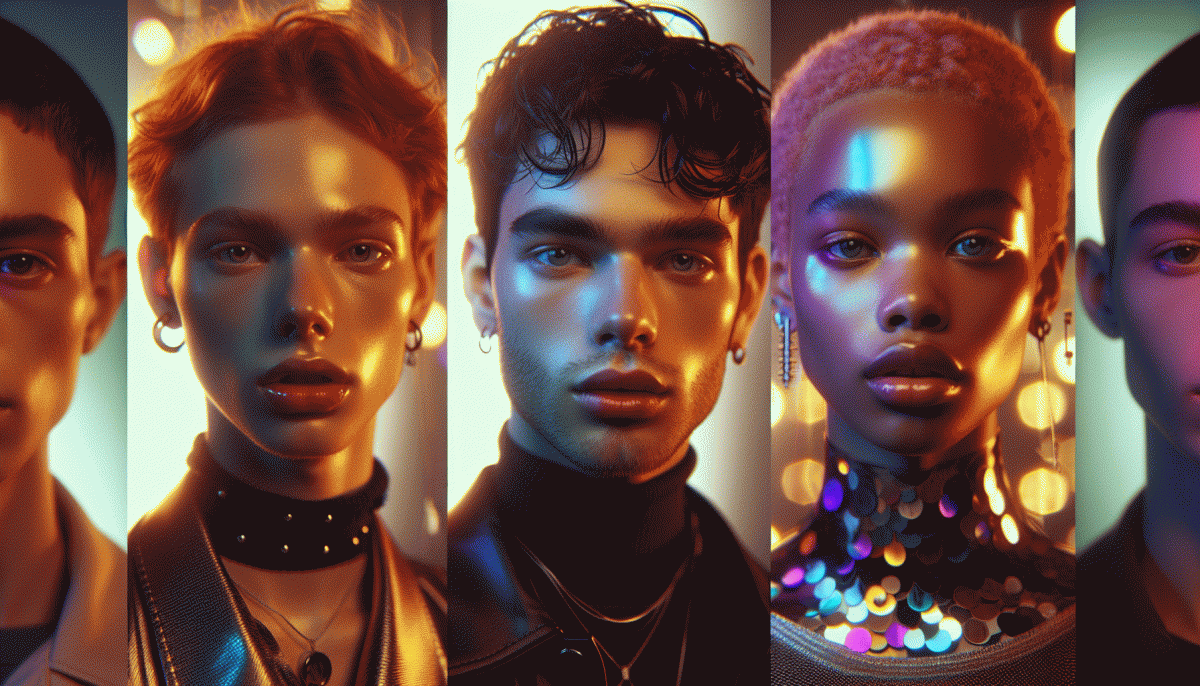
Raw vs Flashy vs Weird: We Ran the Experiment and the Winner Is Wild
Raw: Imperfect, honest, and clicking like crazy
Forget polish for a second: audiences click on posts that feel human. A slightly shaky frame, a breathy aside, a typo that makes you grin—these tiny flaws act like magnets. They trade slick perfection for immediacy and the promise of a story you cannot get anywhere else, so viewers are more likely to tap, linger, and share.
Raw works because it lowers resistance. Imperfect moments build trust faster than glossy ads; relatability drives comments, saves, and follow-through. In our trial the simplest takes sparked more authentic conversation than over-produced edits, and those conversations translated into measurable attention—more clicks that actually stuck around to read and react.
Want to use this now? Keep the first two seconds unfiltered and surprising, film one candid behind-the-scenes clip each week, and let the soundtrack stay human rather than perfectly mixed. Write plain, honest captions that invite a reply instead of selling. Small experiments like this cost little but reveal what your audience really wants.
Treat roughness as a feature, not a bug. Pair a raw clip with one polished post weekly, A/B test headlines that promise a mini story, and measure retention instead of vanity metrics. If your goal is clicks that turn into community, start imperfect, iterate fast, and let honesty do the heavy lifting.
Flashy: High gloss, low effort, big recall
Some campaigns win by looking like a billboard at midnight: shiny, loud, and impossible to ignore. This style trades deep narrative for fast impressions, using slick color palettes, cinematic cuts, and a single clever line to lodge in memory. It is perfect when speed and recall matter more than nuance.
Psychology explains why this works. Peripheral cues like contrast, motion, and symmetry trigger automatic attention while the brain files the rest under a neat short term tag. Use this when introducing a new product, teasing a drop, or rescuing flagging reach. The goal is rapid recognition rather than conversion by itself.
Practical moves make flashy cheap and reliable. Reuse high quality templates, shoot 10 second hero clips, prioritize a bold thumbnail and a one line hook, and lean on color consistency. A sharp visual signature plus a repeatable structure gives you the illusion of endless creativity with real time savings.
Beware of the glossy trap. High recall can mask low value and build brittle attention that vanishes after the next scroll. Counterbalance with one raw touchpoint per campaign — a behind the scenes story, a user quote, a live Q A — so the shiny ad gets context and the audience gets reason to stay.
Measure for lifespan not just peak reach. Run A B tests for retention of message at 24 and 72 hours, track click quality, and cap creative refresh cycles to avoid fatigue. When you want buzz fast and economical, go flashy. Just make sure the flash is the doorway to something real.
Weird: Pattern breakers that stop thumbs on Instagram
Scroll-stoppers aren't born from perfection — they're born from arresting oddities. On Instagram, the feeds are trained to skip sameness, so a weird frame that violates rhythm makes thumbs pause. Think a photo with a human-sized potato in the corner, a pause of silence after a loud beat, or a caption that reads like an unexpected micro-story. The goal isn't shock for shock's sake; it's friction that pulls attention back.
Start with the first 0.5 seconds: purposefully mislead the eye. Use negative space that shifts focus, reverse color palettes mid-clip, or drop in a tiny, out-of-place graphic that creates a micro-mystery. Edit with jittery timing, freeze a frame unusually long, and then resolve with a tidy payoff. Pair the odd visuals with plain, almost boring language — the mismatch amplifies curiosity.
Measure deliberately. Run a three-post mini-test: baseline creative, polished flashy variant, and your weird experiment. Keep captions similar, publish times constant, and compare impression-to-save and impression-to-share ratios over 48–72 hours. If the weird post gets more holds, profile taps, or saves, you've got a repeatable lever. If not, refine the quirk; often the wrong level of subtlety is the culprit.
Try this: pick one post a week to break a pattern — change scale, sound, or syntax — and track the micro-behaviors. Weird wins when it's purposeful and relatable, not gratuitous. Treat it like a tiny science project: hypothesize, execute, measure, iterate. When a stranger stops their thumb and double-taps because something felt 'off' in the best way, you'll know you've tilted the feed in your favor.
How to test fast: a 5 day, 5 asset sprint
Want a fast way to pick a direction between raw, flashy, and weird? Run a five day, five asset sprint that forces real results. Day zero prep: pick one clear KPI — CTR, CPA, or comment volume — and lock audience, placement, and budget. Keep production cheap and decisions brutal.
Day 1: Raw — handheld, lo fi, human. Day 2: Flashy — high design, motion, polish. Day 3: Weird — odd hook, surreal moment, curiosity bait. Day 4: Useful — a plain how to or tip that actually helps. Day 5: Wild Hybrid — mash the best odd element into the polished format and push the boundaries. Keep edits minimal and captions identical so creative treatment is the only variable.
Run all five creatives to the same exact audience at equal budget for true apples to apples comparison. If platform limits force sequencing, rotate daily but keep budget per creative equal and maintain time of day. Post where the target already hangs out and avoid cross platform mixing during the sprint.
After 72 hours evaluate using your chosen KPI and a quick quality check. Look for a 20 percent higher CTR or a 30 percent lower CPA as signal thresholds, and read top comments for sentiment. Kill assets that underperform by a factor of two and reallocate spend to the top two performers. Take screenshots of qualitative feedback to guide the next round.
Treat the sprint as an experiment not a finale. The winner tells you which vibe to amplify; if the wild hybrid wins, double down with higher budget tests and spin micro variants that lean weirder or cleaner. Repeat weekly until your creative mix becomes a predictable growth engine.
Hybrid plays: mix and match ideas that outperform all three
Mixing feels like alchemy rather than math. Instead of choosing raw honesty, flashy spectacle, or bizarre curveballs, combine their best moves: the trust of unfiltered storytelling, the thumb stopping visuals, and a tiny oddity that makes people comment. The result is content that pleases users and plays nice with recommendation engines. Hybrid content reduces risk and increases reach by speaking to multiple microaudiences at once.
Start small and stitch ideas together. Lead with a candid line, cut to a bright visual hook at 1.5 seconds, then drop a short weird reveal before the CTA. Use data to choose which two traits to push per test. Swap tone, not only format. Often a raw voice in a glossy package outperforms either alone because authenticity lowers friction while polish boosts shareability.
If the plan is to scale tests on short form platforms, consider a reliable boosting partner for quick signals: best TT boost platform. Use paid reach to validate creative directions fast, then kill or double down according to retention and comment quality.
Measure what matters: retention curves, saves, comment depth, and downstream conversions. Run 3x microtests weekly and treat each result as a recipe to remix. Keep budgets light, iterate like a band refining a song, and let hybrids evolve. In practice the wild winner is not a single flavor but the clever combination that the audience decides to keep.
Read also

Raw, Flashy, or Weird? The One Style That Crushes Conversions Might Surprise You

Raw vs. Flashy vs. Weird: The Showdown Your Brand Didn’t Know It Needed
Raw vs Flashy vs Weird: The Creative Cage Match No One Saw Coming

Raw vs. Flashy vs. Weird: We Ran the Showdown—Guess Which Style Actually Wins?

Zero Followers, Wild Conversions: Build a No-Social Funnel That Prints Revenue