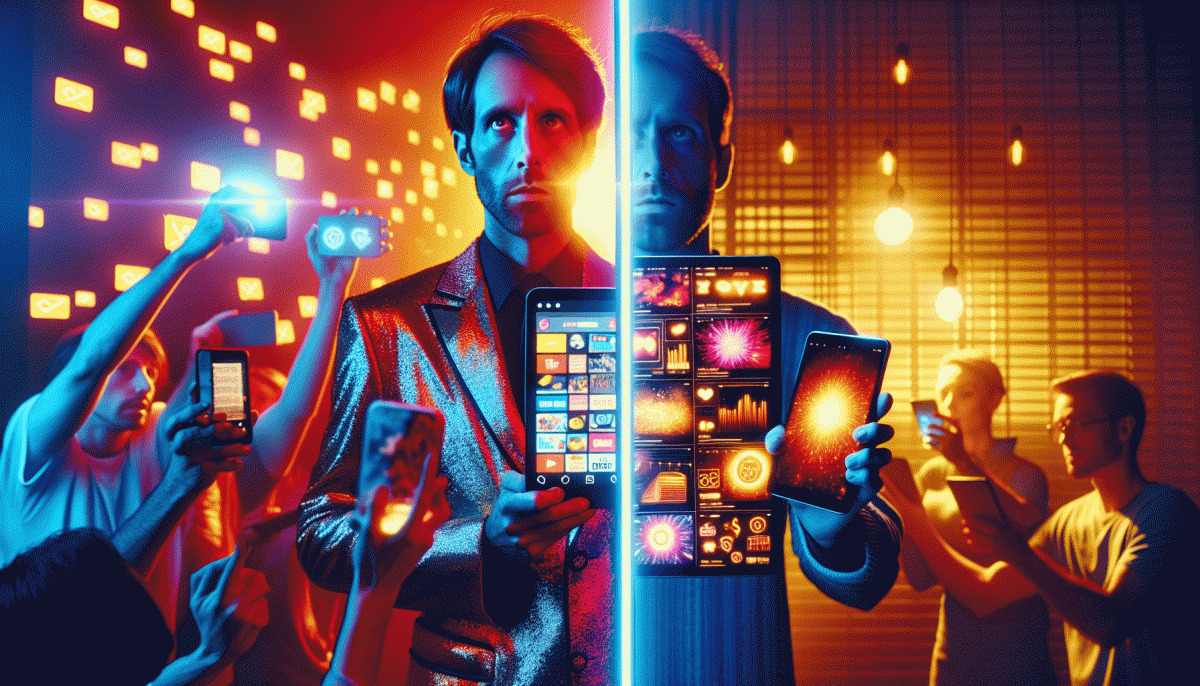
Raw vs. Flashy vs. Weird: The Shocking Winner You're Not Using Yet
Raw: Imperfect, Fast, and Weirdly Trust-Building (Here's When It Wins)
When polish feels like a showroom and your audience starts yawning, the imperfect clip you shot on a phone can land harder than a cinematic ad. Raw content earns trust because it shows process, not polish: tiny mistakes, unglossed thoughts, the kind of quick honesty people recognize because they make the same mess in their own lives.
It wins when speed beats perfection: product launches with tight timelines, real-time responses to trends, or customer problems that need human faces instead of corporate statements. You'll know to go raw when engagement spikes on off-the-cuff posts, when friction increases (people ask questions, not just hit like), or when your brand needs to swap distant authority for messy relatability.
Try these quick playbook moves that make raw actually convert — not just feel cute:
- Authenticity: Share a real behind-the-scenes moment instead of a scripted montage — flaws invite trust.
- Speed: Post now, iterate later — a timely, imperfect take outperforms a late, perfect one.
- Conversation: Use captions that ask one simple question and reply to the first 10 comments.
Practical recipe: film a 15–30s clip, no tripod required; call out the mistake or surprise in the first 3 seconds; add a one-line caption that invites a reaction; follow up with a pinned reply or short update showing what you learned. A/B test raw vs. produced for a week and measure replies and saves — those are the trust signals. And a final pro tip: don't make raw a brand identity graveyard. If the topic requires legal precision or sensitive detail, polish up. Otherwise, get weird, be fast, and let the imperfections do the heavy lifting.
Flashy: High-Gloss, High-Cost—But Does It Actually Convert?
Glossy campaigns are the cinematic trailer of marketing: big-budget lighting, slick edits, and a soundtrack that makes spreadsheets feel emotional. They grab attention quickly, but attention is not the same as action. The practical question is whether the shine moves real people down the funnel — visits, signups, and purchases.
Flash tends to pay off when the product is premium, the decision is emotional, or the offer trades on aspiration. In those cases expect lifts in awareness metrics like CTR, view-through rate, and average session duration. If you choose high-gloss, instrument everything: track view-through conversions, landing engagement, and CPA by creative variant.
On the flip side, flash can flop when clarity and speed matter more than fantasy. Low-priced impulse items, utilities, and many B2B purchases respond better to direct messaging. Excess polish can bury the CTA or bloat page load. Keep headlines crystal clear, present the value proposition above the fold, and optimize asset size so speed is not the villain.
A pragmatic test plan: create one cinematic spot, one stripped-down version, and one control. Run them concurrently for a brief burst, measure micro-conversions like add-to-cart and email capture, and calculate incremental revenue per creative. Those short, sharp tests tell you whether the sparkle justifies the spend.
Rule of thumb: only pay 20–40% more for production if projected lifetime-value gains exceed that delta. When the numbers are fuzzy, favor clarity and iteration over cinematic perfection. Gloss is a tool, not a trophy — use it when it reliably turns into dollars, not just dopamine.
Weird: The Pattern-Breaker That Hijacks Brain Chemistry
When you step outside the predictable, the brain stops running on autopilot and starts paying rent again. A well placed oddball detail or an offbeat turn of phrase creates a prediction error, and that tiny surprise spikes attention in the same circuitry that underwrites curiosity and dopamine. The result: people look longer, remember better, and share with a smirk.
Weird is not noise, it is a surgical tool. Use it to break the pattern people expect from your niche—an unexpected visual, a metaphor gone rogue, or a question that refuses to be answered at once. That mismatch triggers arousal without confusion when you anchor the surprise to a clear payoff: novelty grabs attention, clarity secures comprehension, and the contrast makes your idea sticky.
- Surprise: Drop one element that contradicts the genre norm to force a double take.
- Mismatch: Pair two unrelated concepts to create a memorable mental jolt.
- Payoff: Follow weirdness with a clear benefit so curiosity converts into action.
Start small and test. Sprinkle one strange line into a caption, A B test a quirky thumbnail, or flip a color palette for one post. Track dwell, shares, and comments; then amplify the versions that hijack attention without losing comprehension. Weird works best when it is deliberate, not random.
Speed Test: Which Style Beats the Algorithm in 3 Seconds or Less?
Imagine the algorithm as a bouncer with a stopwatch: if you don't excite, confuse, or delight in the first three seconds, you're back in line. That's the speed test—raw honesty, glossy flash, or weird disruption—and it's less about production budgets and more about a millisecond pattern interrupt. Nail the thumbnail, sound, or motion in that tiny window and the rest of the video gets a second audition from the feed.
Run three tiny A/B experiments: one unvarnished take (raw), one polished headline-and-cut (flashy), and one that makes people do a double-take (weird). Track the first-3s retention, immediate clicks, and whether viewers swipe to watch longer. Even without fancy analytics, you can spot winners: the version that gets people to pause, turn up sound, or rewatch the first second is the one the algorithm will feed.
Here's the shocking bit: the weird one almost always wins when done right. Not because being odd is trendy, but because novelty breaks autopilot. The recipe: a one-line tease that contradicts expectation, a striking visual or movement, and a tiny payoff promise. In practice that's 1) a sentence that makes you ask 'wait, what?', 2) an unexpected camera move or prop, and 3) a visible payoff hint in frame 3.
Don't overcomplicate it—pick a single micro-idea, shoot five 3–5 second opens, and promote the top performer. Swap the thumbnail, mute/enable sound, or tweak the first word and iterate. Quick tests beat grand plans; the algorithm rewards surprise, so build to interrupt, then give value. Try it today and enjoy watching the feed do your marketing for you.
Mix-and-Match Playbook: A Simple Matrix to Pick Your Winner Every Time
Think of a tiny decision matrix you can sketch on a napkin: X-axis is risk (Safe → Wild), Y-axis is intent (Trust-building → Attention-grabbing). Put Raw in the Trust-building/Safe corner — it's honest, slow-burn content that turns strangers into defenders. Drop Flashy in the Trust-building/Wild quadrant when production polish meets brand reliability. Park Weird in Attention-grabbing/Wild: oddball moves that demand a double-take and viral potential. This tiny map removes guesswork and gives you lanes to test, not feelings to argue about.
Now mix-and-match like a chef: Raw+Weird = authentic experiments (behind-the-scenes with a twist) for niche audiences and platform-native fans. Raw+Flashy = high-fidelity authenticity (studio-quality testimonials that still feel human). Flashy+Weird = spectacle that still looks intentional (cinematic oddities made to stop scrolls). Pick combinations by channel instincts too — think Instagram and TikTok for Flashy/Weird, LinkedIn or email for Raw — and let format drive the execution.
Here's a simple playbook. First, answer two questions: who are you trying to move, and what metric proves success? Second, pick a primary axis: credibility (favor Raw/Flashy) or reach (favor Flashy/Weird). Third, choose a secondary spice—use the third style as seasoning, not the main course. Fourth, set a tiny, measurable experiment: one creative, a 48–72 hour run, a clear KPI (CTR, watch time, sign-ups) and a 70/30 budget split favouring the primary style.
Run the test, learn fast, iterate: if watch time tanks, dial back Weird; if CTR is low, flash the visuals; if comments are supportive but conversions lag, lean into Raw storytelling. Rinse and repeat until your matrix points to a consistent winner — sometimes it's the obvious Flashy stunt, other times the unexpected Weird-Raw combo that becomes your secret weapon. Keep the playbook on a sticky note and stop asking "which is better" — start asking "which mix wins this week".
Read also

Raw, Flashy, or Weird? The One Style That Crushes Conversions Might Surprise You

Raw vs. Flashy vs. Weird: The Showdown Your Brand Didn’t Know It Needed
Raw vs Flashy vs Weird: The Creative Cage Match No One Saw Coming

Raw vs. Flashy vs. Weird: We Ran the Showdown—Guess Which Style Actually Wins?

SEO in 2026: The Shocking Truth - Still a Traffic Magnet or Just Marketing Hype?