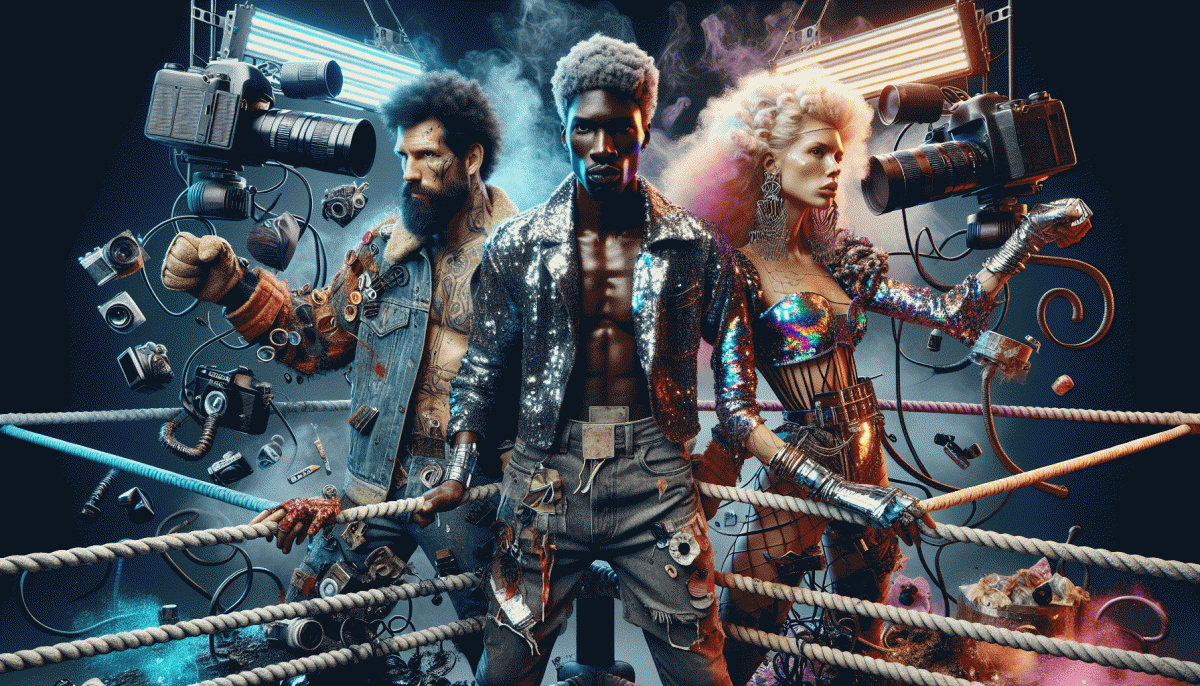
Raw vs Flashy vs Weird: The Shocking Winner Marketers Keep Ignoring
Raw power: Scrappy shoots that convert because they feel real
Skip the storyboard that reads like a tech brochure and embrace the stuff that looks like life happened on camera. When a clip shows a person fumbling with a product, laughing at their mistake, or answering a question honestly, people stop scrolling and start trusting — which is the shortcut to conversion. Raw shoots win because they replace polished distance with relatable proximity: viewers recognize someone like them, and that recognition lowers the guard that usually blocks a sale.
Make it actionable: pick a single micro-story for every shoot (problem → tiny moment of relief → next step). Keep scripts to one sentence per scene and allow room for improvisation; the truest line often appears on take three when the actor forgets the line and says something real. Use short, human-focused hooks: a glance, a question, a reaction. End with a simple, natural CTA — not a corporate tagline — that nudges one clear action.
Production doesn't need a studio. Use a phone on a tripod, prioritize stable audio, and shoot in soft window light. Frame close for emotion, capture an extra 5–10 seconds of awkwardness for cutaways, and record a natural-sounding off-mic line or two in case you need a voice bridge. Edit fast: rough cuts, jump cuts, simple music beds, and captions for sound-off environments. Save every raw take; you'll repurpose the “mistakes” into testimonials, stories, and shorts.
Finally, measure what matters: short-term lifts in retention, comment sentiment, and click-throughs, not vanity polish. A/B test raw vs. refined with the same CTA and iterate on what feels honest to your brand voice. The trick isn't perfection — it's consistency. Ship more imperfect shoots, learn which real moments convert, and scale the ones that do.
Flashy factor: High shine visuals that stop thumbs in one second
Flashy visuals are the bait that makes a thumb stop mid-scroll: a sudden sparkle of color, a face turned toward the camera, a motion cue that interrupts inertia. The trick is not glitter for glitters sake but an engineered pause that gives your message a fighting chance. Aim for contrast, readable text on the first frame, and a focal point that answers "what is this?" in under 600 milliseconds. Use large expressive eyes or hands to create an emotional shortcut that beats fancy copy every time.
Start with composition: big, legible typography, a primary subject placed on the rule of thirds, and a color accent that pops against the feed. Add subtle motion — a looped microanimation or a 0.6 second buildup — to create visual rhythm without triggering swipe reflex. Replace busy backgrounds with bold blocks of color and keep one dominant idea per asset so the eye is not asked to multitask. Consider a simplified product-in-use shot rather than staged glamour; authenticity amplifies shine.
But shiny does not mean trust worthy. Overdecorating makes viewers squint or scroll past. Pair flash with clarity: a short headline, an immediate benefit, and brand cues that do not clutter. Think of flash as an invitation, not a disguise; once you get the pause, deliver value before attention evaporates. Avoid tiny disclaimers, heavy gradients that muddy contrast, and competing focal points that cancel each other out.
Measure like a scientist. Run rapid A/B tests on thumbnails, first-frame motion and palette swaps. Track clickthrough rates, watch seconds viewed, and favor variants that earn attention with less sensory noise. Use short-interval experiments to discard false positives fast and set simple thresholds for winners so teams can scale creative that actually converts.
Ready to iterate? Swap one thumbnail, tighten your opener to 1.5 seconds, highlight a single clear CTA, and review results weekly. Repeat, analyze, and scale what wins. The point is not to be loud all the time but to be loud at the exact moment someone is deciding whether to stay.
Weird works: Quirky cues that hack curiosity and memory
Odd cues convert skimming into curiosity. A tiny mismatch—an out-of-place emoji in a serious line, a cartoon hand touching a product, or a deliberately awkward headline—punctures the scroll and invites a closer look. These are not random gags; they are targeted cheats on attention. That tiny cognitive hiccup is the secret lever marketers underuse.
Neurologically, surprises create prediction errors that prioritize encoding; psychologically, they spark conversation. Practically, that means a small, well-placed eccentricity can boost recall far more than extra polish. Simple test: alter one familiar asset, launch variants for two weeks, then compare CTR, time on page, and unaided recall against a control. And they are cheap to test.
- Tempo: Slow a motion or add a deliberate pause to turn a glance into a read.
- Mismatch: Pair incongruent visuals and copy to create pleasurable dissonance.
- Personify: Give an object a brief voice or personality to make it memorable.
Run the experiment like a scientist: state a hypothesis, build one variant, pick KPIs and a clear winner threshold. Use a 2‑week window or enough impressions to reach practical confidence, then measure CTR, time on page, and one‑line brand recall. If oddity lifts recall and engagement without hurting conversion, scale by seeding related assets; if conversion drops, revert and iterate with a smaller twist.
Run the showdown: A quick test plan to crown your style winner
Start with a compact experiment brief: pick one audience segment, one clear offer and three creative directions — raw (unfiltered), flashy (polished), weird (unexpected). Write a single-line hypothesis for each (e.g., "Raw will boost authenticity and CTR by 15%"). Keep targeting, timing and pricing identical; only tone changes. Don't mix offers or audiences, and plan a 1–2 week baseline window.
Build assets: three distinct creative packs times two formats (square and vertical video or static + short clip). Keep the headline, CTA and landing page identical so creative is the only variable. Optimize first 2 seconds, craft thumb-stopping openers and include captions. Run equal-weight splits on your platform of choice — Instagram Feed, YouTube preroll or email — and use campaign-level holdouts so each person sees only one version. Cap frequency so fatigue doesn't confound the outcome.
Measure with tight KPIs: primary = conversion rate or CTR depending on campaign goal; secondary = engagement rate, cost per conversion, and view-through lift. Track qualitative signals like comments, DMs and session depth to judge sustainability. For sensible confidence, aim for at least several hundred meaningful events per variant (impressions alone aren't enough); if volumes are low, extend duration rather than diluting targeting. Log results daily and snapshot winners at a 95% confidence threshold.
Decide with a simple rubric: a winner beats others on the primary KPI, shows supportive secondary signals, and fits brand tolerance (can you scale it without alienating customers?). If scores are close, champion both and run a follow-up micro-test on single elements (tone, opening frame, CTA). When you scale, allocate ~70% to the champion, keep 30% as an innovation slush fund, refresh creatives regularly and retest every campaign cycle so the "weird" keeps poking the box.
Hybrid mode: Blend styles for lower costs and higher lift
Think of hybrid mode as the marketing remix that actually makes sense: take the trust-building grit of raw, add the attention magnets of flashy, and drop one weird twist that stops scrolls. The goal is not to be everything at once but to combine strengths so each campaign punches above its cost. When you blend materials smartly you get higher lift without hiring a blockbuster production team.
Start by choosing a stable, low-cost backbone asset that feels authentic — a behind-the-scenes clip, a customer moment, or candid voiceover. Layer in a few high-impact flashes: a bold thumbnail, a kinetic graphic, or a quick branded sting. Then introduce one weird detail that feels earned: an unexpected prop, a quirky edit, or an offbeat line. The triage is simple: raw provides credibility, flashy draws eyes, weird makes it memorable.
- Speed: Produce the backbone quickly with phone-shot clips and template edits to keep CPMs low.
- Budget: Allocate 70/20/10 to raw/flashy/weird to control spend while testing impact.
- Hook: Use one odd moment in the first 3 seconds to force a double-take.
Measure by slicing results: compare CPA and lift against a raw-only control, then swap flashy elements until you see diminishing returns. Use asset modularity to repurpose the same raw footage across formats and platforms to multiply reach for minimal extra cost.
Action plan: Run one hybrid experiment this week, cap spend low, and iterate fast. Expect faster learnings, lower overall production outlay, and the kind of lift that makes decision makers smile.
Read also

Raw, Flashy, or Weird? The One Style That Crushes Conversions Might Surprise You

Raw vs. Flashy vs. Weird: The Showdown Your Brand Didn’t Know It Needed

Are Landing Pages Still Necessary in 2026? The Shocking Truth Marketers Won’t Tell You

Shoppable Content Beyond Social: The Revenue Shortcut Brands Keep Ignoring

Landing Pages Are Dead in 2026... Or Are They? The Shocking Truth Marketers Miss