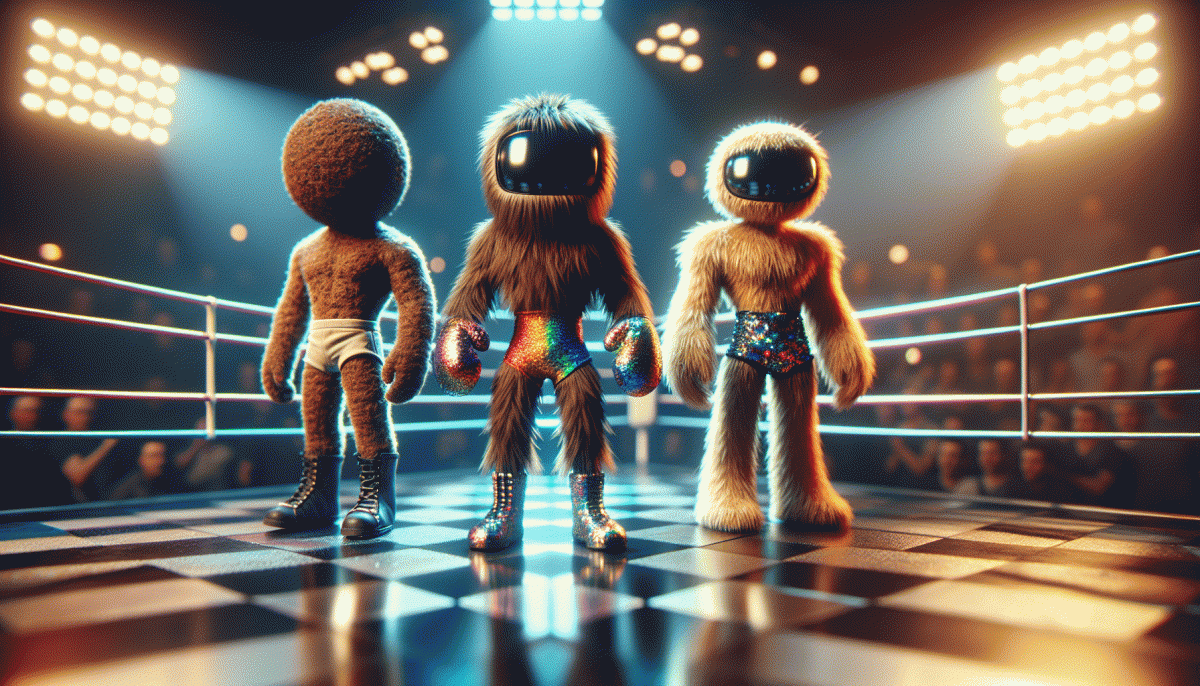
Raw vs Flashy vs Weird: The Creative Cage Match You Did Not Know You Needed
Raw: Unfiltered vibes that build instant trust
Think of a brand that swaps a hyper-produced ad for a shaky selfie confession from the founder: suddenly scrolling stops. Raw content is the social equivalent of being invited into the kitchen; you see the recipe, the spills, the real timer on the stove. It lets texture, stumbles, and unscripted humor do the trust-building heavy lifting instead of glossy polish.
People don't crave perfection as much as they crave proof that there are people behind the handle. Background noise, an honest mistake, or a candid laugh signals authenticity and lowers defensive filters. Those little flaws function like social receipts—evidence that what you're watching wasn't manufactured in a vacuum—and that's why audiences engage, forgive, and come back.
Turn raw into a repeatable tactic: capture 60–90 second micro-moments that show process, not just product; narrate what went wrong and what you learned; and let user-generated takes live alongside your own posts. Ditch multiple re-takes for one brave first try, pin a clarifying follow-up if needed, and make captions conversational—ask a quick question rather than broadcast a manifesto.
If you need starter prompts, try this: film your first sketch of an idea and ask for critique, show the post-launch checklist that didn't go according to plan, or pull a customer DM into a 30-second story response. These tiny admissions invite replies, corrections, and stories from other people who recognize themselves in the mess.
Measure what matters: qualitative signals like thoughtful comments and DMs, and quantitative ones like retention bumps or shares. Raw isn't sloppy; it's strategic humanization. Treat it like an experiment with fast iterations—test, tweak, repeat—and watch consistent honesty compound into real trust.
Flashy: High gloss hooks that stop the scroll
Bright, glossy hooks are the fast lane of attention: a flash of color, a punchy phrase, and motion that makes thumbs pause. Think of each scroll stop as a tiny audition; visual contrast gets the first yes, microcopy wins the second, and a tiny motion cue seals the booking. The goal is immediate comprehension plus a tease that invites the next swipe or tap.
Here are three compact levers to pull when you need to stop the scroll and start the conversation:
- Visual: Use one disruptive color and a readable focal element so the eye lands in 300ms.
- Copy: Lead with a benefit, not a feature; a two to six word line is best for glance time.
- Motion: Add microanimation or a cinemagraph to transform a static thumb stop into a tiny mini-story.
Make small bets and iterate fast. Produce three variants per creative, run them for a few hundred impressions, then double down on the winner. Pay special attention to first-frame legibility on mobile and mute-first playback when applicable.
Finally, flashy does not mean disposable. Keep brand cues consistent, give the user one clear action, and avoid the temptation to cram every gimmick into one asset. Execute with discipline and the gloss becomes irresistible, not annoying.
Weird: Delightfully odd ideas that stick in memory
Weird ideas earn attention because they are unexpected, sticky, and inexpensive to prototype. A peculiar prop, a tiny rule change, or a deliberately strange visual can do more for recall than the hundredth polished ad. Think of weird as a spice: use a pinch to accentuate your core message so humans remember the thing not the slick wrapper.
Start small and measure what matters. Run an A/B where one creative swaps color, voice, or context for something delightfully offbeat — maybe a product in a ridiculous setting or a mascot that behaves badly. If you need a quick reach boost to validate a risky idea, try buy Instagram followers fast to jumpstart social proof, then refine what actually converts.
Track engagement over attention: watch comments and shares instead of vanity impressions. Record qualitative reactions and double down on the one odd element that sparks conversation. Use short experiments, not lifetime campaigns, and give failures little room to fester — kill what does not create chatter and amplify what makes people laugh, scratch their head, or send a screenshot.
Weird works when it feels honest rather than contrived. Anchor weirdness to a clear benefit, keep the offer simple, and treat every oddity as a hypothesis to test. One hands-on experiment to try this week: pair a functional demo with an absurd caption and measure how many people tag a friend — that single metric will tell you if the oddity is sticky.
Pick your winner by goal, budget, and timeline
There is no universal champion in the raw vs flashy vs weird tournament; the winner depends on what you want to achieve, how much you want to spend, and how fast you need results. Start by naming the one thing that matters most: credibility, reach, or buzz. That single choice will cut through the creative noise faster than a focus group ever could.
If the goal is trust and long term loyalty, lean into raw: simple production, genuine voices, lower spend, more time to grow. If the goal is immediate eyeballs and aesthetic impact, pick flashy: higher budget, polished assets, and a tight calendar to maximize launch momentum. If the goal is viral lift or category disruption, try weird: experimental ideas, unpredictable payoff, and a tolerance for both small wins and spectacular flops. Budget and timeline are the referee: small budgets favor raw or micro-flashy bets, moderate budgets can fund flashy with smart placement, and flexible timelines let weird ideas breathe.
- Trust: Raw — low cost, authentic storytelling that compounds value over weeks and months
- Splash: Flashy — higher production to grab attention fast; best for launches and events
- Buzz: Weird — high variance creative for potential viral spikes; test small, scale on signal
Practical playbook: pick your primary metric, set a realistic budget band, and choose a timeline that matches creative risk. Run two small tests side by side, measure simple KPIs, and double down on the style that moves your metric. Creativity is a choice, not a mystery. Make it intentional and the cage match becomes a strategy.
Quick A/B test plan to crown your champ this week
Think of this as a one-week gladiator match for creative styles: pick a single metric (CTR, conversion rate, or comment rate) and a clean audience segment, then run three ads—one raw, one flashy, one weird—with identical copy and targeting. The point is to isolate visual voice, not copycraft, so keep headlines and CTAs identical across variants.
Split traffic evenly and give each variant at least 1,000 impressions or three full days, whichever comes later; if your channel is slow, extend to the week. Use a simple hypothesis: e.g., "Weird creatives will lift CTR by 20% vs Raw." Track one primary KPI and one quick secondary (engagement or cost per click) so you don't chase noise.
- Raw: Authentic, low-polish visuals that feel human and moment-driven.
- Flashy: High-energy, polished motion and bold color palettes to grab scrollers.
- Weird: Unexpected, quirky elements designed to stop and provoke a reaction.
After the run, compare percentage lifts and use a 95% confidence mindset but be pragmatic: if two variants are close, prefer the cheaper CPA. Declare a provisional winner, scale its budget by 2–3x, and immediately plan a follow-up test to iterate on the winning flavor. Quick, decisive cycles beat perfect experiments every time.
Read also
Raw vs Flashy vs Weird: The Creative Cage Match No One Saw Coming

Raw vs. Flashy vs. Weird: The Showdown Your Brand Didn’t Know It Needed

Raw, Flashy, or Weird? The One Style That Crushes Conversions Might Surprise You
Raw vs. Flashy vs. Weird: We Ran the Showdown—Guess Which Style Actually Wins?

This 3x3 Creative Testing Framework Saved Us Thousands—Steal the Playbook