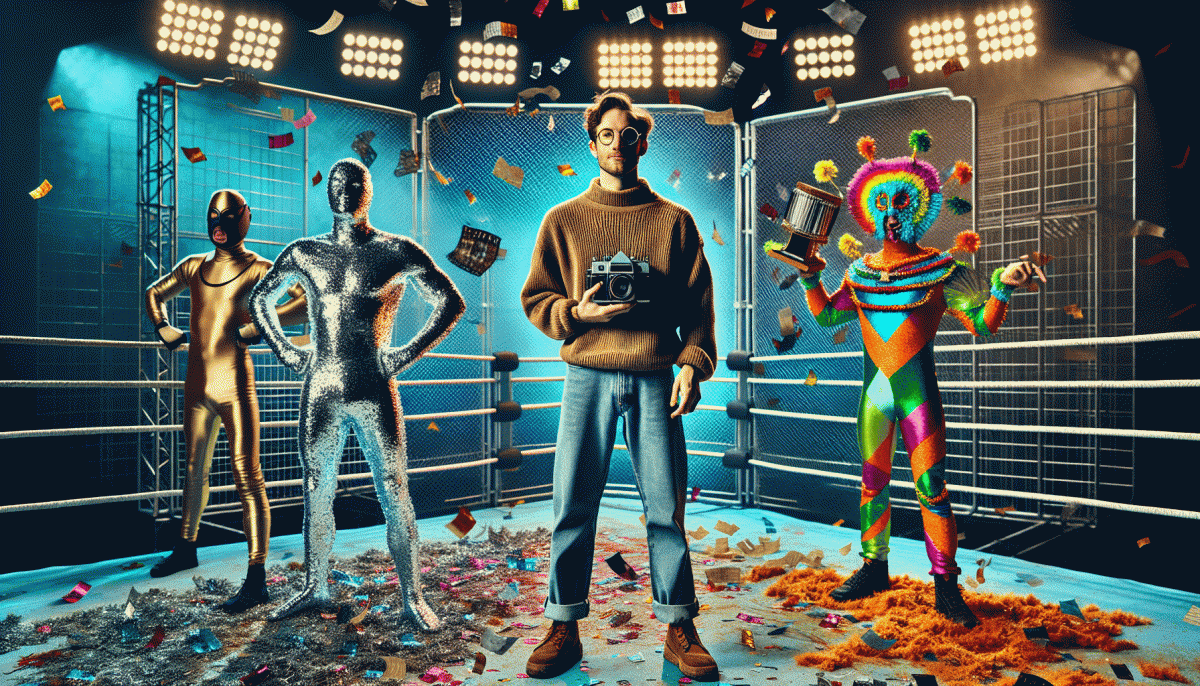
Raw vs Flashy vs Weird: The Creative Cage Match with a Surprise Champion
Why Raw Converts When Budgets Cannot
When money is tight, spectacle becomes a liability. Raw creative is the scrappy champion: it turns scarcity into intimacy, edits into authenticity, and moments into persuasive currency. Audiences smell production sheen from a mile away; they respond to voice, flaws, and the small human things that polished ads erase.
Start with what you already own. Film a short handheld demo, capture customer messages from DM threads, reshare screenshots of praise, and show the team unpacking a box. These are cheap, fast, and credible. Reuse assets across stories, posts, and quick reels so each raw moment pulls work across multiple touch points.
Raw converts because it builds trust faster than high production can earn attention. Trust shortens decision paths: viewers move from curiosity to consideration to checkout when they feel seen and not sold to. Focus your creative on clarity of benefit, visible proof, and a single simple next step to maximize conversions.
Try three practical moves this week: film a 30 second unedited how it works clip, pin a real customer screenshot to your profile, and A B test a raw post against a polished one for reach and clicks. Track the one metric that matters for your goal and iterate quickly.
Budget constraints do not equal creative limits. With a clear message, honest footage, and ruthless testing, raw work will outconvert gloss that costs more and says less. Lean into it and treat scarcity as a strategic advantage.
Flashy on Purpose — Not Just Pretty, Profitable
Think of flashy as strategic costume design — loud enough to stop the scroll but tailored to make people move. When you plan sparkle with intent, every shimmer becomes a conversion lever: a color that points to the CTA, an animated reveal that teases the benefit, a bold headline that promises relief. The goal is attention that pays.
Start with tiny, testable bets: add a 1.5s motion to hero imagery to increase curiosity, swap one brand color for a higher-contrast accent that pulls the eye toward your button, rewrite the button with outcome-focused microcopy. For socials, favor vertical motion and 3-second curiosity hooks; on landing pages, layer surprise moments that reward scroll — not annoy.
Measure the sparkle: click-through, scroll depth, micro-conversions (email sign, add-to-cart), and post-click bounce. Put every flashy change behind an A/B test and a pre-set success metric — a 10% lift in CTR or a 5% reduction in cart abandonment is a win. If your vanity metrics rise but revenue doesn't, dial back the glitter and re-route attention to value.
Don't confuse flash with flake: gratuitous effects that slow pages or hide information kill credibility. Keep accessibility (alt text, reduced-motion options), mobile performance, and clear user paths front and center. Flash is a tool, not the whole toolbox — it amplifies good design, it doesn't replace it.
Close with experiments: run three two-week experiments — color swap, animated CTA, and headline rewrite — and compare lift. If you want a shortcut, test platform-specific tweaks on Instagram reels, YouTube intros, or Twitch overlays where boldness scales fast. Think of flashy as a disciplined amplifier, not reckless glitter.
Weird Works — The Memorable Edge You Are Skipping
Weird cuts through the noise because it is a tiny permission slip to look twice. A surreal visual, an odd metaphor, or a playful misdirection makes people pause, laugh, and remember. The trick is to be surprising without being inscrutable — curious, not confusing.
Neurology loves novelty: the brain flags unexpected stimuli and hands them to memory. That means oddball ideas boost recall and shareability faster than perfectly polished predictability. When an audience can describe one strange detail, they are far more likely to tell a friend or tag someone in the comments.
Make it practical: inject a single narrative twist that reframes a normal benefit, pair a familiar product with one outlandish prop, or give your brand a voice that contradicts its look. These three small moves increase distinctiveness without rewriting the whole strategy or alienating loyal fans.
Measure what matters: run simple A/B tests, compare CTRs and share rates, and watch comment sentiment for anecdotes that only the weirder version provokes. If engagement spikes but conversions do not, iterate on messaging rather than abandoning the angle — the right tweak often unlocks both memorability and performance.
Keep the brand tethered: anchor oddity to a clear value, start with micro-experiments, and scale the eccentricity that performs. In short, choose one weird element, test it, and let data decide how far you push the delightful weirdness.
A/B Test Smackdown — Pick a Winner in 7 Days
Stop treating tests like slow science experiments. Pick one thing to change — the thumbnail, the opening line, or that bizarre mascot — and run two variants against the same audience. Keep everything else fixed (same copy length, placement, spending cadence) so the creative gets a fair one-on-one. A clean test beats frantic multitesting and lets real behavior, not gut feeling, decide the champ.
Your 7-day playbook: launch on Monday, promote evenly, and let weekday and weekend behavior show up. Aim for a rule-of-thumb minimum: ~1,000 impressions per variant or 30–50 meaningful actions (clicks, saves, signups); if you're way below that, extend the window or bump spend. Track one primary KPI and a supportive secondary metric so signals don't get fuzzy.
How to pick the winner: look for a consistent edge across days, not a single spike. Favor a variant that sustains an ~8–10% uplift in your KPI plus cleaner engagement (lower bounce, higher comments). If results tie, give the oddball a rematch — weird creatives often win hearts and carve out niche momentum that flashy polish misses.
When you've got a winner, scale fast: double the budget, keep creative fresh with small tweaks, then iterate every 7–14 days. Document what moved the needle and where the audience fell off. The goal isn't to crown the prettiest creative — it's to find what actually moves real people. Ship, learn, repeat.
Style Mashups — Frameworks to Mix Without Losing Your Brand
Treat mixing styles like a DJ set: the brand is the beat you never drop. Start by naming your Anchor — the one non-negotiable personality trait (friendly, expert, playful). Then pick a dominant style (raw, flashy, or weird), a secondary style that brings contrast, and a controlled accent that adds surprise without derailing recognition. That three-part hierarchy keeps mashups from sounding schizophrenic.
Make rules you can follow. Use a 70/20/10 split: 70% brand-safe content that reinforces the anchor, 20% experiments that borrow from a different lane, and 10% deliberate oddities with clear guardrails. Define palette hierarchy, voice intensity, and allowed visual distortions for that 10% so weirdness is memorable instead of confusing. A simple style sheet line can save a thousand mistaken posts.
Run quick cohesion checks before publishing. The five-second test asks: does this feel like us at first glance? The function test asks: does it still solve the audience's problem? The tone test asks: could loyal followers recognize this voice in blind A/Bs? If any answer is no, pull back an accent or dial the flash down; keep the anchor intact.
Finally, treat mashups as iterative experiments. Document what worked, tag assets that passed the tests, and create a tiny playbook for creative teams. Iterate in micro-campaigns, not seismic rebrands. That way you get the thrill of mixing raw grit, flashy polish, and a sprinkle of weird — while customers still know it's you.
Read also
Raw vs Flashy vs Weird: The Creative Cage Match No One Saw Coming

Raw, Flashy, or Weird? The One Style That Crushes Conversions Might Surprise You

Raw vs. Flashy vs. Weird: The Showdown Your Brand Didn’t Know It Needed

Raw vs. Flashy vs. Weird: We Ran the Showdown—Guess Which Style Actually Wins?

TikTok Ads: Still Printing Sales or Just Burning Cash? The Answer Might Surprise You