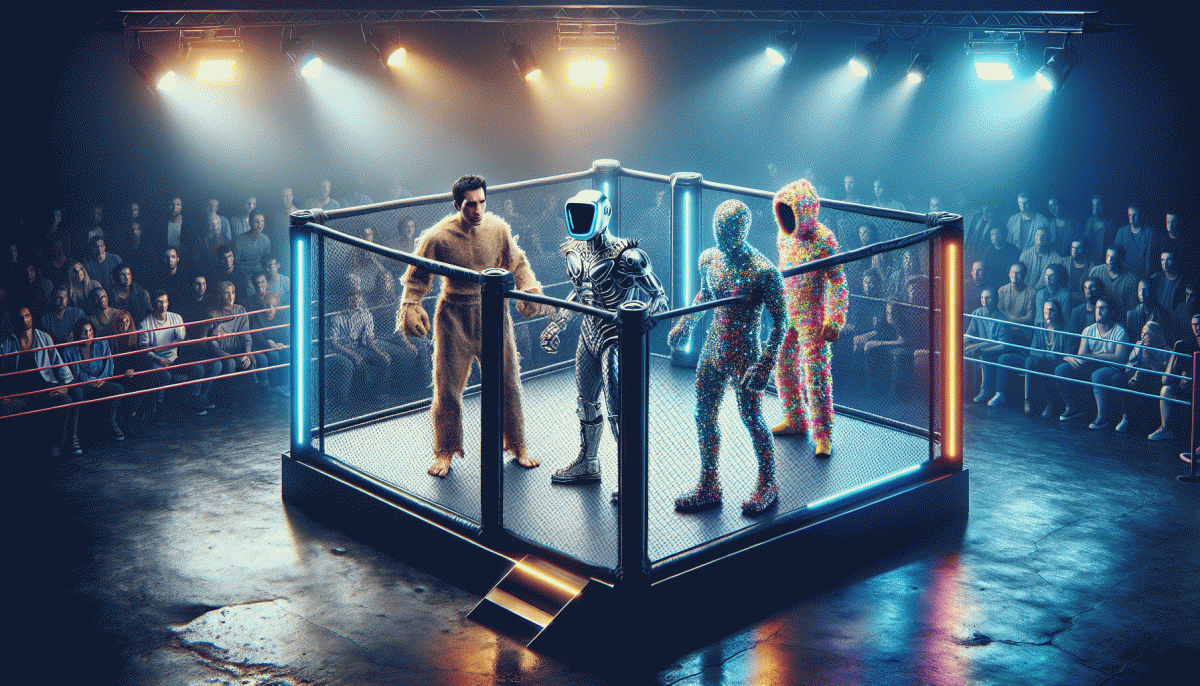
Raw vs Flashy vs Weird: The Creative Cage Match Marketers Must See
Raw: Imperfect, Authentic, and Ridiculously High-Converting
Forget polished commercials and feverish graphics. The raw play wins because humans respond to flaws that signal a real person behind the camera. Trading artifice for texture — a shaky frame, a filler word, a visible edit — replaces suspicion with curiosity and boosts attention. Marketers who embrace imperfection often see higher clickthrough and better retention because viewers feel invited, not sold to.
Make raw a repeatable tactic rather than a happy accident. Build quick templates for candid shots, hand off short briefs to creators, and set a two day turnaround for testing. Keep creative banks full of little moments that feel unscripted so you can iterate fast when one concept catches.
- Hook: Lead with a tiny surprise — a flub, a candid laugh, or an unexpected line — to stop the thumb.
- Pace: Keep breaths and pauses; slowed motion or silence makes proof moments pop and CTAs feel earned.
- Proof: Use real customers, screen grabs of messages, raw numbers on screen, or unedited testimonials to show outcomes.
Want a low risk experiment? Send a handful of raw clips to a targeted audience using order TT boosting. Track views, watch time, comments, and conversions for 72 hours and pivot to the versions that spark the best conversation. Batch five variations, double down on the top two, and treat creative quirks as hypotheses to test — the slightly imperfect, human creative will convert more often than the sterile, perfect one.
Flashy: Glitter, Motion, and the Scroll-Stopping Glow-Up
Flashy creative is the art of turning a thumb into a stop: glitter, motion, color pops, and perfectly timed beats. Start by treating the first second as sacred real estate—use contrast, a clear subject, and a single motion cue. Keep visual clutter low so the brain registers the hook instantly; if viewers have to decode it, they will keep scrolling.
Practical tools include looped microvideos, cinemagraphs that freeze just enough, kinetic typography, and micro-interactions that reward taps. Test animation speed in 10 ms increments and prefer shorter loops under 3 seconds for feeds. Use color and scale to guide the eye, and pair motion with a strong audible or caption tag so the message survives silent autoplay.
To scale reach fast, pair standout creative with smart seeding. Consider seeding initial social proof to prime algorithms and eyeballs—paid placement, influencer drops, or organic seeding hacks. One fast route to lift perceived momentum is to buy Instagram followers instantly today, then convert attention into value with a crisp content funnel.
Finish with a simple measurement plan: track dwell, click through, saves, and conversion. If flashy content gets clicks but low conversions, trim the glamour and tighten messaging. Run weekly iterations and steal what works. Remember: flash without follow through is a party trick; flashy wins when it draws the crowd and leads them somewhere useful.
Weird: Delightfully Unhinged Ideas That Brand Themselves
Strangeness is not a bug, it is a feature when you want people to remember you. A well-placed oddity — a surreal vending machine, a mascot that behaves like it has secrets, packaging that looks like an artifact from another planet — turns passive viewers into gossip engines. The trick is to be deliberately puzzling rather than random: give people something to explain to each other.
Think in micro-narratives. A tiny recurring mystery across channels creates brand lore: a cryptic sticker in one city, a short looping audio clip on socials, and a product detail that only makes sense if you connect the dots. Use contrast to amplify the oddity (clean design + bizarre copy), and let the weird element perform the work of branding by becoming the memorable variable people attach to your name.
Be actionable: start with a 48-hour experiment. Pick one playful constraint (color, sound, or gesture), design one asset, and push it to a single platform. Use a small control group to gather initial reactions, then iterate. Establish simple guardrails — no offensive content, a clear fallback message, and a budget cap — so the unhinged idea stays delightful instead of damaging.
Measure what matters: track organic mentions, share rate, click-through from oddity-related posts, and sentiment shifts. A spike in DMs or user-generated content is a better signal than vanity impressions when testing eccentric campaigns. If engagement is high but sentiment is mixed, refine the story rather than killing the experiment; weird scales better when it becomes coherent.
Finally, adopt a playful cadence: one tiny odd experiment per month, documented and repeatable. Keep a notebook of strange wins and why they worked, then translate the winning elements into brand templates. The goal is a portfolio of delightful quirks that, when stitched together, make your brand unmistakable.
Test Like a Pro: Simple A/B Plays to Crown Your Champion
Think of each creative as a contender in the ring and testing as the referee. Pick one clear metric to judge them by—clickthrough rate for attention, conversion rate for persuasion, cost per acquisition for efficiency—and treat each test like a short, decisive match. Keep your hypothesis crisp: why should variant B beat A?
Win by isolating variables. Swap only the hero image, headline, CTA, or format at a time so the result points to a single creative ingredient. Two variants are your fastest path to clarity: A versus B, clean and merciless. If you must test many ideas, run sequential head-to-heads, not a chaotic scramble of ten options at once.
Control the mechanics. Split traffic evenly, let the test run long enough to smooth out daily and placement noise, and aim for statistical confidence before declaring victory. Use guardrails so a tiny, short lived bump does not get crowned. Record sample sizes, durations, and pretest baselines so results are repeatable, not lucky.
When a winner emerges, do not rest on laurels. Scale the champ, then iterate with focused tweaks and audience segments. Keep a lightweight playbook of what element won and why. Treat testing as ongoing choreography: small, smart moves that let raw, flashy, or weird actually prove they deserve the belt.
Swipe These Prompts: 15 Hooks to Make Any Style Pop
Think of these as a prompt swiss army knife: 15 punchy hooks you can paste into briefs, decks, or your favorite AI prompt box to instantly tilt tone toward raw, flashy, or weird. Each hook is built to be modular—drop it into a short instruction like "Make this ad" or "Rewrite this caption" and then add a style tag (raw / flashy / weird) and one constraint (30 words / 10s video / first-person). That combo gives you control without killing spontaneity.
Start small: here are three high-impact hooks you can copy right now and riff on to match any lane.
- Tease: Open with a tiny mystery that forces the scroll to stop—hint at what they\'ll miss if they don\'t watch.
- Confess: Begin with a small, relatable failure and pivot to a useful insight or solution.
- Shock: Lead with one blunt stat or image that reorients expectations within the first two seconds.
Need the rest of the 15? Swipe these templates and tweak for platform: 1) Start with a challenge then offer a micro-win; 2) Use a rapid "before / after" beat; 3) Ask a weird, specific question that feels personal; 4) Give a one-line how-to with measurable result; 5) Make an absurd analogy; 6) Narrate a tiny scene; 7) Call out the viewer directly; 8) Use a reverse expectation (do the opposite of genre); 9) Offer a limited-time curiosity; 10) Tease a secret in three words; 11) Repeat a single strong word for rhythm; 12) End with a double-take twist. For best results, pick three hooks, A/B two variants, and measure engagement by attention and responses—raw wins on honesty, flashy on spectacle, weird on memorability. Mix and match, then rinse and repeat.
Read also
Raw vs Flashy vs Weird: The Creative Cage Match No One Saw Coming

Raw, Flashy, or Weird? The One Style That Crushes Conversions Might Surprise You

Raw vs. Flashy vs. Weird: The Showdown Your Brand Didn’t Know It Needed

Dominate Social Media in 2026: The Must-Have Tools Top Marketers Swear By

Raw vs. Flashy vs. Weird: We Ran the Showdown—Guess Which Style Actually Wins?