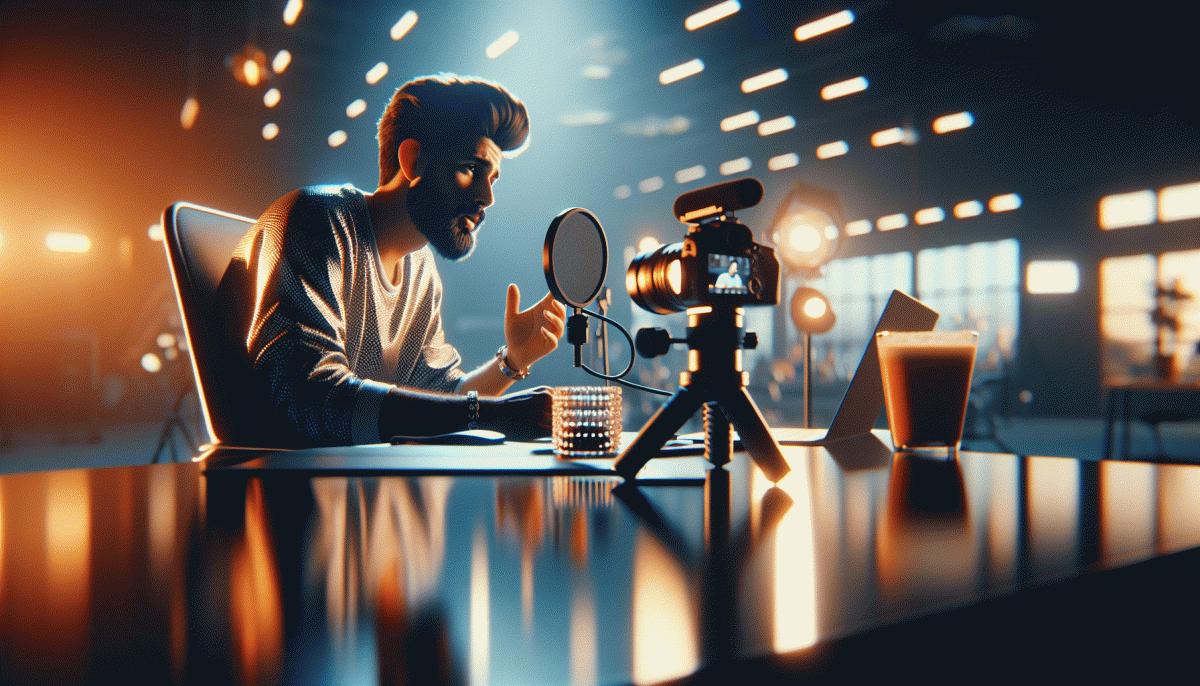
Go Live on Instagram Without Cringe: The Foolproof Playbook to Win Viewers Fast
The 10-Minute Prep That Makes You Look Effortlessly Professional
Start the clock and treat the next ten minutes like a tiny production sprint. You don't need studio gear — just a sequence: tidy the frame, test the tech, pick a winning opener, and give yourself a confidence pep talk. The goal is effortless; the trick is repetition. Run this routine until it becomes muscle memory and viewers read 'professional' before you even say hello.
Camera: Angle matters more than megapixels. Raise your phone or laptop to eye level (stack books if you must), back up so your head and shoulders fit comfortably, and center your eyes a third from the top of the frame. Flip on gridlines, frame yourself with a little headroom, and remove anything distracting behind you — a simple blank wall or a plant is far more flattering than a pile of laundry.
Lighting: Face light wins. Position a window or lamp in front of you, not behind; if a window is too bright, drape a thin shirt over it to diffuse. Warm desk lights angled at your face soften shadows; avoid harsh overhead lights that create unflattering lines. If you have a ring light, you're already ahead — if not, two opposite lamps will do the trick.
Sound: Audio makes trust or kills it. Use earbuds or an external mic when possible, close doors and windows, and move away from humming appliances. Do a 10-second recording and listen for echoes, traffic, or fridge noise. If there's a problem, switch to a quieter spot or add a pillow behind you to dampen reflections.
Final 3 minutes: Clothes, script, and tech check. Wear one solid color that contrasts with your background, keep a one-line opener on a sticky note, silence notifications, and open only the apps you need. Take a deep breath, smile, and hit record — a confident first 30 seconds locks attention, and this quick prep gives you that edge without looking like you tried too hard.
Hooks That Stop the Scroll: Openers Proven to Spike Live Retention
The first ten seconds decide whether a viewer sticks or ghosts. Open with something that snaps attention, sets an expectation, and hints at a payoff. Pick an opener that is specific, short, and slightly unusual so people feel compelled to watch the reveal rather than scroll away.
Build every opener using three small beats: shock to stop, promise to hold, and proof to reassure. For example, lead with an odd fact, follow with the concrete benefit of staying, then flash a quick credibility signal. Keep each beat under eight words and leave a deliberate pause between beats.
- Surprise: Start with a weird visual or claim that makes viewers do a double take.
- Benefit: Tell them exactly what will change if they stay: faster, easier, or better results.
- Countdown: Use a time box or numbered reveal: "In 60 seconds, I will show..." to create urgency.
Delivery matters as much as the line. Use a tighter frame, raise energy for the first three seconds, then slow into the value. Add bold on-screen text and a pinned chat prompt to capture skimmers. Ask a tiny interaction question early to get viewers to type and invest in staying.
Copy these ready-to-run openers: "Stop scrolling — in 30 seconds learn the one fix pro creators use.", "Most makers waste hours on this step; stay and I will show the shortcut.", "Who else hates slow growth? Watch for 45 seconds and try this tweak." Use them verbatim, then adapt based on what your audience responds to.
Chat Chaos, Tamed: Engagement Prompts and Moderation That Feel Natural
Stop pretending chat is a scoreboard. Treat it like a room of people — set one friendly pinned line that says what to do and how to get noticed. Example pinned: 'Welcome! Say hi + where you're watching from. Drop an emoji to vote. I'll call names for replies.' That tiny script cuts awkward silences and gives viewers a natural way in.
Use short, timed prompts — every 4–8 minutes — that invite a one-word answer or emoji. Try: 'Drop a ? if you're team A or a ❄️ if team B', 'Quick take: describe this in one word', 'Two-choice poll: Song A or Song B?' These are low-effort, high-reply and feel conversational rather than game-showy.
Keep moderation human and fast. Pin simple rules, enable slow mode, and prepare canned-but-kind replies: 'Hey, we're keeping things friendly — that's a warning,' then mute if needed. Award trusted viewers mod roles and give them a 3-step script: nudge privately, warn in chat, remove if it escalates. Auto-filters should block slurs and spam, but avoid overzealous word bans that kill natural talk.
Pair prompts with micro-CTAs: ask people to tag a friend, vote with emoji, or drop a one-line tip you can read live — that fuels back-and-forth and gives you content to riff on. Before you go live: prepare five go-to prompts, set slow mode to a sensible interval, assign two moderators, and bookmark three canned responses for praise, redirect, and mute. Do this and chat transforms from chaos into your co-host.
Lighting, Framing, and Audio: Cheap Fixes That Look Luxe on IG Live
Bad lighting, awkward framing and muddy audio are the usual culprits that kill a live vibe — but they're also the easiest things to fix. Start by thinking like a photographer: choose one strong light source, a tidy plane behind you, and a mic that captures only your voice. Small changes make your feed look edited, even when it's raw.
For lighting, use a window as your main light whenever possible — face it, don't backlight. Soften harsh bulbs with a bit of translucent baking paper or a frosted shower curtain clipped to a lamp. If you need extra punch, clamp a cheap LED panel or ring light behind your phone; set it to daylight (around 5000–5600K) for natural skin tones. Bounce light with a white posterboard or tinfoil to fill shadows.
Frame like you mean it: put your eyes about one-third down the frame and keep the camera at eye level (stack books under a phone tripod if you're improvising). Allow a little headroom — not too much ceiling — and create depth by moving a lamp or plant a couple of feet behind you. Declutter one plane, not the entire room: a single neat shelf or framed print reads curated, not chaotic.
Audio wins loyalty. Clip an inexpensive lav mic to your shirt or use wired earbuds with a mic — positioning matters, not price. Reduce echo by adding soft surfaces (throw blanket, rug, clothes) or leaning into a corner with curtains closed. Always do a 30‑second soundcheck and record a backup on your phone so you can swap in clean audio if needed. If background hum shows up, low-cost noise reduction apps can work wonders.
Before you go live, run this quick checklist: check the light, test the angle, verify mic placement, clear the background, and hit record for one dry run. Nail those five and you'll look warm, crisp and confident — without spending a fortune or sounding like you cloned a studio. Practice once, then go get viewers.
Save, Slice, and Repurpose: Turn One Live into a Week of Content
One live stream is not one moment. Save the raw replay, then treat it like a content goldmine to extract micro wins across the week. Record with timestamps, note standout lines, and mark natural chapter points while the energy is fresh. This method reduces cringe by letting you audition clips before live promotion. That small prep yields multiple deliverables with minimal extra time.
Slice smart: cut 15 to 60 second clips that start with a hook, end with value, and stand alone out of context. Create a 30 second teaser, a 60 second how to, and a striking quote graphic. Add closed captions, a punchy caption, and platform specific aspect crops so each clip looks native. Use a simple naming convention so you can find clips fast and batch caption in short blocks to save time.
- Highlight: A 45 second peak moment that drives shares and saves and shows real personality.
- Teaser: A 15 second preview that hooks with a promise and sends viewers to the full replay.
- Snack: A 30 second quick tip optimized for Reels, Shorts, or Story formats to grow discovery.
Repurpose plan: post the teaser on Day 1, the highlight on Day 2, the snack on Day 4, and a carousel of quotes midweek. Batch edit with templates and reuse captions with platform specific tweaks. Set aside one hour post stream for the whole workflow; that hour will pay back all week. Track which format wins and iterate, keeping clarity and energy front and center with one clear call to action per clip.
Read also
Go Live on Instagram Without the Cringe: Steal These Pro Tricks to Wow Viewers

Instagram Live Without the Cringe: The Unfair Playbook They Don't Want You to Use
Go Live on Instagram Without Cringe: The Shockingly Simple Playbook
Live on Instagram Without Embarrassment: Pro Secrets That Actually Work

Steal This $5/Day Ad Playbook: Grow Fast Without Torching Your Budget